Multiplication as Scaling and Resizing Numbers
Interactive game with multiple rounds, auto-scoring, and unlimited replay.
By completing this purchase you agree to our Terms of Use and Privacy Policy. Your subscription renews automatically until you cancel. You can cancel anytime from your account settings. All sales are final and non-refundable. Digital content is available for download in your account immediately upon purchase.
What's included
Multiplication as Scaling and Resizing Numbers preview and details
Try the game
About this game
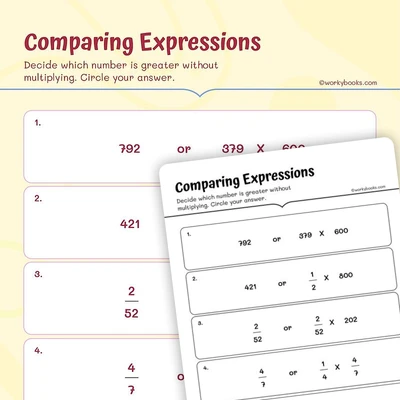
This engaging interactive game helps students understand multiplication as scaling (resizing) through real-world contexts and visual representations. Students explore how multiplying a number by a fraction or whole number changes its value, developing critical mathematical reasoning skills.
LEARNING OUTCOMES
- Compare the size of a product to the size of one factor based on the size of the other factor
- Explain why multiplying a given number by a fraction greater than 1 results in a larger number
- Understand why multiplying by a fraction less than 1 results in a smaller number
- Apply scaling concepts to solve real-world problems
Tags
multiplication, scaling, resizing, fractions, factors, products, multiplicative comparison, interactive math game, differentiated learning, common core aligned, digital activity
Common Core standards covered
Interpret multiplication as scaling (resizing), by:
Perfect for the way you teach
- Engaging classroom centers
- Auto-scored play
- Use as warm-up or review
- Educational screen time
- Replay to build mastery
- Fun, not boring drills
- Hands-on practice
- Self-paced challenge
- Works on any device