

Binturong's Smells and Tails
Interactive passage with audio narration, comprehension questions, and printable PDF.
By completing this purchase you agree to our Terms of Use and Privacy Policy. Your subscription renews automatically until you cancel. You can cancel anytime from your account settings. All sales are final and non-refundable. Digital content is available for download in your account immediately upon purchase.
What's included
Binturong's Smells and Tails preview and details
About this printable Binturong's Smells and Tails science reading passage, NGSS-aligned (Grades 3-8)
Sample passage and quiz from Binturong's Smells and Tails
Reading passage and comprehension quiz preview
Binturong's Smells and Tails
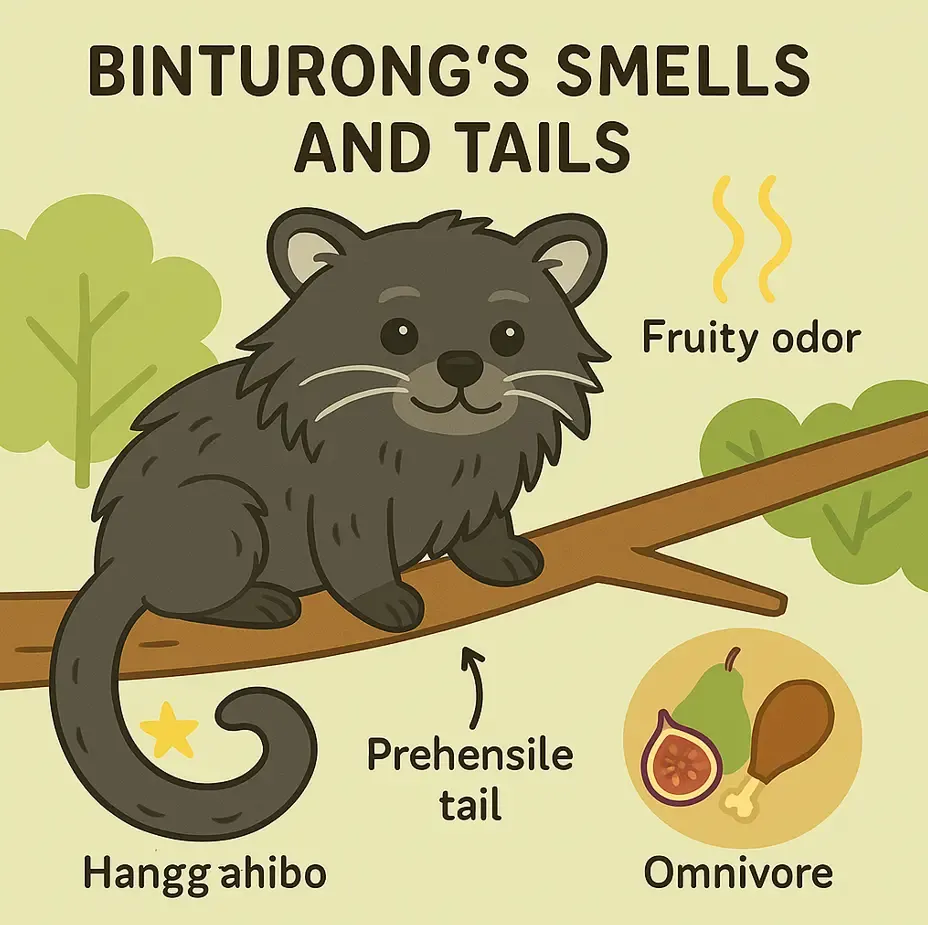
The Binturong is full of surprises, not just its "bearcat" looks! This unique animal has some very special powers that help it live in the rainforests of Southeast Asia. One of its most amazing features is its long, strong prehensile tail. This isn't just any tail; it works like a fifth limb! The Binturong uses its prehensile tail to grip branches tightly, helping it climb and move through the trees with incredible ease. It can even hang upside down using just its tail! This adaptation is perfect for an animal that spends most of its life arboreal.
What about its diet? The Binturong is an omnivore, meaning it eats both plants and animals. It loves to munch on fruit, especially figs, which makes it an important "seed disperser" in the forest. When it eats fruit and then moves to another spot, it helps spread the seeds, allowing new plants to grow. Besides fruit, it also eats small animals like rodents, birds, eggs, and even leaves.
Another incredible "secret power" of the Binturong is its smell! Many people say that Binturongs smell exactly like hot, buttery popcorn. This unique popcorn smell comes from a special scent gland under its tail. Binturongs use this smell to mark their territory and communicate with other Binturongs. It's their way of leaving a message for their friends and family in the dense rainforests. These special adaptations like their tail and smell are vital for their survival and for maintaining the biodiversity of their ecosystem.
Fun Fact: When a Binturong hangs by its tail, its face points downwards, allowing it to look at what's below!
Comprehension quiz (8 questions)
1. What is special about the Binturong's tail?
2. What does "prehensile" mean for a tail?
3. What kind of eater is a Binturong?
4. What popular snack does the Binturong often smell like?
5. How does eating fruit help the rainforest?
6. Why is the Binturong's tail useful for its arboreal life?
7. What is the main idea of this passage?
8. If an animal has a unique smell it uses to mark its area, what is this an example of?
Perfect for the way you teach
- Build comprehension skills
- Auto-graded quiz
- Differentiated reading
- Read together at home
- Improve fluency
- Quiet reading time
- Reading curriculum support
- Independent practice
- Track Lexile growth