

Spiders Silk Strength
Interactive passage with audio narration, comprehension questions, and printable PDF.
By completing this purchase you agree to our Terms of Use and Privacy Policy. Your subscription renews automatically until you cancel. You can cancel anytime from your account settings. All sales are final and non-refundable. Digital content is available for download in your account immediately upon purchase.
What's included
Spiders Silk Strength preview and details
About this printable Spiders Silk Strength science reading passage, NGSS-aligned (Grade 6)
Sample passage and quiz from Spiders Silk Strength
Reading passage and comprehension quiz preview
How Spiders Use Silk to Survive
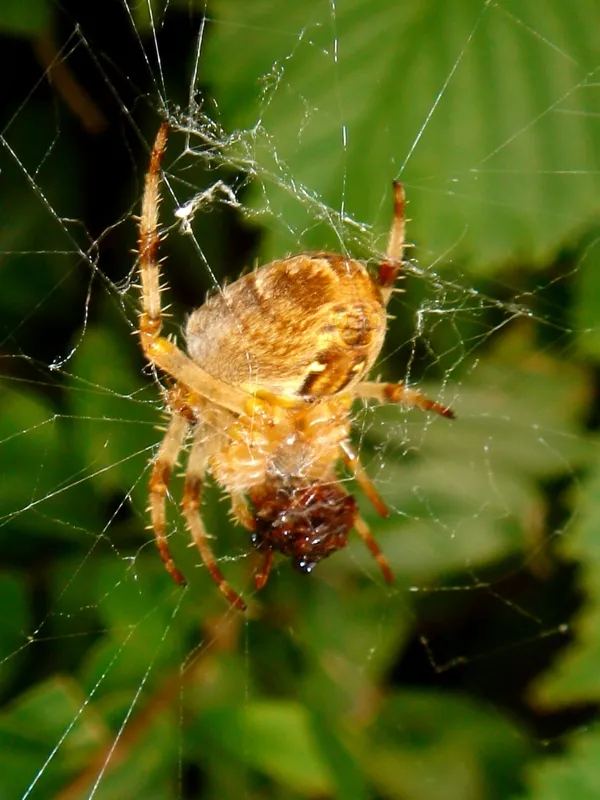
"Spinneret seen on cross spider, small" by Peter Freiman / Wikimedia Commons.
Imagine a superhero whose superpower is creating an incredibly strong, sticky, and versatile material right from their own body. That's essentially what a spider does with its amazing silk! This natural wonder isn't just for building beautiful webs; it's a critical tool for survival in almost every aspect of a spider's life, helping them to find food, protect themselves, and reproduce. Understanding how spiders use silk helps us see how genetic variations in traits can lead to incredible adaptations.
Spider silk is truly one of nature's marvels. It's lighter than cotton but stronger than steel by weight. Each spider has special glands called spinnerets, located at the back of its abdomen, that produce different types of silk. A single spider can produce up to seven different kinds of silk, each with a unique purpose. For example, some silk is sticky to trap prey, while other types are strong and dry for structural support or smooth for wrapping.
One of the most well-known uses of spider silk is for building webs. These intricate traps are essential for many spiders to catch their food, primarily insects. The web's design and the stickiness of the silk are perfectly adapted to the spider's hunting strategy. A spider with a strong, sticky web has a much higher chance of catching food, which directly increases its chances of surviving and reproducing. This is a great example of adaptation, where a trait helps an organism thrive in its environment.
Beyond hunting, silk plays many other vital roles. Spiders use silk to create safe shelters, like silk-lined burrows or silken retreats, protecting them from predators and harsh weather. Young spiders, called spiderlings, often use a technique called 'ballooning,' where they release a long strand of silk into the wind, allowing them to travel great distances to new habitats. This dispersal method helps them avoid competition for resources.
For reproduction, silk is indispensable. Female spiders use silk to weave protective egg sacs, safeguarding their developing offspring from danger and environmental changes. Male spiders also use silk in their courtship rituals, sometimes creating silken 'nuptial gifts' for the female or laying down silk threads to guide her. Without silk, spiders would struggle to survive, find mates, or protect their young, making it a key factor in their evolutionary success.
Interesting Fact: Some spiders can even recycle their silk by eating old or damaged webs, allowing them to conserve energy and resources!
Comprehension quiz (10 questions)
1. What are the special glands that produce silk?
2. How many types of silk can a single spider produce?
3. Which of these is NOT a primary use of spider silk mentioned?
4. Why is a strong, sticky web important for a spider's survival?
5. What is 'ballooning' used for by young spiders?
6. How does silk help protect spider offspring?
7. The passage suggests that spider silk is crucial for:
8. What does 'adaptation' mean in the context of spiders and silk?
9. Spider silk is lighter than cotton but stronger than steel by weight. (True/False)
10. A spider that produces very weak silk would likely have a lower chance of survival and reproduction.
Perfect for the way you teach
- Build comprehension skills
- Auto-graded quiz
- Differentiated reading
- Read together at home
- Improve fluency
- Quiet reading time
- Reading curriculum support
- Independent practice
- Track Lexile growth