What Characteristic Is Used to Divide Aquatic Biomes into Three Zones? — Reading Comprehension
Rate this
Premium Resource
Present
Present in classroom. No work saved
Assign
Classroom with student accounts, Track progress
Quick Play
No student accounts, assign with a link
Grades
3
4
5
6
7
Standards
MS-LS1-3
PRINT+DIGITAL RESOURCE
This learning resource is available in interactive and printable formats. The interactive worksheet can be played online and assigned to students. The Printable PDF version can be downloaded and printed for completion by hand.
This NGSS-aligned reading passage explains how aquatic biomes such as oceans and lakes are divided into three zones based on the amount of sunlight. Designed for middle school readers, the passage explores the photic (sunlight) zone, the twilight zone, and the aphotic (midnight) zone, describing the life forms and energy sources found in each. It introduces key science terms like photosynthesis, bioluminescence, and chemosynthesis while highlighting how organisms adapt to varying levels of light. This science comprehension activity helps students understand how energy flows in aquatic ecosystems and why certain plants and animals are found at specific depths. Aligned to NGSS MS-LS2-1, this passage builds knowledge in life science, ecosystems, and biological adaptation.
CONTENT PREVIEW
Expand content preview
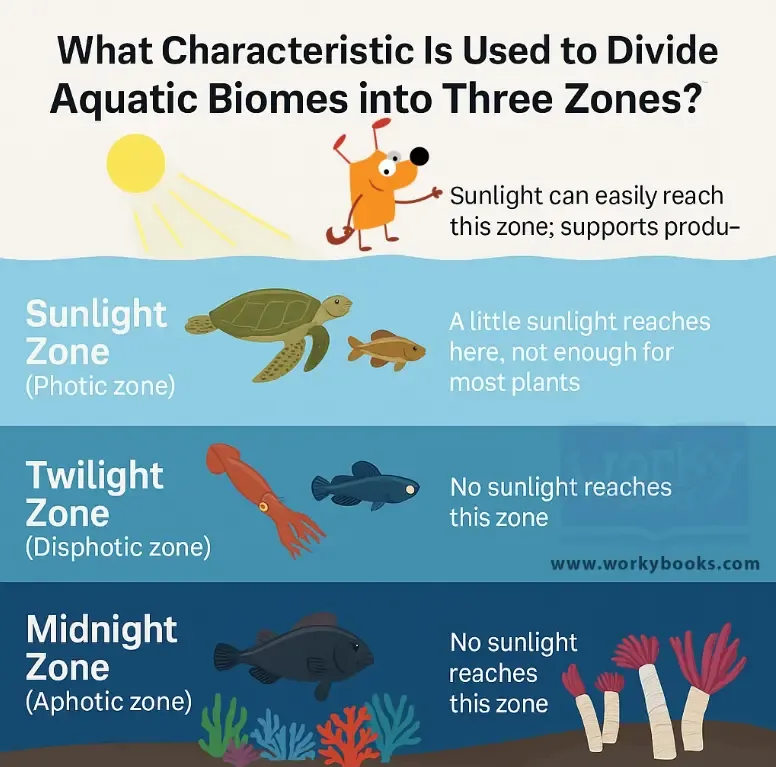
Aquatic biomes, such as oceans, lakes, and ponds, are divided into three main zones based on the amount of sunlight that reaches the water. Sunlight is a key factor because it affects how much photosynthesis can happen, which in turn affects what kinds of plants and animals can survive in each zone.
The sunlight zone, also called the photic zone, is the top layer of water where sunlight can easily reach. This zone supports a large variety of life because it has enough light for producers like algae and phytoplankton to grow. These tiny plants form the base of the food chain. Fish, sea turtles, and coral reefs are commonly found in this zone.
Below that is the twilight zone, or disphotic zone, where only a small amount of sunlight filters through. There is not enough light for most plants to perform photosynthesis. Animals that live here, such as squid and lanternfish, often have special adaptations like bioluminescence—the ability to produce light.
The deepest layer is called the midnight zone, or aphotic zone. In this zone, no sunlight reaches at all. It is cold, dark, and under great pressure. Only specially adapted organisms, like deep-sea fish and giant tube worms, can survive here. These creatures often rely on chemosynthesis, a process where energy is made from chemicals instead of sunlight.
Understanding these zones helps scientists study marine ecosystems and how energy moves through them. It also explains why different types of life are found at different depths in the water.
Fun Fact: The Mariana Trench, Earth's deepest ocean point, is part of the midnight zone—it's so deep that Mount Everest could fit inside it and still be underwater!
What main factor is used to divide aquatic biomes into zones?
Water temperatureType of fishAmount of sunlightDepth of sediment
What is another name for the sunlight zone?
Twilight zoneAphotic zoneMidnight zonePhotic zone
Which aquatic zone receives no sunlight?
Photic zoneTwilight zoneAphotic zoneSurface zone
What kind of organisms live in the photic zone?
Only bacteriaDeep-sea wormsCoral reefs and algaeNone, it’s too dark
Why can plants not grow well in the twilight zone?
The water is frozenThere's not enough lightThere are too many fishThe water is polluted
What special ability helps animals survive in the twilight zone?
FlyingBioluminescencePhotosynthesisHibernation
What is the main idea of the passage?
Aquatic zones are divided by sizeSunlight determines aquatic zones and what lives thereOnly shallow water has living thingsOceans are not important
How do some organisms in the midnight zone get energy?
From the sunThrough eating coralBy swimming to the surfaceThrough chemosynthesis
Perfect For:
👩🏫 Teachers
• Reading comprehension practice
• Auto-graded assessments
• Literacy skill development
👨👩👧👦 Parents
• Reading practice at home
• Comprehension improvement
• Educational reading time
🏠 Homeschoolers
• Reading curriculum support
• Independent reading practice
• Progress monitoring
Reading Features:
📖
Reading Passage
Engaging fiction or nonfiction text
❓
Comprehension Quiz
Auto-graded questions
📊
Instant Feedback
Immediate results and scoring
📄
Printable Version
Download for offline reading
🔊
Read Aloud
Voice-over with word highlighting
Reviews & Ratings
No reviews yet. Be the first to share your experience!
Related Content
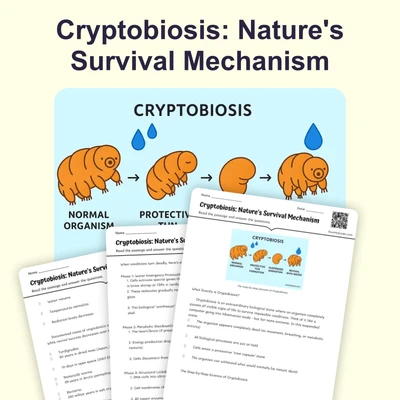
How Does Cryptobiosis work
This passage explains cryptobiosis, the process where organisms like tardigrades pause their metabolism to survive extre...
MS-LS1-3RI.6.3RI.7.3RI.8.8
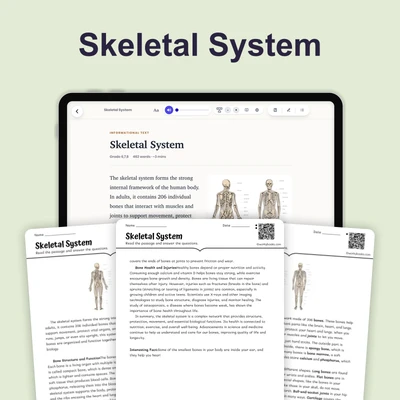
Skeletal System
This comprehensive middle school science passage explores the human skeletal system, focusing on the 206 bones of the ad...
MS-LS1-3
Homeostasis
This engaging science passage introduces middle school students to the concept of homeostasis, focusing on how living or...
MS-LS1-3
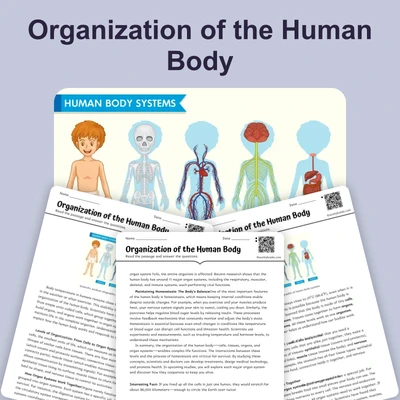
Organization of the Human Body
This comprehensive passage for grades 6-8, aligned to NGSS MS-LS1-3, guides students through the intricate organization ...
MS-LS1-3
Levels of Organization
This middle school science passage, aligned with NGSS MS-LS1-3, introduces students to the concept of biological levels ...
MS-LS1-3
Muscular System
This comprehensive passage for grades 6-8 explores the human muscular system, covering structure, function, and health. ...
MS-LS1-3
Integumentary System
This comprehensive middle school science passage aligns with NGSS standard MS-LS1-3 and explores the integumentary syste...
MS-LS1-3
Digestive System
This comprehensive science passage for grades 6-8 explores the digestive system, tracing the step-by-step journey of foo...
MS-LS1-3MS-LS1-7
Excretory System
This comprehensive middle school science passage explores the excretory system and its importance in maintaining the bod...
MS-LS1-3
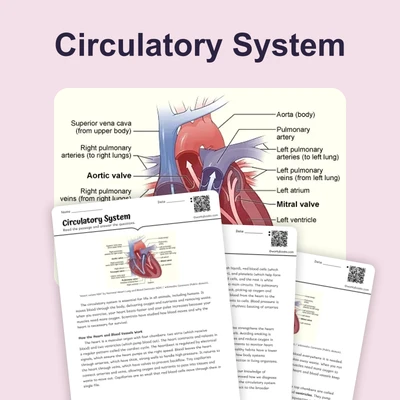
Circulatory System
This engaging middle school science passage explores the circulatory system, focusing on how the heart, blood, and blood...
MS-LS1-3
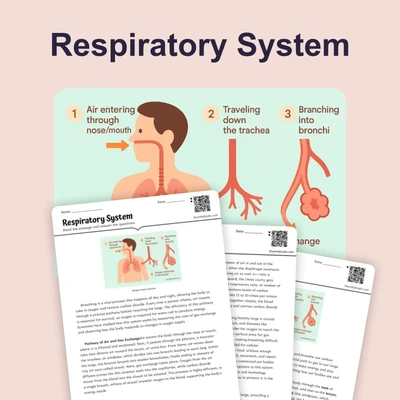
Respiratory System
This comprehensive passage for grades 6-8 explores the respiratory system, examining the pathway of air from the nose an...
MS-LS1-3MS-LS1-7
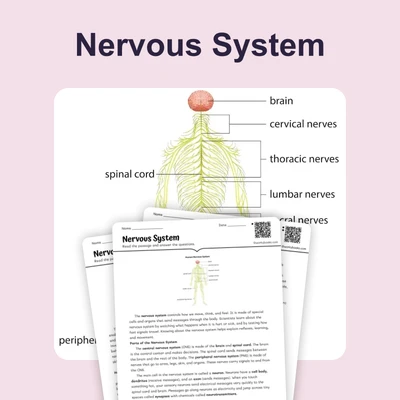
Nervous System
This comprehensive middle school science passage explores the structure, function, and significance of the human nervous...
MS-LS1-3MS-LS1-8
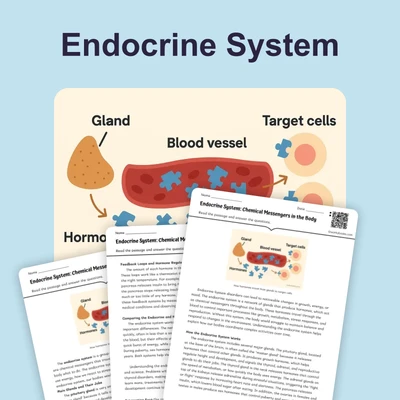
Endocrine System
This passage explores the middle school science topic of the endocrine system, aligned with NGSS standard MS-LS1-3. It d...
MS-LS1-3
Body Systems Working Together
This middle school science passage explores how the human body's systems work together to sustain life, aligned with NGS...
MS-LS1-3
Immune System
This comprehensive middle school science reading passage explores the immune system, focusing on its role as the body's ...
MS-LS1-3
Reproductive System
This passage provides a comprehensive overview of the human reproductive system for middle school students, aligning wit...