What Is Text Structure and How To Teach It Effectively
Have you ever wondered how authors organize their writing? Just like every good story has a beginning, middle, and end, nonfiction texts also follow special patterns to help readers understand them better. These patterns are called text structure—and they are the secret behind strong reading and writing skills!
In this blog, we’ll break down what text structure means, explore 5 common types with easy examples, and give you fun ways to teach it to kids. Whether you’re a parent, teacher, or student, understanding text structure can make reading a whole lot easier (and more fun)!
What is Text Structure?
Text structure refers to the way a piece of writing is organized. Just like a house needs a solid frame to stand tall, every text has a specific structure or “skeleton” that gives it shape. Knowing this skeleton helps readers follow the author’s ideas more easily.
| According to Reading Rockets, “Teaching students to recognize common text structures can improve reading comprehension.” In simple terms, when we teach children how to see these patterns, we teach them how to think about what they read. |
Whether it’s a story that follows a timeline or an article that shows how one event caused another, recognizing the structure of a text can be a game-changer.
Why Teaching Text Structure Matters
When students understand structure of a text, they gain the ability to break down and analyze information. It becomes easier for them to summarize, ask questions, and make predictions.
Take Ms. Lopez, a 4th-grade teacher. When she introduced “Compare and Contrast” to her students, something amazing happened: her students began spotting patterns everywhere! They compared animals, stories, and even recess games. Suddenly, reading wasn’t just reading—it was understanding.
By teaching structure of a text in 4th grade, educators are not only improving reading comprehension but also building foundational writing skills.
And guess what? There are tons of printable worksheets and online digital worksheets to help practice identifying and using these structures!
Types of Text Structure
Writers organize their ideas in different ways depending on their purpose. Recognizing these patterns helps students understand what they’re reading—and why it’s written that way.
There are five common types of text structure:
- Description
- Sequence
- Cause and Effect
- Compare and Contrast
- Problem and Solution
Let’s take a deep dive into a list of text structures and analyze each text structures types.
1. Description
This structure paints a vivid picture of a topic using detailed language. It focuses on helping readers visualize or understand something by describing its characteristics.
Common Uses:
- Describing a place, person, or object
- Informational texts about animals, plants, or landmarks
Helps students develop sensory writing and build imagery.
2. Sequence
Information is organized in a specific order—usually by time or steps. This is ideal for showing processes or narrating events in order.
Common Uses:
- Historical timelines
- Step-by-step guides or instructions
Great for understanding progression and following directions.
3. Cause and Effect
Shows the relationship between actions or events and their outcomes. It helps readers understand why something happened and what followed.
Common Uses:
- Explaining scientific reactions
- Describing consequences in history or literature
Promotes logical reasoning and analytical skills.
4. Compare and Contrast
Highlights similarities and differences between two or more subjects. This structure allows readers to explore relationships and distinctions clearly.
Common Uses:
- Comparing two animals, places, or ideas
- Evaluating pros and cons
Ideal for developing evaluation and critical thinking skills.
5. Problem and Solution
Introduces a problem and presents one or more possible solutions. This structure encourages thinking about challenges and how they can be addressed.
Common Uses:
- Articles on environmental or social issues
- Fictional stories involving conflict resolution
Helps learners explore solutions and apply problem-solving strategies.
How to Teach Text Structure Effectively
Here are practical and fun ways to make learning about text structures stick:
1. Signal Words
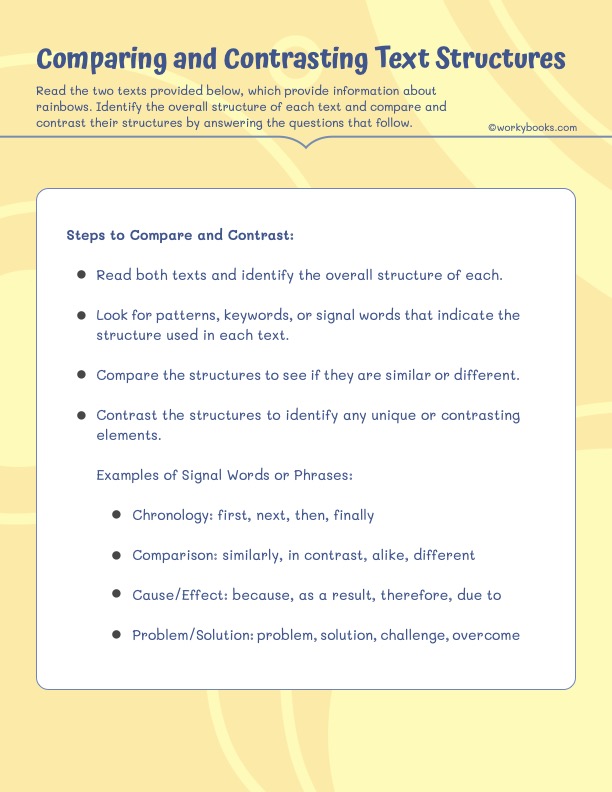
Teach kids to spot signal words like “because,” “both,” or “after.” These words hint at the structure being used.
2. Graphic Organizers
Use Venn diagrams for compare and contrast, flowcharts for cause and effect, and timelines for sequence. These visuals make it easier for kids to organize information.
3. Anchor Charts
Post anchor charts in the classroom with definitions, keywords, and examples for each text structure.
4. Mentor Texts
Read mentor texts aloud that clearly demonstrate a structure. Ask students to identify the structure and explain why they think it fits.
5. Color Coding
Let students highlight signal words in different colors for each type. It’s fun and reinforces learning!
Sample Mini-Lesson Plan
Objective: Identify text structures using signal words.
Materials: Sample passage, highlighters, graphic organizer
Steps:
- Read a short paragraph aloud.
- Highlight keywords together.
- Fill in a graphic organizer to show the structure.
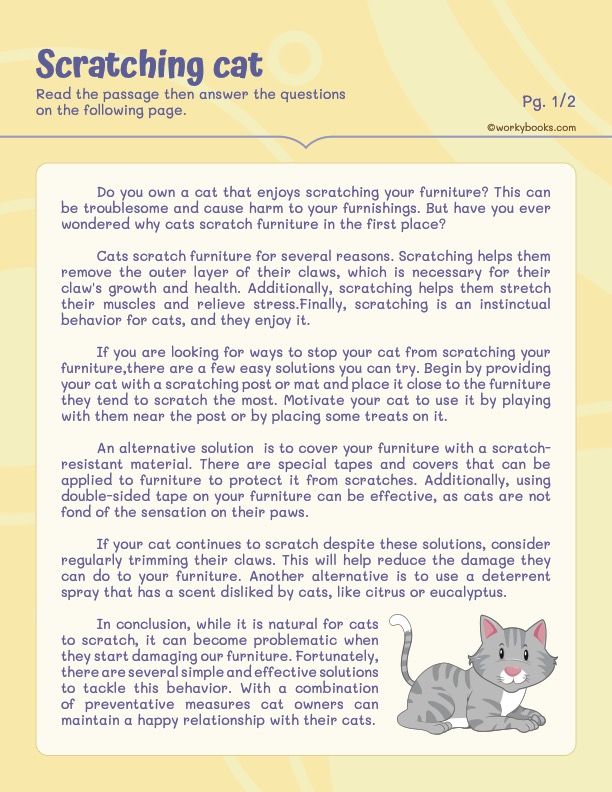
Engaging Activities and Worksheet Ideas
Hands-on activities are the best way to solidify learning:
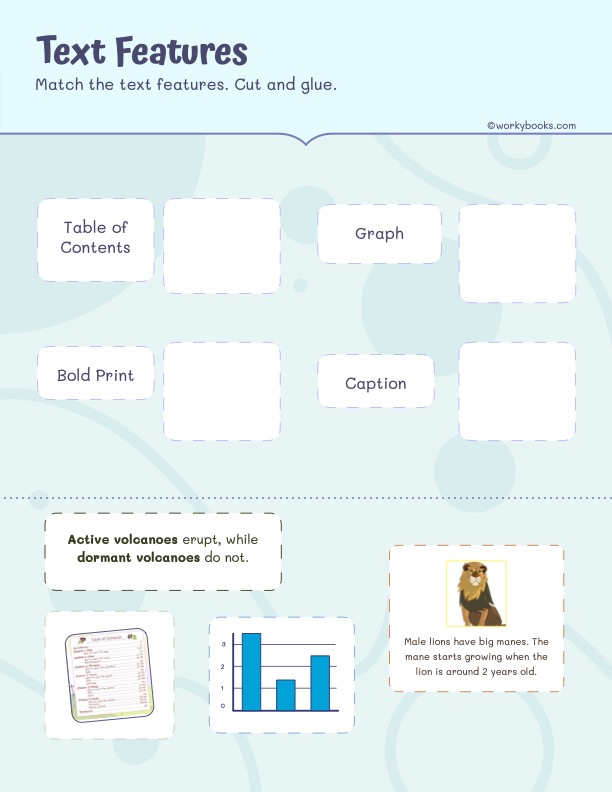
- Sort & Match: Match paragraphs to their text structure types.
- Story Remix: Rewrite a passage using a different structure.
- Reading Centers: Use text structures worksheets during literacy rotations.
Whether you’re looking for worksheets on text structure, online digital worksheets, or printable worksheets, there are resources for every classroom.
“Practice makes perfect, and the best way to master text structures is by exploring them again and again in fun ways.”
Try mixing traditional worksheets with tech-friendly options like interactive slides or games.
Conclusion
Understanding text structures helps students read with purpose, write with clarity, and think critically. Teaching it doesn’t have to be boring — especially when you incorporate games, graphic organizers, and engaging resources.
At Workybooks, we make learning text structures fun and effective. Our collection includes Text Structure 4th Grade Worksheets, printable worksheets, and online digital worksheets — all designed to help kids thrive with confidence.
With the right support and creative tools, students will not just recognize text structure — they’ll use it to unlock the world of reading.