
Rosa Parks Day Resources
Rosa Parks changed American history with one brave act. On December 1, 1955, she refused to give up her bus seat to a white passenger in Montgomery, Alabama. This simple act of courage sparked a movement that changed the nation forever.
In her words” I knew someone had to take the first step and I made up my mind not to move“.
Today, teachers across the country share the story of Rosa Parks with their students. Her life offers powerful lessons about courage, justice, and standing up for what is right. In this post, we explore who Rosa Parks was, share interesting facts about her life, and offer Rosa Parks teaching resources for your classroom.
Who Was Rosa Parks?
Rosa Parks was born on February 4, 1913, in Tuskegee, Alabama. She grew up during a time when Black Americans faced unfair laws called segregation. These laws kept Black people separate from white people in schools, restaurants, and public buses.
Parks worked as a seamstress in Montgomery. She was also active in the civil rights movement. She served as secretary of the local NAACP chapter. This group fought for equal rights for Black Americans.
On that famous day in 1955, Parks was tired after a long day at work. She sat in the “colored section” of the bus. When the white section filled up, the bus driver told her to move. Parks refused. She was arrested for breaking the segregation law.
Her arrest led to the Montgomery Bus Boycott. Black residents refused to ride city buses for 381 days. This protest hurt the bus company and brought national attention to the civil rights cause. The boycott ended when the Supreme Court ruled that bus segregation was unconstitutional.
Interesting Facts About Rosa Parks
Here are some facts about Rosa Parks that may surprise your students:
Rosa Louise Parks was not the first person to refuse giving up a bus seat. Nine months earlier, a 15-year-old girl named Claudette Colvin did the same thing. Civil rights leaders chose Parks to be the face of the movement because of her strong character and community standing.
Parks and her husband lost their jobs after the boycott. They moved to Detroit, Michigan, in 1957. She worked for Congressman John Conyers for over 20 years.
Rosa Parks met Dr. Martin Luther King Jr. during the Montgomery Bus Boycott. King was a young minister at the time. He became the leader of the boycott and went on to lead the entire civil rights movement.
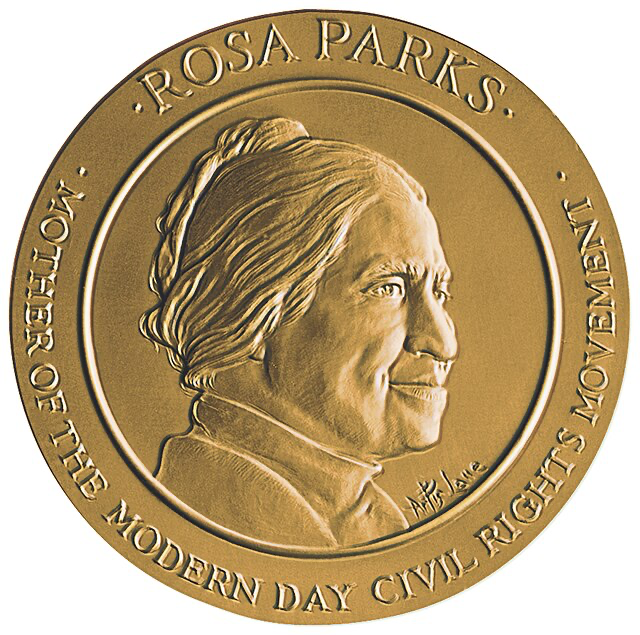
Congress called Rosa Parks the “Mother of the Civil Rights Movement.” She received the Congressional Gold Medal in 1999. This is one of the highest honors a civilian can receive.
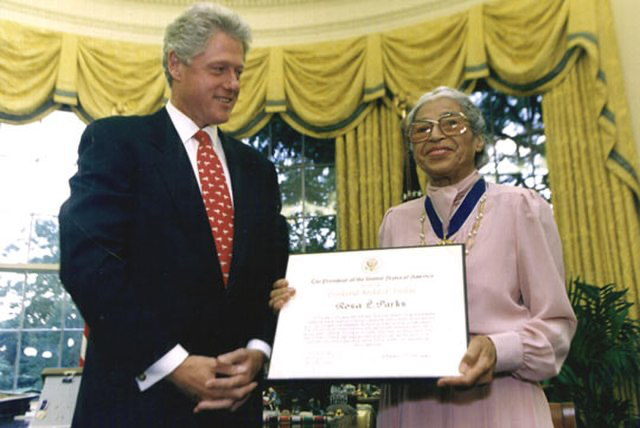
Rosa Parks receive the Presidential Medal of Freedom, the highest civilian honor given by the U.S. executive branch, from President Bill Clinton. Rosa Parks Papers, Prints and Photographs Division, Library of Congress (072.00.00)
Parks continued fighting for civil rights until her final years. She started the Rosa and Raymond Parks Institute for Self Development in 1987. This program teaches young people about the civil rights movement.
When Did Rosa Parks Die?
Rosa Parks died on October 24, 2005, in Detroit, Michigan. She was 92 years old. Her death was mourned across the nation.
Parks became the first woman to lie in honor in the U.S. Capitol Rotunda. Over 50,000 people came to pay their respects. Presidents, lawmakers, and ordinary citizens honored her memory.
Every year on December 1, people celebrate Rosa Parks Day. This day marks the anniversary of her famous bus protest. Many states also celebrate her birthday on February 4.
Rosa Parks Quotes
Rosa Louise Parks spoke often about courage and justice. Her words continue to inspire students and teachers today.
“Each person must live their life as a model for others.”
Heads side of the Rosa Parks Congressional Gold Medal presented to Rosa Parks on 28 November 1999. Designed by Artis Lane. US Mint
“I would like to be remembered as a person who wanted to be free and wanted other people to be also free.”
“Memories of our lives, of our works, and our deeds will continue in others”
These quotes make excellent discussion starters in the classroom. Ask students what each quote means to them. Connect the quotes to events in Parks’ life.
The Montgomery Bus Boycott and March on Washington
The Montgomery Bus Boycott was just the beginning. The civil rights movement grew stronger throughout the 1960s. Two other major events shaped this era: Dr. King’s “I Have a Dream” speech and the March on Washington.
On August 28, 1963, over 250,000 people gathered at the Lincoln Memorial. They demanded equal rights and an end to discrimination. Dr. King delivered his famous speech that day. He spoke of a future where people would be judged by their character, not their skin color.
These three events connect in important ways. The bus boycott showed that peaceful protest could bring change. The March on Washington brought the movement to the national stage. Together, they helped pass the Civil Rights Act of 1964.
Black History Teaching Resources for Your Classroom
Bringing Parks to life in your classroom is easy with the right resources. We offer a complete collection of Parks classroom activities designed for elementary students.
Our Rosa Parks reading comprehension passages help students understand her story. Each passage includes questions that check for understanding. Students learn about her early life, the bus boycott, and her lasting legacy.
Teachers love our differentiated reading materials. We offer the same content at multiple reading levels. This means every student in your class can access the same important story.
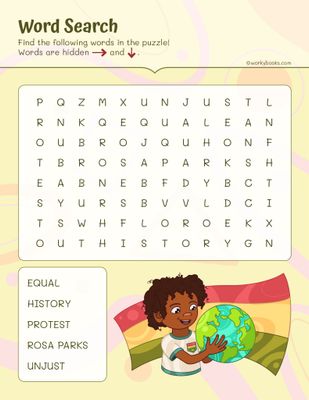
Looking for printable activities? Our collection includes graphic organizers, timeline activities, and writing prompts. You can download each Rosa Parks worksheet PDF with one click.
The March on Washington passage helps students see the bigger picture of the civil rights movement. These teaching resources save you time and engage your students. Each resource aligns with state standards and supports your curriculum goals.
Bringing Rosa Louise Parks Into Your Classroom
Rosa Louise Parks taught us that one person can make a difference. Her courage inspired a movement and changed a nation. Sharing her story helps students understand the power of standing up for what is right. Use these activities to spark discussions about fairness and equality. Connect her story to current events. Help students see how her legacy lives on today.
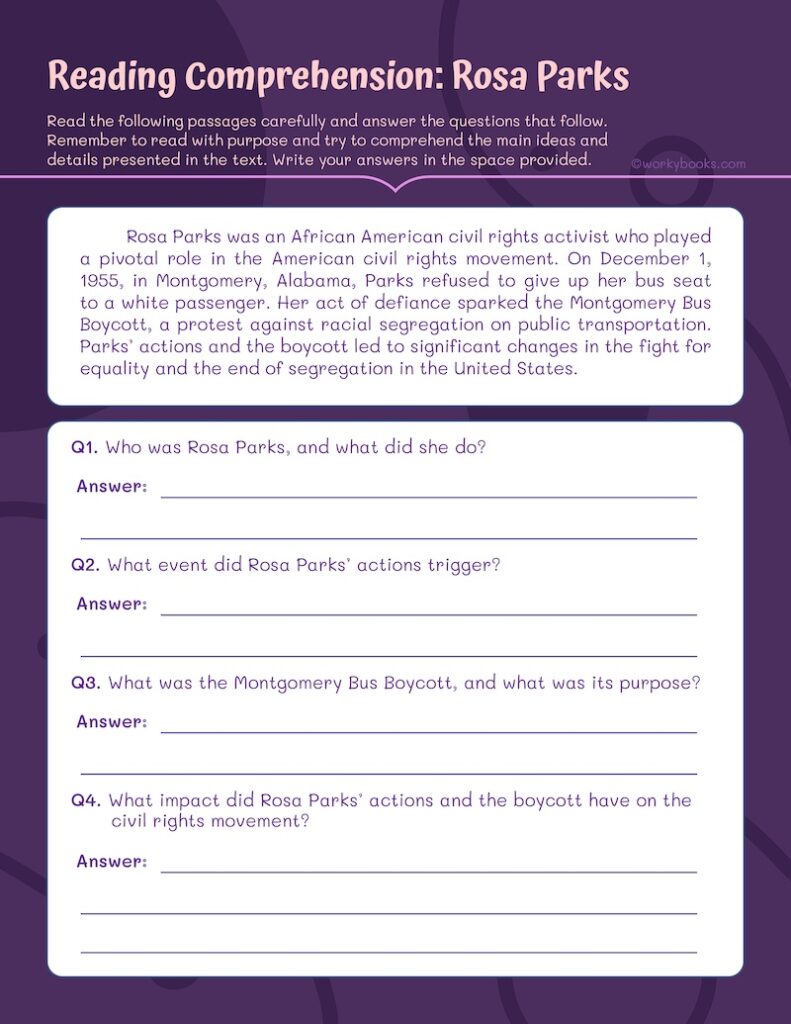
Explore our complete collection of Rosa Parks reading passages and activities in our digital library. Your students will connect with her powerful story and learn valuable lessons about courage and justice.
Looking for more Black History Month resources? Check out our complete collection of civil rights reading passages and classroom activities for elementary students.
Related Posts

Fun Facts About Jupiter

Author’s Purpose Worksheets: Grade 1