Are Bats Blind?
Interactive passage with audio narration, comprehension questions, and printable PDF.
By completing this purchase you agree to our Terms of Use and Privacy Policy. Your subscription renews automatically until you cancel. You can cancel anytime from your account settings. All sales are final and non-refundable. Digital content is available for download in your account immediately upon purchase.
What's included
Are Bats Blind? preview and details
About this printable Are Bats Blind? science reading passage, NGSS-aligned (Grades 3-8)
Sample passage and quiz from Are Bats Blind?
Reading passage and comprehension quiz preview
Are Bats Blind?
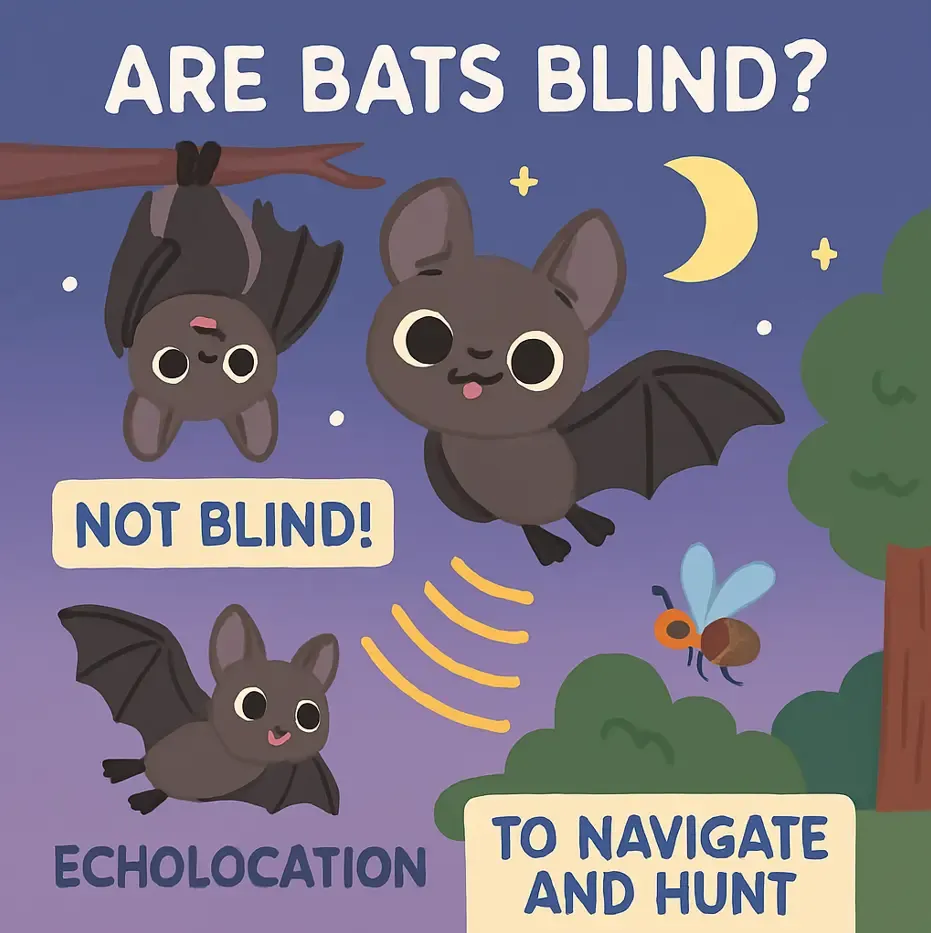
The phrase "blind as a bat" is a common saying, but it's a popular misconception! So, are bats blind? The surprising truth is, no, bats are not blind at all. While they are famous for their incredible ability to navigate in the dark, they can certainly see, and their eyesight is often quite good.
Bats are nocturnal animals, meaning they are most active at night. To hunt and find their way in the darkness, they rely primarily on a sophisticated sensory system called echolocation. This amazing adaptation allows them to emit high-pitched sounds that are too high for human ears to hear. They then listen carefully for the echoes that bounce back off objects in their environment. By interpreting these echoes, bats can create a detailed "sound map" of their surroundings, identifying the location, size, and even texture of objects, including tiny flying insects.
While echolocation is their primary tool for hunting and navigation in the dark, it doesn't mean their vision is useless. Many bat species can see quite well, especially in low light. For example, large fruit bats (often called flying foxes) rely heavily on their excellent eyesight and sense of smell to locate ripe fruit in the dim light of dusk or dawn. Their vision helps them see distant landmarks and avoid predators.
So, the myth that bats are blind is just that – a myth! Their ability to "see" with sound is an extraordinary adaptation that allows them to thrive in their nighttime world, complementing rather than replacing their sense of sight.
Comprehension quiz (8 questions)
1. Are bats truly blind?
2. What is a bat's primary navigation system in the dark?
3. How does echolocation work?
4. When are bats most active?
5. What type of bat often relies on good eyesight?
6. What do bats use echoes to create?
7. What is the main idea of this passage?
8. What does echolocation allow bats to do?
Perfect for the way you teach
- Build comprehension skills
- Auto-graded quiz
- Differentiated reading
- Read together at home
- Improve fluency
- Quiet reading time
- Reading curriculum support
- Independent practice
- Track Lexile growth