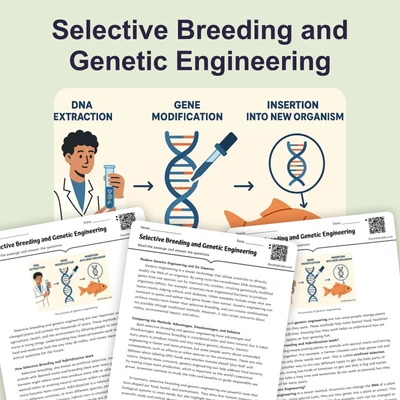
What Is Artificial Selection
Interactive passage with audio narration, comprehension questions, and printable PDF.
By completing this purchase you agree to our Terms of Use and Privacy Policy. Your subscription renews automatically until you cancel. You can cancel anytime from your account settings. All sales are final and non-refundable. Digital content is available for download in your account immediately upon purchase.
What's included
What Is Artificial Selection preview and details
About this printable What Is Artificial Selection science reading passage, NGSS-aligned (Grades 5-8)
Sample passage and quiz from What Is Artificial Selection
Reading passage and comprehension quiz preview
Artificial Selection
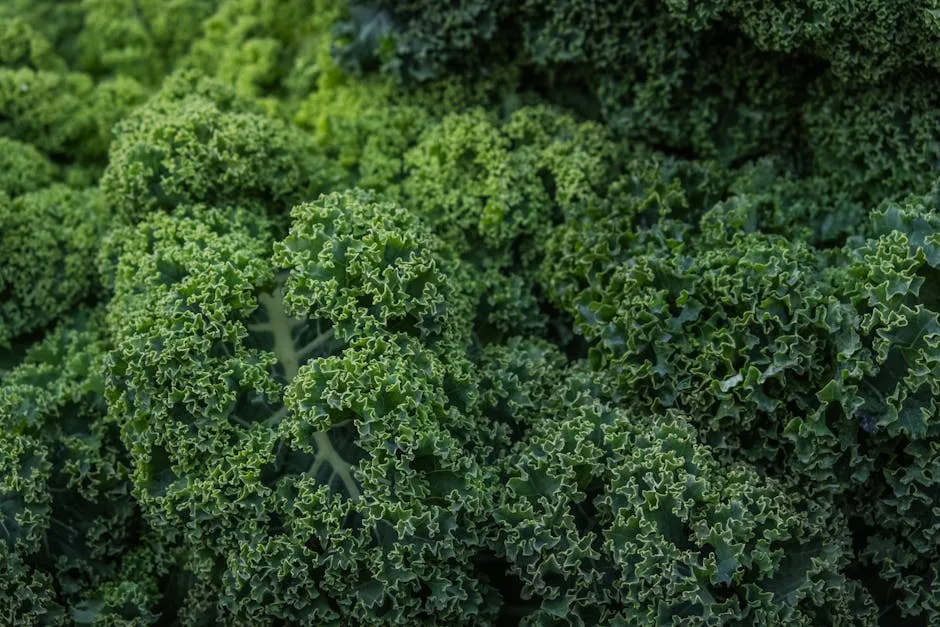
Kale was developed from wild mustard as a result of artificial selection. Image by Ilo Frey / Pexels.
Artificial selection is a powerful scientific process in which humans, not nature, decide which organisms are allowed to reproduce. This method has shaped many species around us, from the vegetables we eat to the pets we love. By selecting individuals with specific traits, people have rapidly changed the appearance and behavior of plants and animals. The process is significant because it highlights how genetic variation and selective breeding can lead to dramatic changes in living things over just a few generations.
How Artificial Selection Works
Artificial selection requires three key ingredients: variation, heredity, and selection. Variation means that individuals in a population differ in their traits, such as size, color, or strength. Heredity is the ability of those traits to be passed from parent to offspring through genes. In artificial selection, humans act as the selecting agents, choosing which individuals to breed based on desired traits. For example, all modern dog breeds were developed from wild wolves by humans repeatedly breeding dogs with certain behaviors or appearances. This process can rapidly create new breeds and varieties; while natural selection might take thousands of years, artificial selection can show noticeable changes in just a few decades.
Comparing Artificial and Natural Selection
Both artificial and natural selection rely on the same basic principles: variation, heredity, and the survival of certain traits over others. However, in natural selection, the environment determines which traits are beneficial and which individuals survive to reproduce. In artificial selection, humans make those choices, often for reasons unrelated to survival. For example, corn was developed from a wild grass called teosinte by Native Americans who selected plants with larger, sweeter kernels. Similarly, broccoli, cabbage, and kale all come from wild mustard, shaped by farmers who favored specific leaf shapes or flavors. The speed of artificial selection is much faster, since humans intentionally breed only those individuals with the most desirable traits.
Evidence and Consequences
Charles Darwin used artificial selection as evidence that selection can cause species to change over time. He observed how quickly breeders could alter animals like pigeons or cattle. However, artificial selection can have unintended consequences. For instance, some purebred dogs suffer from health problems because of the intense selection for certain looks or behaviors. These issues remind us that focusing only on a few traits can reduce genetic diversity, making populations more vulnerable to disease or environmental change.
Artificial selection demonstrates the power humans have to shape the living world. It also highlights the importance of genetic variation and careful decision-making in breeding. Understanding artificial selection helps us make better choices in agriculture, animal care, and conservation.
Interesting Fact:
Did you know that the bananas we eat today are the result of thousands of years of artificial selection? Wild bananas were full of hard seeds and barely edible!
Comprehension quiz (10 questions)
1. What is artificial selection?
2. Which three ingredients are necessary for artificial selection to occur?
3. What does the term 'heredity' mean as used in the passage?
4. What is 'teosinte'?
5. Why is artificial selection faster than natural selection?
6. How did artificial selection lead to the creation of dog breeds?
7. Which of the following is an unintended consequence of artificial selection mentioned in the passage?
8. What evidence did Charles Darwin use to support his idea that species can change?
9. True or False: In natural selection, humans decide which traits are best.
10. True or False: Artificial selection can reduce genetic diversity in a population.
Perfect for the way you teach
- Build comprehension skills
- Auto-graded quiz
- Differentiated reading
- Read together at home
- Improve fluency
- Quiet reading time
- Reading curriculum support
- Independent practice
- Track Lexile growth