Bonobo Behavior and Social Structure — Reading Comprehension
Rate this
Premium Resource
Present
Present in classroom. No work saved
Assign
Classroom with student accounts, Track progress
Quick Play
No student accounts, assign with a link
Grades
6
Standards
MS-LS4-2: APPLY SCIENTIFIC IDEAS TO CONSTRUCT AN EXPLANATION FOR THE ANATOMICAL SIMILARITIES AND DIFFERENCES AMONG MODERN ORGANISMS AND BETWEEN MODERN AND FOSSIL ORGANISMS TO INFER EVOLUTIONARY RELATIONSHIPS.
PRINT+DIGITAL RESOURCE
This learning resource is available in interactive and printable formats. The interactive worksheet can be played online and assigned to students. The Printable PDF version can be downloaded and printed for completion by hand.
This audio-integrated reading passage, 'Bonobo Behavior and Social Structure,' introduces Grade 6 students to the fascinating world of bonobos, often called 'peaceful primates.' It delves into their unique social structures, including matriarchal leadership, their use of grooming and play for bonding, and their distinctive methods of conflict resolution. The passage defines key terms like 'matriarchal,' 'primates,' and 'empathy,' making complex concepts accessible. Aligned with NGSS MS-LS4-2, this resource helps students understand biological diversity and evolutionary connections. It also includes comprehension questions, a glossary, and short answer activities to enhance learning and engagement, all designed for an audio-integrated experience.
CONTENT PREVIEW
Expand content preview
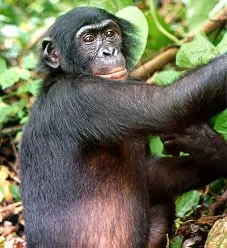
"Bonobo" / Wikimedia Commons.
Imagine a world where arguments rarely lead to fights and everyone helps each other. This is often the world of the bonobo, a fascinating ape that shares many similarities with humans. Bonobos are primates, just like us and chimpanzees, and they live in the forests of central Africa. Studying bonobo behavior and their unique social structure helps us understand more about our own evolutionary past and how different species adapt to their environments.
One of the most striking things about bonobos is their peaceful nature. Unlike chimpanzees, who sometimes show aggression, bonobos prefer to solve problems through non-violent means. They often use play, grooming, and even sharing food to reduce tension and build strong bonds within their groups. This peaceful approach is a key part of what makes bonobo societies so unique among great apes.
Bonobo groups are matriarchal, meaning the females are in charge. Older, experienced females often lead the group, making decisions about where to find food and how to react to danger. These female leaders form strong alliances, which help them maintain power and protect their young. This female leadership is quite different from many other primate societies, where males typically dominate.
Building relationships is very important for bonobos. They spend a lot of time grooming each other, which is not only about keeping clean but also about showing affection and strengthening social ties. This constant interaction creates a sense of community and trust. Scientists believe bonobos have a high level of empathy, meaning they can understand and share the feelings of others. This helps them cooperate and live together peacefully.
Bonobos are omnivores, meaning they eat both plants and animals, though their diet is mostly fruit. Their intelligence and complex social behaviors, including their ability to learn and adapt, make them important subjects in primatology. Learning about these 'peaceful primates' gives us valuable insights into the diversity of life on Earth and the many ways species can evolve.
Interesting Fact: Bonobos are the only great ape species known to walk bipedally (on two legs) more frequently than other apes when carrying food or moving through wet areas.
Where do bonobos live?
Central AfricaSouth AmericaNorth AmericaAustralia
What is the typical leadership structure?
MatriarchalPatriarchalEqualNo leadership
Which of these is TRUE about bonobos?
They prefer peaceful solutionsMales always lead the group
What does 'empathy' mean?
Sharing feelings of othersFeeling angryBeing strongEating plants
How do bonobos maintain strong bonds?
Grooming and playFighting oftenIgnoring each otherStaying alone
How do bonobos differ from chimpanzees?
Bonobos are more peacefulChimpanzees are largerBonobos eat only fruitChimpanzees live in Africa
Why is female leadership important?
To protect youngTo fight malesTo get more foodTo be faster
Why is studying bonobos valuable?
Understand evolutionLearn about birdsImprove human dietsTrain pets
What does 'primatology' involve?
Study of primatesStudy of plantsStudy of rocksStudy of oceans
If a species had strong female alliances, how might it affect conflict?
Reduce overall aggressionIncrease male dominanceMake conflicts worseCause groups to split
Perfect For:
👩🏫 Teachers
• Reading comprehension practice
• Auto-graded assessments
• Literacy skill development
👨👩👧👦 Parents
• Reading practice at home
• Comprehension improvement
• Educational reading time
🏠 Homeschoolers
• Reading curriculum support
• Independent reading practice
• Progress monitoring
Reading Features:
📖
Reading Passage
Engaging fiction or nonfiction text
❓
Comprehension Quiz
Auto-graded questions
📊
Instant Feedback
Immediate results and scoring
📄
Printable Version
Download for offline reading
🔊
Read Aloud
Voice-over with word highlighting
Reviews & Ratings
No reviews yet. Be the first to share your experience!
Related Content
Bonobos Versus Chimpanzees Key Differences
This educational passage, audio-integrated for accessibility, delves into the intriguing world of bonobos and chimpanzee...
MS-LS4-2: APPLY SCIENTIFIC IDEAS TO CONSTRUCT AN EXPLANATION FOR THE ANATOMICAL SIMILARITIES AND DIFFERENCES AMONG MODERN ORGANISMS AND BETWEEN MODERN AND FOSSIL ORGANISMS TO INFER EVOLUTIONARY RELATIONSHIPS.