

Bonobos Versus Chimpanzees Key Differences
Interactive passage with audio narration, comprehension questions, and printable PDF.
By completing this purchase you agree to our Terms of Use and Privacy Policy. Your subscription renews automatically until you cancel. You can cancel anytime from your account settings. All sales are final and non-refundable. Digital content is available for download in your account immediately upon purchase.
What's included
Bonobos Versus Chimpanzees Key Differences preview and details
About this printable Bonobos Versus Chimpanzees Key Differences science reading passage, NGSS-aligned (Grade 6)
Sample passage and quiz from Bonobos Versus Chimpanzees Key Differences
Reading passage and comprehension quiz preview
Bonobos Versus Chimpanzees Key Differences
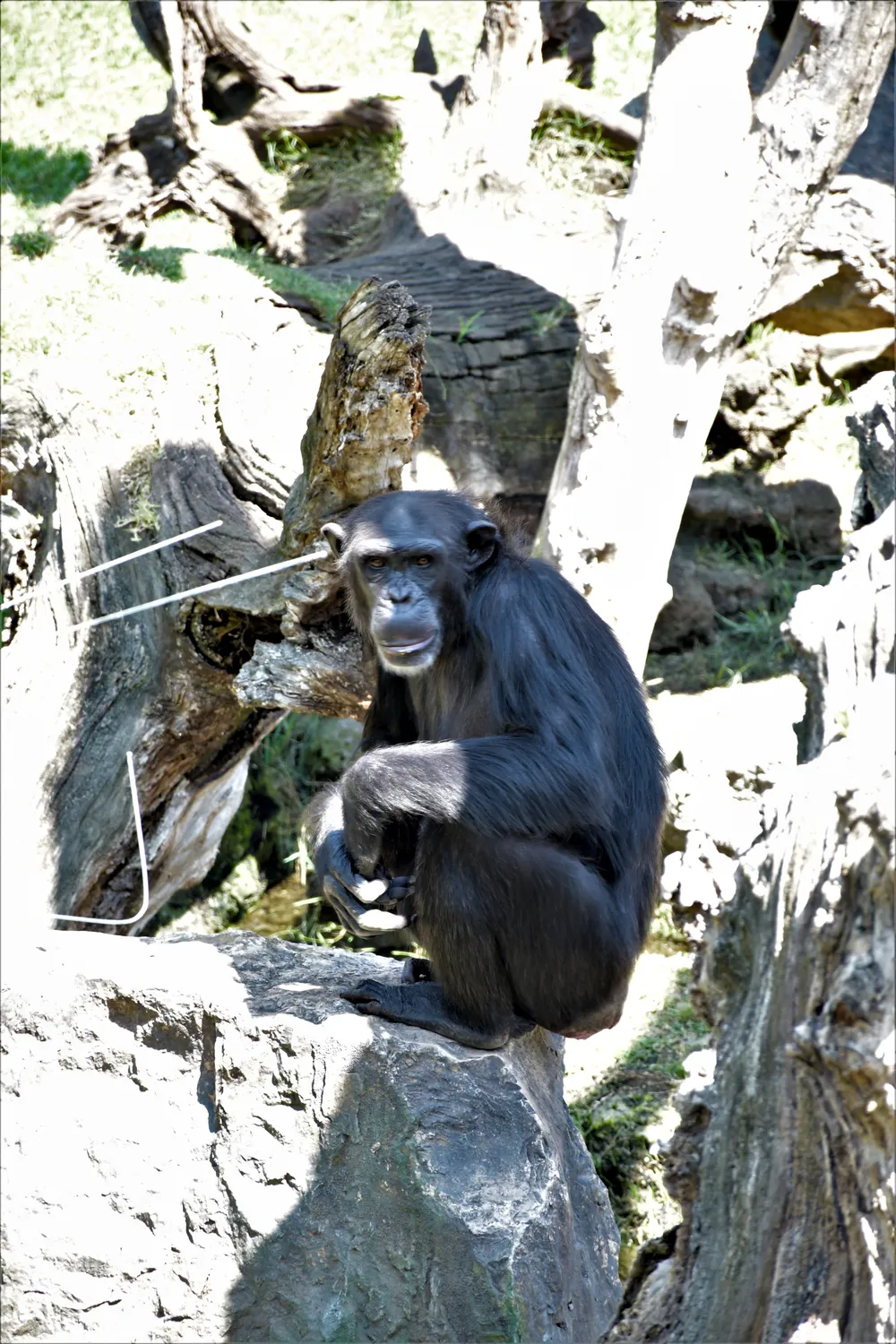
"A chimpanzee (Pan troglodytes)" by Vasil Vyagov / Wikimedia Commons.
Imagine two cousins who look quite similar but act very differently. This is much like the relationship between bonobos and chimpanzees. These two species of great apes are our closest living relatives in the animal kingdom, sharing about 99% of our DNA! However, they have evolved distinct characteristics, offering a fascinating look at how small genetic differences can lead to big variations in behavior and even appearance. Understanding these differences helps us infer their evolutionary relationships and adaptations.
Physically, bonobos are often described as more slender and graceful than chimpanzees. They have longer legs for their body size, a narrower chest, and a smaller head. Their faces tend to be flatter, and their hair is typically parted in the middle. Chimpanzees, on the other hand, are more robust. They have shorter legs, a broader chest, and a more prominent brow ridge. These anatomical similarities and differences are subtle but important clues to their evolutionary paths.
The most striking differences, however, lie in their social structures and behaviors. Chimpanzees are known for their male-dominated societies. Groups of male chimpanzees often form alliances to hunt and patrol their territory, and they can be quite aggressive, sometimes engaging in warfare with neighboring groups. Their diet includes fruits, leaves, and occasionally meat from hunting. Bonobos, living south of the Congo River in central Africa, are famous for their peaceful, female-led societies. Conflicts are often resolved through social interactions, including playful activities. They are primarily frugivorous, meaning their diet mainly consists of fruit, but they also eat leaves and insects.
While both species use tools, chimpanzees are more documented for complex tool use, such as using sticks to fish for termites or rocks to crack nuts. Bonobos are also intelligent and can learn complex tasks, but their observed tool use in the wild is less frequent or elaborate than that of chimpanzees. These differences in behavioral adaptations reflect their varying environments and social needs. Studying bonobos and chimpanzees helps scientists understand the diverse ways primates can evolve from a common ancestor.
Interesting Fact: Bonobos are sometimes called 'pygmy chimpanzees' due to their smaller size, though they are a distinct species with unique characteristics.
Comprehension quiz (10 questions)
1. Which physical feature is more prominent in chimpanzees than bonobos?
2. What percentage of DNA do humans share with bonobos and chimpanzees?
3. Which ape species is known for male-dominated societies?
4. Bonobos primarily resolve conflicts using what?
5. If an ape has long legs and a narrower chest, it is likely a:
6. The passage suggests that differences between bonobos and chimpanzees are important for understanding what?
7. Why might chimpanzees have more documented complex tool use than bonobos?
8. The term 'frugivorous' means an animal mainly eats fruit.
9. Which term describes how species change over time?
10. Based on the passage, which ape likely lives in a more competitive environment?
Perfect for the way you teach
- Build comprehension skills
- Auto-graded quiz
- Differentiated reading
- Read together at home
- Improve fluency
- Quiet reading time
- Reading curriculum support
- Independent practice
- Track Lexile growth