

How Does Rising Sea Level Affect Coastal Environments?
Interactive passage with audio narration, comprehension questions, and printable PDF.
By completing this purchase you agree to our Terms of Use and Privacy Policy. Your subscription renews automatically until you cancel. You can cancel anytime from your account settings. All sales are final and non-refundable. Digital content is available for download in your account immediately upon purchase.
What's included
How Does Rising Sea Level Affect Coastal Environments? preview and details
About this printable How Does Rising Sea Level Affect Coastal Environments? science reading passage, NGSS-aligned (Grade 6)
Sample passage and quiz from How Does Rising Sea Level Affect Coastal Environments?
Reading passage and comprehension quiz preview
What Is The Difference Between Greenhouse Gases And Air Pollution?
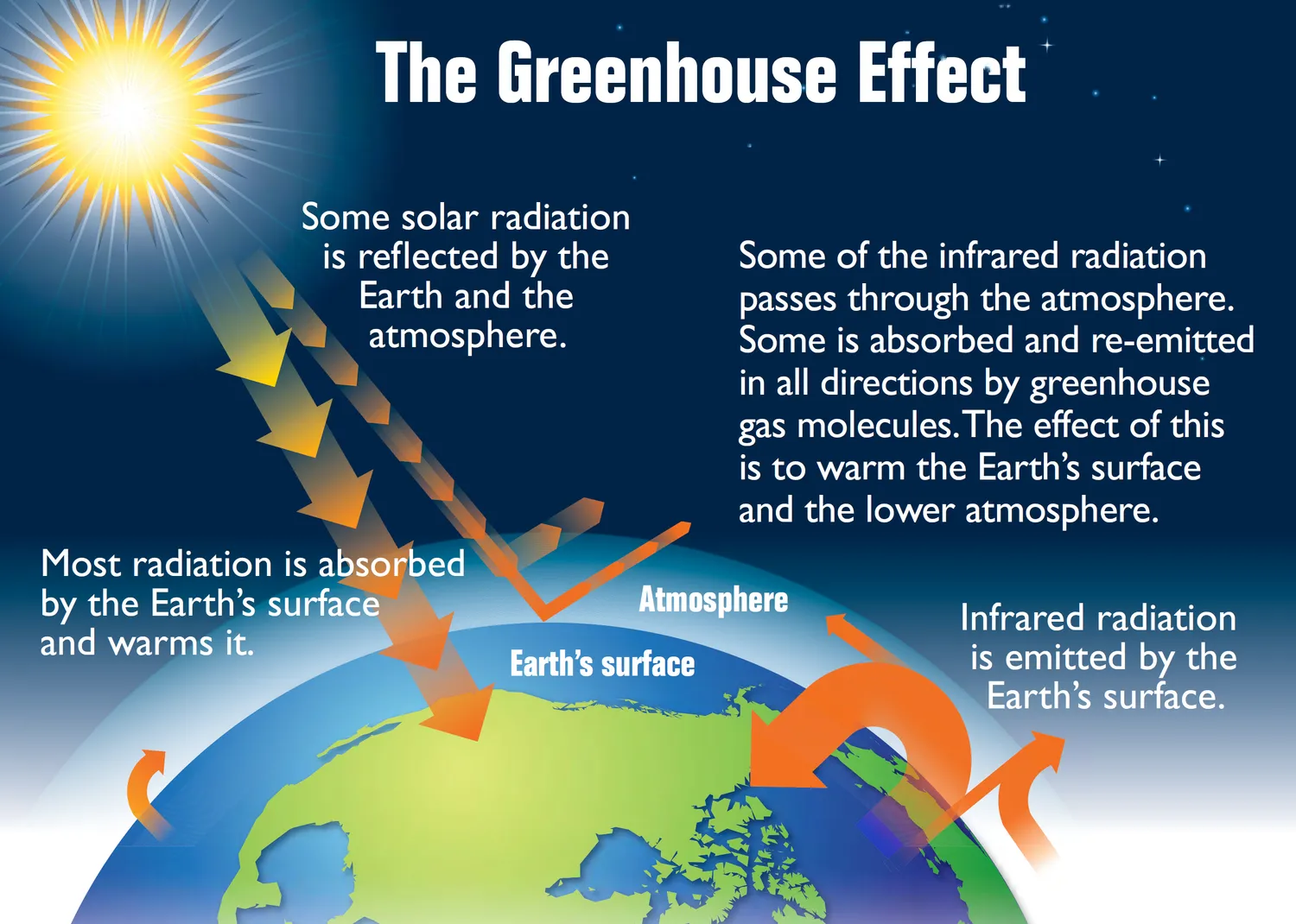
"Earth's greenhouse effect (US EPA, 2012)" by US EPA / Wikimedia Commons.
Have you ever wondered about the air around us? Sometimes, we hear about things like greenhouse gases and air pollution. While both are related to the air and human activities, they are actually quite different! Understanding these differences is super important for protecting our planet.
Let's start with greenhouse gases. Imagine Earth wearing a cozy blanket. That blanket is made of greenhouse gases, like carbon dioxide (CO2), methane, and water vapor. These gases are naturally present in our atmosphere and are essential for life. They trap some of the sun's heat, keeping our planet warm enough for plants, animals, and humans to survive. This natural process is called the greenhouse effect. Without it, Earth would be a frozen ball of ice!
However, human activities have added too many extra greenhouse gases to this natural blanket. When we burn fossil fuels like coal, oil, and natural gas for electricity, driving cars, or running factories, we release large amounts of carbon dioxide. Deforestation, which is cutting down trees, also contributes because trees absorb CO2. More greenhouse gases mean the blanket gets thicker, trapping too much heat. This extra warming of our planet is called global warming, and it leads to bigger changes in our planet's weather patterns, known as climate change.
Now, let's look at air pollution. Air pollution refers to harmful substances, called pollutants, in the air we breathe. Unlike greenhouse gases, which mainly cause warming, air pollution directly impacts our health and visibility. These pollutants can be tiny particles (like soot from fires or diesel engines) or harmful gases (like sulfur dioxide and nitrogen oxides from factories and cars). When you see smog over a city, that's air pollution! Air pollution can make it hard to breathe, cause lung diseases, and irritate our eyes and throats. It can also damage plants and buildings.
So, what's the big difference? Greenhouse gases cause the planet to warm up over a long time (global warming and climate change). They are usually invisible and spread throughout the atmosphere. Air pollution, on the other hand, causes immediate health problems and reduces visibility, often concentrated in specific areas. While some sources like burning fossil fuels contribute to both, their main effects are different.
Think of it this way: greenhouse gases are like turning up the thermostat for the whole house (Earth), making everything warmer. Air pollution is like having smoke in one room, making it hard to breathe right now. Both are serious environmental concerns caused by human impact, and reducing both is crucial for a healthy future for everyone. Monitoring our emissions and finding cleaner energy sources are important steps to minimize these impacts.
Fun Fact: The amount of carbon dioxide in Earth's atmosphere today is higher than it has been in the last 800,000 years!
Comprehension quiz (10 questions)
1. Which gas is essential for Earth's warmth?
2. What causes smog over a city?
3. How do excess greenhouse gases impact Earth?
4. What is deforestation's effect on CO2 levels?
5. Which is an immediate health concern?
6. What is the primary cause of excess CO2?
7. Which term describes Earth's warming blanket?
8. Why is reducing emissions important?
9. What action minimizes human environmental impact?
10. If a factory reduces its soot, what improves?
Perfect for the way you teach
- Build comprehension skills
- Auto-graded quiz
- Differentiated reading
- Read together at home
- Improve fluency
- Quiet reading time
- Reading curriculum support
- Independent practice
- Track Lexile growth