Sensory Processing
Interactive passage with audio narration, comprehension questions, and printable PDF.
By completing this purchase you agree to our Terms of Use and Privacy Policy. Your subscription renews automatically until you cancel. You can cancel anytime from your account settings. All sales are final and non-refundable. Digital content is available for download in your account immediately upon purchase.
What's included
Sensory Processing preview and details
About this printable Sensory Processing science reading passage, NGSS-aligned (Grades 5-8)
Sample passage and quiz from Sensory Processing
Reading passage and comprehension quiz preview
Sensory Processing
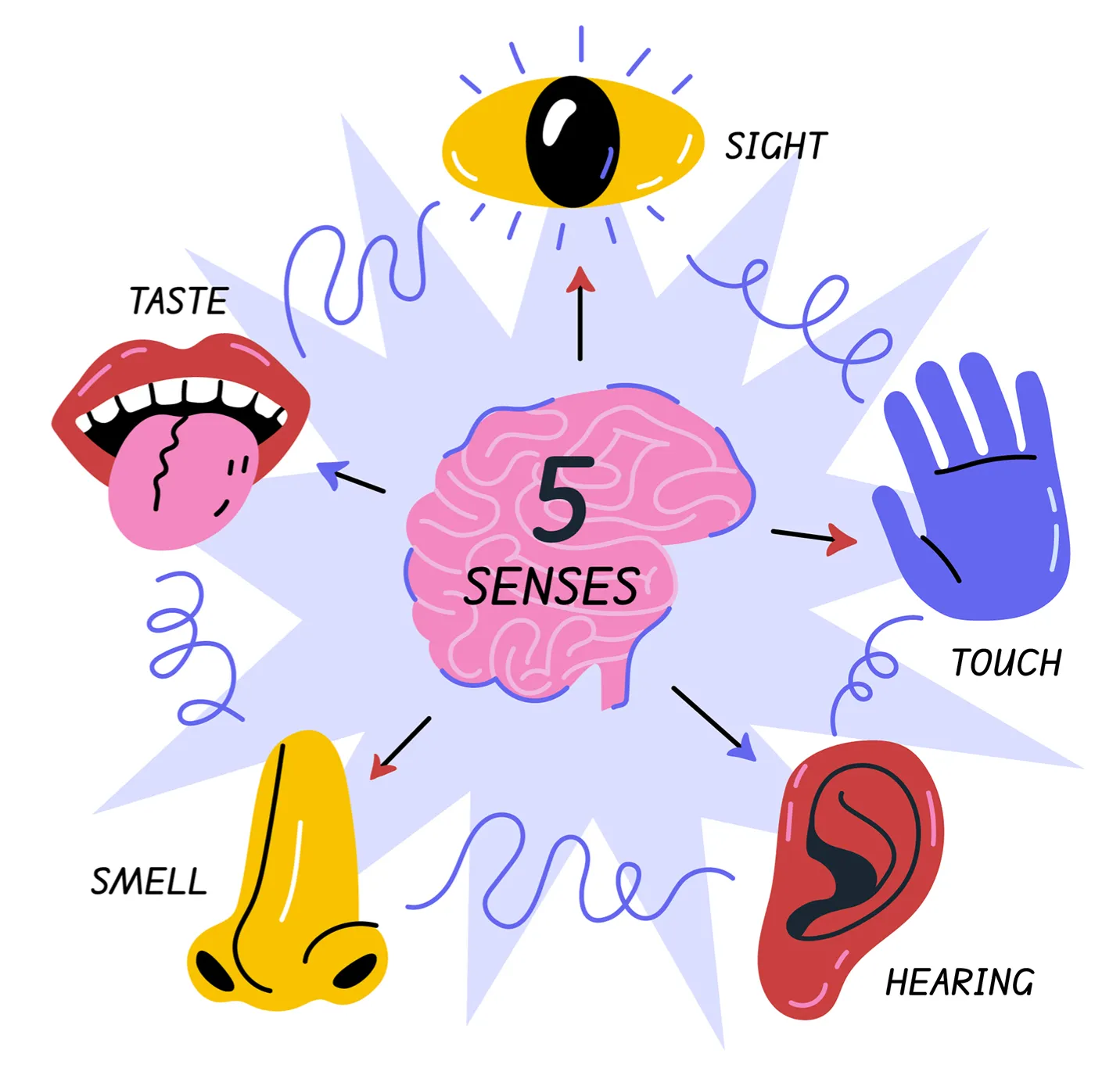
Sensory processing is the system that allows humans and animals to detect and respond to changes in their environment. When a car horn sounds or a flower’s scent drifts by, your body relies on the nervous system to make sense of these events. The process involves specialized receptors in the sense organs, the transmission of signals through nerves, and interpretation by the brain. Understanding sensory processing helps explain not just how we experience the world, but also how we adapt and protect our senses.
How the Five Senses Work Together
Each of the five main senses—sight, hearing, smell, taste, and touch—has distinct receptors designed to detect specific types of information. In the eyes, rods and cones respond to light and color, while the ears use hair cells to detect sound vibrations. The nose contains olfactory receptors that sense airborne chemicals, and the tongue’s taste buds react to molecules dissolved in saliva. The skin is equipped with several types of receptors, each sensitive to pressure, temperature, or pain. When these receptors are activated, they send electrical signals through sensory neurons to the brain, where the information is interpreted. For example, stepping on a sharp object activates pain receptors and triggers an almost immediate reaction.
Sensory Information: Transmission and Interpretation
Once receptors detect a stimulus, the information travels along pathways of the nervous system. Sensory neurons carry signals at speeds up to 120 meters per second. The brain’s cortex receives these signals and determines what they mean. For instance, a sudden bright light causes pupils to contract and the brain to assess whether the light is safe or dangerous. Sometimes, multiple senses work together to give a more complete understanding. Eating food, for example, combines taste, smell, and touch—around 80% of flavor perception comes from smell. Scientific research using imaging technologies has shown how specific brain regions activate with different sensory inputs, illustrating the brain’s role as an information processing center.
Adaptations and Protecting Our Senses
Animals have evolved remarkable adaptations for their environments. Owls have an extraordinary sense of hearing, allowing them to locate prey in the dark, while snakes use heat-sensitive receptors to detect warm-blooded animals. Humans also have adaptations, like the ability to quickly withdraw from pain. However, our senses can be damaged. Loud noises may permanently harm hair cells in the ear, leading to hearing loss. Bright sunlight can damage rods and cones, so eye protection like sunglasses is important. Understanding how sensory processing works helps people make choices that protect their senses and overall health.
Sensory processing is a complex, interconnected system that reveals how organisms interact with their environment. By examining the mechanisms and adaptations of our senses, scientists gain insight into the diversity of life and the importance of protecting these vital systems.
Interesting Fact:
Some sharks can detect electrical signals given off by other animals, using special receptors called ampullae of Lorenzini!
Comprehension quiz (10 questions)
1. What is the main function of sensory processing?
2. Which sense uses rods and cones as receptors?
3. What do olfactory receptors detect?
4. Which part of the nervous system interprets sensory signals?
5. What is meant by 'adaptation' in the context of animal senses?
6. What happens if hair cells in the ear are damaged by loud noise?
7. What percentage of flavor perception is estimated to come from smell?
8. True or False: The skin only has one type of receptor.
9. True or False: Sensory neurons can carry signals at speeds up to 120 meters per second.
10. Which animal uses heat-sensitive receptors to detect warm-blooded prey?
Perfect for the way you teach
- Build comprehension skills
- Auto-graded quiz
- Differentiated reading
- Read together at home
- Improve fluency
- Quiet reading time
- Reading curriculum support
- Independent practice
- Track Lexile growth