Nervous System
Interactive passage with audio narration, comprehension questions, and printable PDF.
By completing this purchase you agree to our Terms of Use and Privacy Policy. Your subscription renews automatically until you cancel. You can cancel anytime from your account settings. All sales are final and non-refundable. Digital content is available for download in your account immediately upon purchase.
What's included
Nervous System preview and details
About this printable Nervous System science reading passage, NGSS-aligned (Grades 5-8)
Sample passage and quiz from Nervous System
Reading passage and comprehension quiz preview
Nervous System
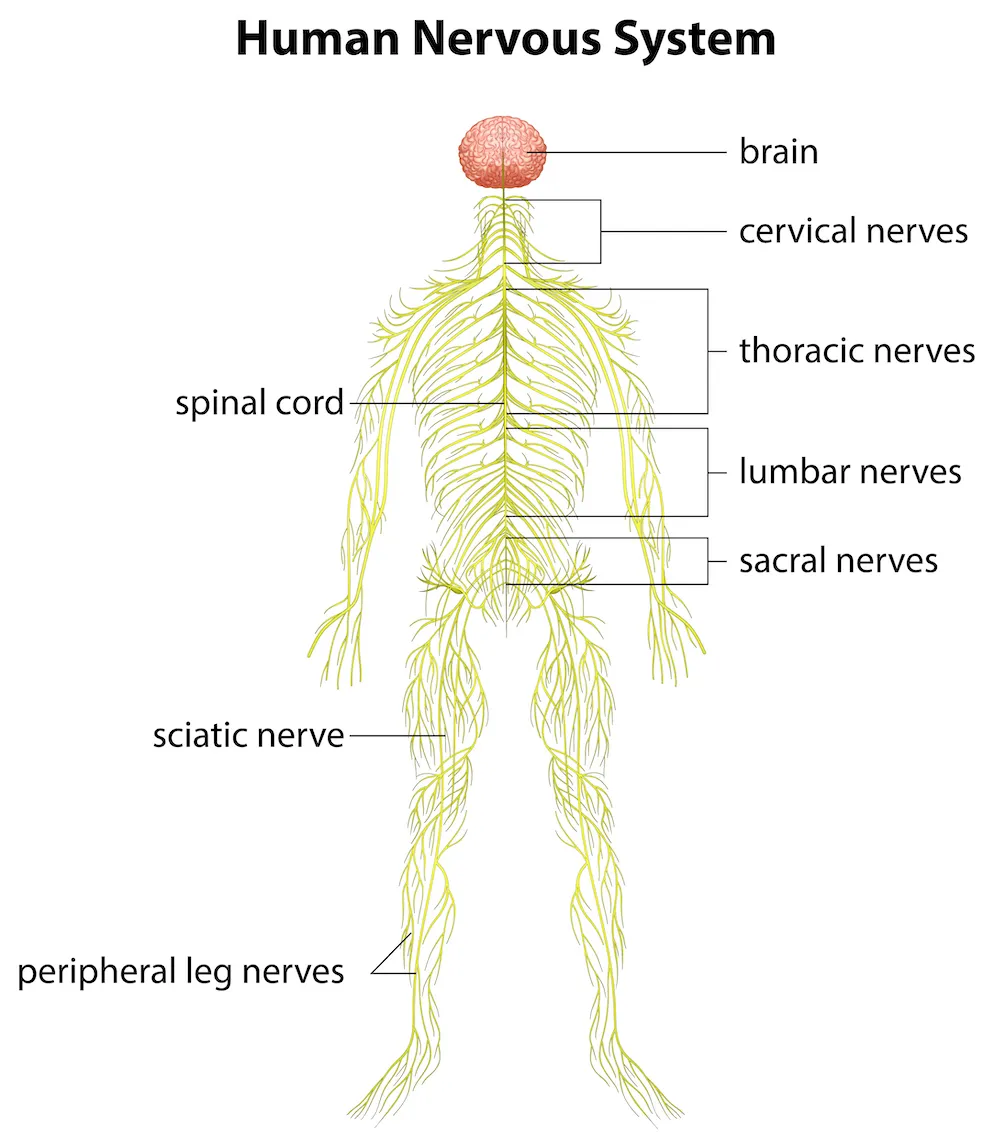
The nervous system is essential for controlling actions, sensing the world, and enabling quick responses to changes in the environment. Every movement, thought, and feeling depends on this complex network of cells and organs. Scientists investigate the nervous system by observing how damage or disease affects behavior and by measuring electrical signals in the body. Understanding how the nervous system works helps us explain everything from reflexes to how we learn new skills.
How the Nervous System Works
The nervous system has two main parts: the central nervous system (CNS) and the peripheral nervous system (PNS). The CNS includes the brain and spinal cord. The brain is the command center, processing information and making decisions. The spinal cord carries signals between the brain and the rest of the body. The PNS is made of nerves that branch out to organs, muscles, and skin. These nerves send messages back and forth between the body and the CNS.
The basic unit of the nervous system is the neuron. Neurons have a cell body, dendrites (which receive signals), and a long axon (which sends signals). When you touch something hot, for example, sensory neurons send electrical signals as fast as 120 meters per second to your spinal cord and brain. Information travels along neurons as electrical impulses and crosses tiny gaps called synapses using chemicals called neurotransmitters.
Brain Regions and Reflexes
The brain has specialized regions with different jobs. The cerebrum controls thinking, memory, senses, and voluntary movements. The cerebellum helps with balance and coordination, making activities like riding a bike possible. The brain stem manages automatic functions such as breathing and heartbeat. Scientists use brain scans and experiments to match brain regions to their functions. For example, when a person solves a math problem, the cerebrum is especially active.
Sometimes, the nervous system acts without the brain’s involvement. A reflex arc is a pathway where a quick response happens automatically, like pulling your hand away from something sharp. In a reflex, signals travel from sensory neurons to the spinal cord and immediately to motor neurons, skipping the brain to save time. This process can take less than a second, protecting the body from harm.
Keeping the Nervous System Healthy
Nervous system health is vital for learning, movement, and overall well-being. Getting enough sleep, wearing helmets to protect the brain during sports, and avoiding drugs and alcohol help keep neurons functioning properly. Long-term lack of sleep can slow reflexes and memory, while injuries to the brain or spinal cord can cause permanent damage. Researchers estimate that wearing a helmet can reduce the risk of serious head injury by up to 85%.
Understanding the nervous system connects to broader science ideas, such as how systems in the body interact and adapt. Advances in neuroscience help doctors treat diseases and improve technology, like artificial limbs that respond to nerve signals.
Interesting Fact:
The human brain contains about 86 billion neurons, each connecting to thousands of others, forming trillions of connections.
Comprehension quiz (10 questions)
1. What are the two main parts of the nervous system?
2. What is the main function of the cerebellum?
3. Which part of the neuron receives signals from other cells?
4. What is a reflex arc?
5. What does 'neurotransmitter' mean as used in the passage?
6. In the context of the passage, what does the word 'synapse' refer to?
7. Why does the brain stem matter for survival?
8. How does wearing a helmet help the nervous system?
9. True or False: The cerebrum is responsible for automatic functions like breathing.
10. True or False: A neuron can send signals as fast as 120 meters per second.
Perfect for the way you teach
- Build comprehension skills
- Auto-graded quiz
- Differentiated reading
- Read together at home
- Improve fluency
- Quiet reading time
- Reading curriculum support
- Independent practice
- Track Lexile growth