This learning resource is available in interactive and printable formats. The interactive worksheet can be played online and assigned to students. The Printable PDF version can be downloaded and printed for completion by hand.
This engaging science passage explains how sound transfers energy through waves and vibrations for Grade 4-5 students. Aligned with NGSS standard 4-PS3-5, the passage explores sound energy, sound waves, vibrations, and how sound travels through different materials like air, water, and solids. Students learn how particles pass energy from one to another, allowing us to hear sounds like a friend calling our name. The passage includes audio integration for enhanced learning, a simplified differentiated version, Spanish translations, glossary terms, multiple-choice questions testing recall and comprehension, writing activities requiring explanation and application, and graphic organizers including a sequence/process table and vocabulary context table. These comprehensive materials help students understand the fundamental concepts of sound energy transfer through concrete examples and age-appropriate explanations that connect scientific principles to everyday experiences.
CONTENT PREVIEW
Expand content preview
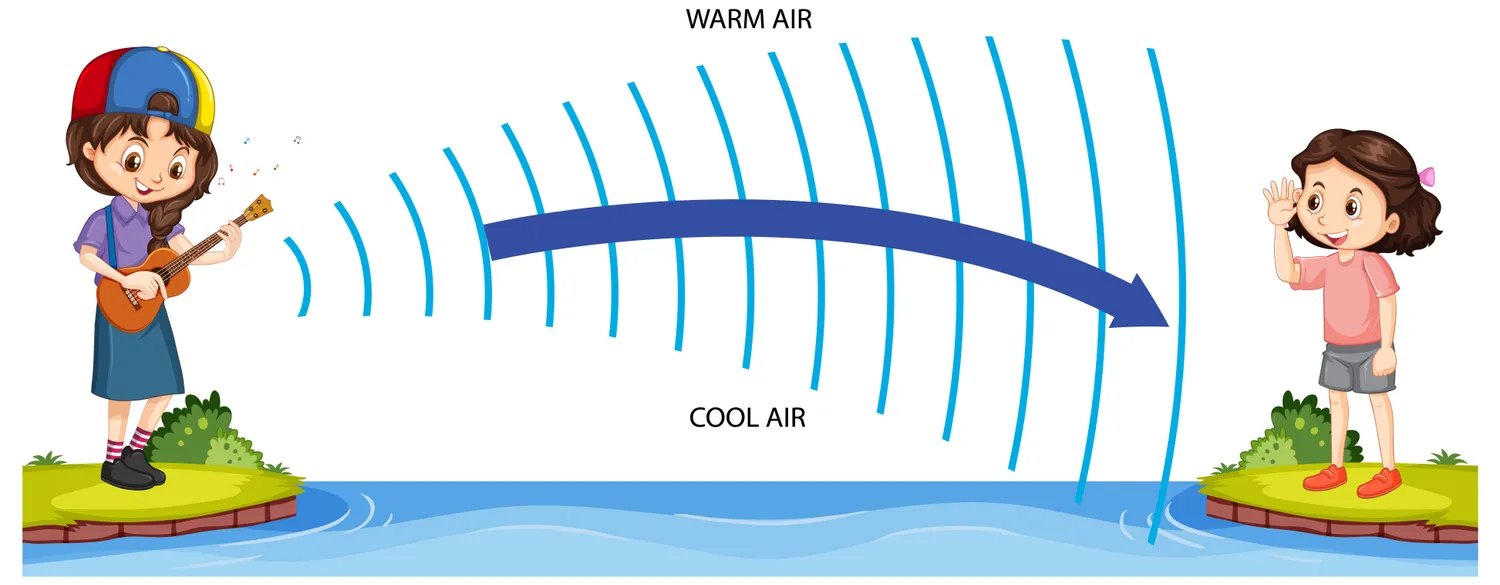
Sound waves are patterns of vibrations that carry energy through materials. Image Credit Freepik.
Sound is a form of energy that travels through materials as vibrations, which are back-and-forth movements that happen very quickly. Sound energy moves from one place to another by making tiny particles in materials shake and bump into each other. This process allows us to hear everything from a whisper to a thunderclap.
When someone speaks, their vocal cords vibrate and create sound waves in the air. Sound waves are patterns of vibrations that carry energy through materials. Think of it like a line of dominoes falling—when one particle vibrates, it bumps into the next particle, passing the energy along. The particles themselves don't travel far, but the energy moves through them like a wave moving across the ocean.
Sound can travel through three types of materials: gases like air, liquids like water, and solids like wood or metal. In each material, sound moves by making particles vibrate and transfer energy to their neighbors. Interestingly, sound actually travels faster through solids than through air because the particles in solids are packed more tightly together, so they can pass energy more quickly.
When your friend calls your name across the playground, sound waves carry energy through the air to your ears. The vibrations travel through the air particles until they reach your eardrum, a thin piece of skin inside your ear that vibrates when sound waves hit it. Your brain then interprets these vibrations as the sound of your friend's voice.
Sound cannot travel through empty space because there are no particles to vibrate and pass the energy along. This is why astronauts in space cannot hear each other talk unless they use radios—there's no air in space to carry the sound waves. However, on Earth, sound energy successfully transfers through air, water, and solid materials every single day.
Understanding how sound transfers energy helps us appreciate the amazing process that allows us to communicate and enjoy music. Whether it's hearing a bird sing, listening to your teacher, or enjoying your favorite song, sound waves are constantly carrying energy from one place to another through vibrating particles all around us.
What is sound?
A form of light energyA form of energy from vibrationsA type of materialA kind of particle
How do sound waves carry energy?
By making particles move long distancesBy creating new particlesBy making particles bump into each otherBy stopping all particle movement
Through which materials can sound travel?
Only through airOnly through waterAir, water, and solidsOnly through empty space
Why does sound travel faster through solids?
Solids have fewer particlesParticles are packed closer togetherSolids are always warmerParticles in solids don't vibrate
What vibrates when sound reaches your ear?
Your brainAir particles onlyYour eardrumYour vocal cords
Why can't astronauts hear in space?
Space is too coldNo particles exist to carry soundTheir ears don't work in spaceSound travels too fast in space
Sound can travel through empty space.
TrueFalse
What are vibrations?
Slow movements that happen onceQuick back-and-forth movementsParticles that don't moveA type of sound wave
Perfect For:
👩🏫 Teachers
• Reading comprehension practice
• Auto-graded assessments
• Literacy skill development
👨👩👧👦 Parents
• Reading practice at home
• Comprehension improvement
• Educational reading time
🏠 Homeschoolers
• Reading curriculum support
• Independent reading practice
• Progress monitoring
Reading Features:
📖
Reading Passage
Engaging fiction or nonfiction text
❓
Comprehension Quiz
Auto-graded questions
📊
Instant Feedback
Immediate results and scoring
📄
Printable Version
Download for offline reading
🔊
Read Aloud
Voice-over with word highlighting
Reviews & Ratings
No reviews yet. Be the first to share your experience!