Abiotic Factors and Biomes
Interactive passage with audio narration, comprehension questions, and printable PDF.
What's included
Abiotic Factors and Biomes preview and details
About this printable Abiotic Factors and Biomes science reading passage, NGSS-aligned (Grades 3-7)
Sample passage and quiz from Abiotic Factors and Biomes
Reading passage and comprehension quiz preview
What Abiotic Factors Determine the Type of Biome?
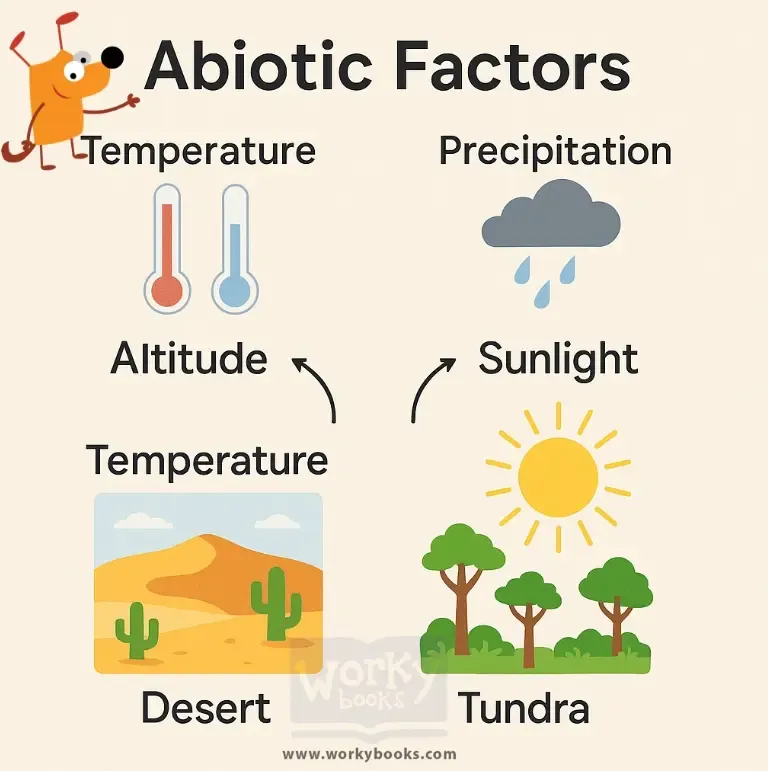
Biomes are large regions on Earth with similar climates, plants, and animals. The type of biome in a particular area is mainly determined by abiotic factors, which are the non-living parts of the environment. Two of the most important abiotic factors that shape biomes are temperature and precipitation (rain and snowfall). These factors influence what kinds of plants can grow, and in turn, what animals can live there.
Temperature affects how hot or cold an area is throughout the year. Tropical biomes, like rainforests, have warm temperatures year-round, while tundras have very cold temperatures. Most plants and animals can only survive in specific temperature ranges, so temperature plays a major role in determining the types of organisms found in a biome.
Precipitation provides water, which all living things need to survive. Deserts, for example, are dry biomes with very little rainfall, so only drought-tolerant plants like cacti can grow there. In contrast, temperate forests and tropical rainforests receive more rain, which supports taller trees, dense plant life, and many animal species.
Other abiotic factors that help define a biome include soil type, sunlight, and altitude. Soil affects what plants can grow by providing nutrients. Sunlight influences how much energy is available for photosynthesis. Altitude, or how high the land is above sea level, can also change the temperature and oxygen levels, creating different conditions even within the same biome.
Understanding these abiotic factors helps scientists predict where certain biomes are found and how ecosystems might change with climate shifts. These factors also show how tightly connected the non-living and living parts of Earth really are.
Fun Fact: Mount Kilimanjaro in Africa has several different biomes on its slopes—from rainforest at the base to tundra near the top—all due to changes in temperature and altitude!
Comprehension quiz (8 questions)
1. What are abiotic factors?
2. Which two abiotic factors most strongly shape a biome?
3. Why can cacti grow in deserts?
4. What kind of biome does a warm climate with high rainfall support?
5. How does altitude affect a biome?
6. Why is precipitation important in a biome?
7. What is the main idea of the passage?
8. If an area gets very cold and dry, what biome is likely to form?
Perfect for the way you teach
- Build comprehension skills
- Auto-graded quiz
- Differentiated reading
- Read together at home
- Improve fluency
- Quiet reading time
- Reading curriculum support
- Independent practice
- Track Lexile growth