What is Solar Radiation
Interactive passage with audio narration, comprehension questions, and printable PDF.
What's included
What is Solar Radiation preview and details
About this printable What is Solar Radiation science reading passage, NGSS-aligned (Grades 3-7)
Sample passage and quiz from What is Solar Radiation
Reading passage and comprehension quiz preview
What is Solar Radiation
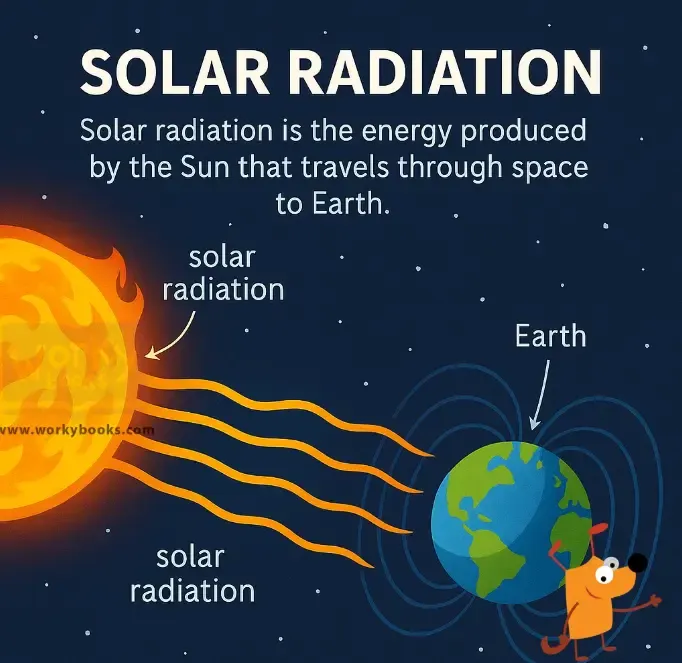
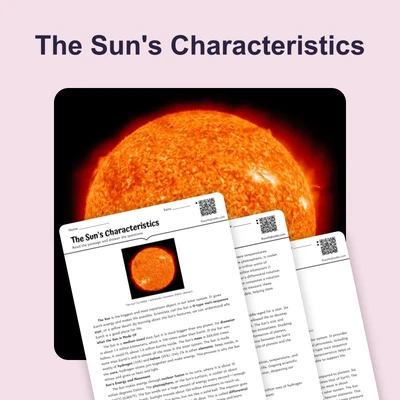
Solar radiation is the energy that comes from the Sun. It travels through space as electromagnetic waves, including visible light, ultraviolet (UV) rays, and infrared (heat). This energy is essential for life on Earth because it powers processes like photosynthesis in plants, helps regulate Earth’s climate, and drives the water cycle.
The Sun constantly emits energy in all directions. When this radiation reaches Earth, some of it is absorbed by the atmosphere, land, and oceans. The rest is reflected back into space. The energy that is absorbed warms the planet, allowing for a range of weather patterns and supporting ecosystems. This warming effect is known as the greenhouse effect, which helps keep Earth’s temperature stable.
Different types of solar radiation affect Earth in different ways. Ultraviolet radiation can cause sunburns and is harmful in large amounts, but it also helps our bodies produce vitamin D. Fortunately, the ozone layer in the atmosphere absorbs most of the harmful UV rays. Infrared radiation is felt as heat and is responsible for warming the air, ground, and water.
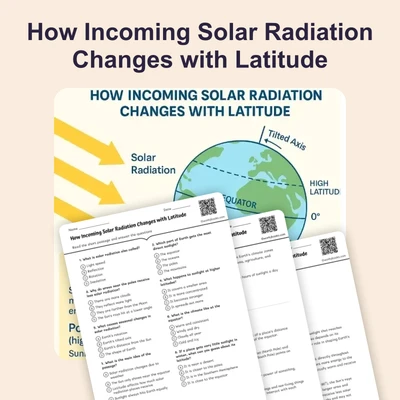
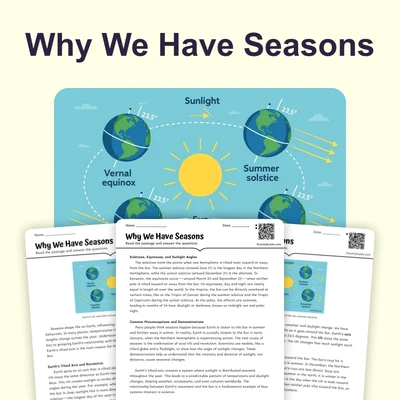
Solar radiation isn’t the same everywhere. It depends on the time of day, season, and location on Earth. For example, areas near the equator receive more direct sunlight year-round, while the poles get less. This difference in solar energy affects climates around the world and explains why some areas are hot and others are cold.
Humans use solar radiation in technology, too. Solar panels convert sunlight into electricity through photovoltaic cells. This clean energy source is becoming more popular as we look for alternatives to fossil fuels. It’s renewable, doesn’t pollute, and is available almost everywhere the Sun shines.
Solar radiation is a powerful natural force that supports life, shapes our environment, and offers clean energy solutions for the future.
Fun Fact: It only takes about 8 minutes and 20 seconds for sunlight to travel 93 million miles from the Sun to Earth!
Comprehension quiz (8 questions)
1. What is solar radiation?
2. Which process in plants depends on solar radiation?
3. What type of solar radiation is felt as heat?
4. What layer of the atmosphere protects us from UV rays?
5. Why do areas near the equator receive more sunlight?
6. How do solar panels use solar radiation?
7. What is the main idea of the passage?
8. If the ozone layer became thinner, what might happen?
Perfect for the way you teach
- Build comprehension skills
- Auto-graded quiz
- Differentiated reading
- Read together at home
- Improve fluency
- Quiet reading time
- Reading curriculum support
- Independent practice
- Track Lexile growth