This learning resource is available in interactive and printable formats. The interactive worksheet can be played online and assigned to students. The Printable PDF version can be downloaded and printed for completion by hand.
This science reading passage, titled "Why Are Sloths Slow? An Energy-Saving Strategy!", explores the fascinating reasons behind the sloth's famous sluggishness. Aligned with NGSS Life Science standards, particularly MS-LS1-5 (Energy Flow in Organisms) and MS-LS4-C (Adaptations), the passage explains that the sloth's extreme slowness is a crucial evolutionary adaptation tied to its low-nutrient, leaf-based diet and exceptionally low metabolic rate. It details how this strategy allows them to conserve energy, influences their body temperature, and even provides effective camouflage from predators in their tropical rainforest habitat. This resource is excellent for fostering reading comprehension, expanding vocabulary related to animal physiology and adaptations, and illustrating how organisms are uniquely suited to their environments and diets.
CONTENT PREVIEW
Expand content preview
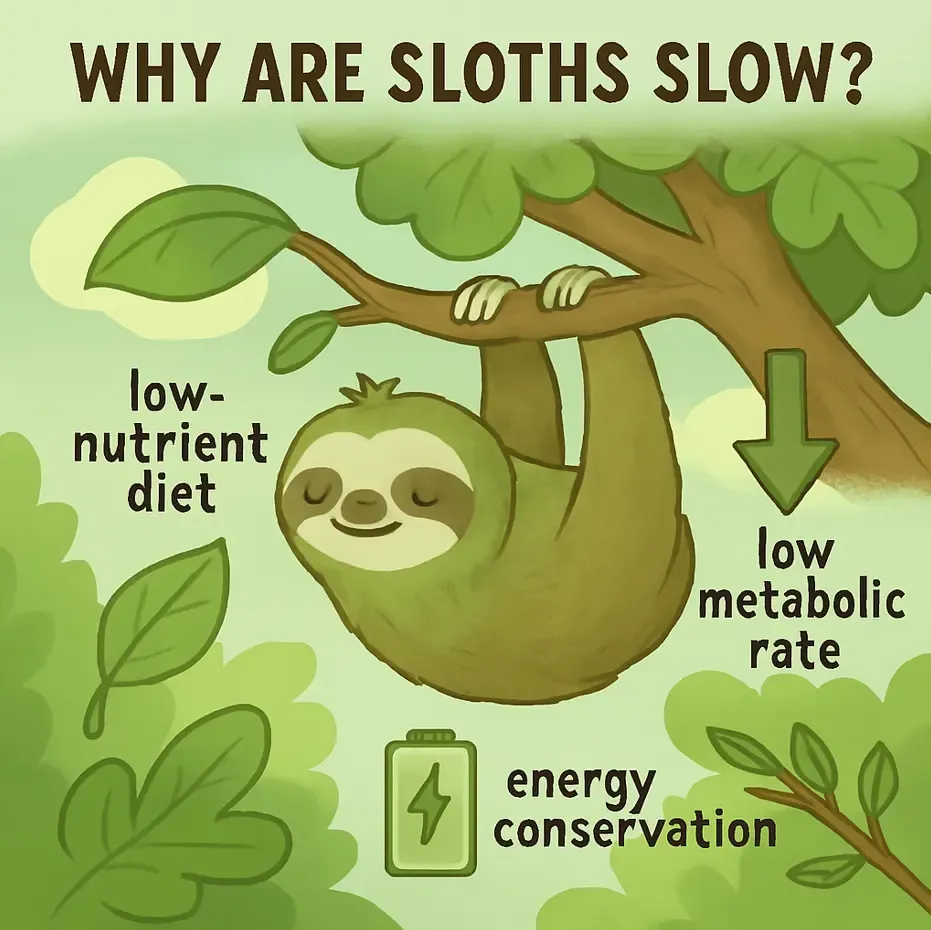
Sloths are famous for their incredibly slow pace, moving with such deliberate speed that they often appear to be in slow motion. But why are sloths slow? This isn't just a quirky habit; it's a brilliant energy-saving strategy that allows them to thrive on a surprisingly low-nutrient diet in the dense tropical rainforests of Central and South America.
The primary reason for a sloth's sluggishness is its exceptionally low metabolic rate. Their metabolism is about half as fast as that of most other mammals their size. This is a direct adaptation to their diet, which consists mainly of leaves. Leaves are very fibrous, difficult to digest, and provide very little energy. By moving slowly and conserving every bit of energy, sloths can survive on a diet that wouldn't sustain faster-moving animals.
A sloth's slow metabolism also affects its body temperature. Unlike many mammals that maintain a constant high body temperature, a sloth's body temperature can fluctuate slightly, further reducing the energy needed for internal heating. Their leisurely movements, whether climbing, eating, or even scratching, minimize energy expenditure. They spend up to 15 hours a day sleeping or resting, another way to save energy.
Beyond saving energy, being slow offers another surprising survival advantage: camouflage. Their unhurried movements and the algae that often grow on their fur (giving them a greenish tint) make them incredibly difficult for predators like jaguars and harpy eagles to spot in the leafy canopy. For sloths, slowness isn't a disadvantage; it's a perfectly adapted way of life that balances their diet, energy needs, and safety in their jungle home.
What is the main reason sloths are slow?
They are lazy.Low metabolic rate.They are too heavy.They prefer sleeping.
What is a sloth's primary food source?
FruitsInsectsLeavesSmall animals
Are leaves high or low in nutrients for sloths?
HighVery highLowNeutral
How does their slow metabolism help sloths?
Makes them faster.Conserves energy.Makes them hungry.Helps them hide easily.
What covers a sloth's fur, aiding camouflage?
MudAlgaeFlowersPollen
What do sloths do for up to 15 hours a day?
HuntSleep or restDig burrowsPlay
What is the main idea of this passage?
Sloths are simply lazy.Sloths are slow due to unique energy adaptations.Sloths are always cold.
Who are some of a sloth's predators?
FrogsJaguarsButterfliesMonkeys
Perfect For:
👩🏫 Teachers
• Reading comprehension practice
• Auto-graded assessments
• Literacy skill development
👨👩👧👦 Parents
• Reading practice at home
• Comprehension improvement
• Educational reading time
🏠 Homeschoolers
• Reading curriculum support
• Independent reading practice
• Progress monitoring
Reading Features:
📖
Reading Passage
Engaging fiction or nonfiction text
❓
Comprehension Quiz
Auto-graded questions
📊
Instant Feedback
Immediate results and scoring
📄
Printable Version
Download for offline reading
🔊
Read Aloud
Voice-over with word highlighting
Reviews & Ratings
No reviews yet. Be the first to share your experience!
Related Content
What's The Main Idea?
These short science texts are a great way to practice main idea. Students will read the paragraphs and then choose the m...
RI.2.6
Reading for Main Details—Birds
This informational text on birds is a great way to practice main idea. Students will read the passage, then give the mai...
RI.2.6RI.2.8
Koi Fish—What’s the Main Idea?
This informational text on koi fish is a great introduction to teaching main idea. Students will be asked, in multiple c...
RI.3.2RF.3.4RI.3.1
Spider—Main Idea
This informational text on spiders is a great introduction to teaching main idea. Students will be asked, in multiple ch...
RI.3.2RF.3.4RI.3.1RI.2.6
Reading for Main Details—Beavers Teeth
This informational text on beavers is a great way to practice main idea. Students will read the passage, then give the m...
RI.2.6RI.2.10
Reading for Main Details—Veternarians
Practie summarizing paragraphs with this fun informational text on veternarians! Students will give the main idea of eac...
RI.2.2RI.2.10
Penguins— Main Purpose
This informational text on penguins with comprehension questions is a great way to practice reading fluency and main ide...
RI.1.2RI.1.10RF.1.4.ARF.1.4.B
Reading for Main Details—Orcas
Practie summarizing paragraphs with this fun science informational text on orcas! Students will give the main idea of ea...
RI.2.2RI.2.10
Informational Text —Learn About Dinosaurs
This informational text on dinosaurs with comprehension questions to follow is perfect for teaching main idea. Students ...
RF.3.4RF.3.4.ARF.3.4.CRI.3.2
Informational Text — Habitats
This short informational text on habitats will teach your students what a habitat is, as well as provide some examples o...
RF.3.4.A
Informational Text —Elephants Facts
This informational text on elephants with comprehension questions to follow is perfect for teaching main idea. Students ...
RF.2.4.ARI.2.1RI.2.2RI.2.6
Main Idea and Supporting Details in Informational Text
RI.3.1RI.3.2RI.3.8
Informational Text — Astronauts
Practice this second grade context clues worksheet with this informational text on astronauts. Students will read the te...
RI.2.4RI.2.10RI.3.4RI.3.10
Ocean Animal Adaptations
Students will read a passage that provides information about various adaptations that marine animals have developed to t...
W.4.9.B
Informational Text —Importance of Sound
This Reading Informational Text Common Core standards calls for 4th graders to be able to effectively describe and analy...
RI.4.5
Informational Text — Penguins
This informational text on penguins is a great way to practice reading comprehension. Students will read the short passa...
RI.2.1RI.2.10
Informational Text — Armadillos
This informational text on armadillos is a great way to practice reading comprehension. Students will read the short pas...
RI.2.1RI.2.10
Informational Text —Sea Stars
Use this second grade worksheet on context clues with this informational text on sea stars. Students will read the text ...
RI.2.4RI.2.10RI.3.4RI.3.10
Informational Text —Bioluminescence
This informational text on bioluminescence will teach your students about this phenomenon. Examples in nature are provid...
RI.3.10RF.3.4RF.3.4.ARI.3.1
Informational Text —Snowflakes
This informational text on snowflakes will teach your students how snowflakes are formed. Images of several different fl...