Decomposing Rectangular Figures: Area
Interactive worksheet with auto-grading, instant feedback, and printable PDF.
By completing this purchase you agree to our Terms of Use and Privacy Policy. Your subscription renews automatically until you cancel. You can cancel anytime from your account settings. All sales are final and non-refundable. Digital content is available for download in your account immediately upon purchase.
What's included
Decomposing Rectangular Figures: Area preview and details
About this worksheet
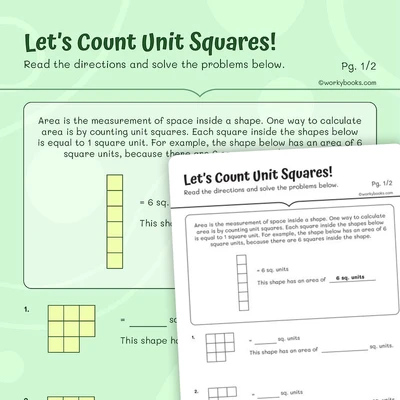
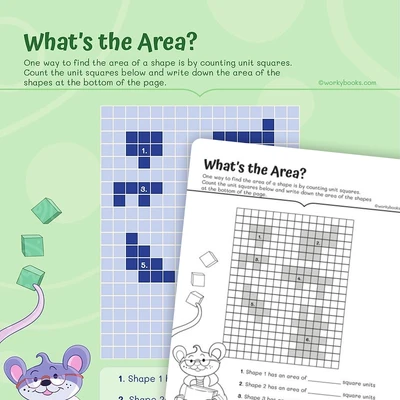
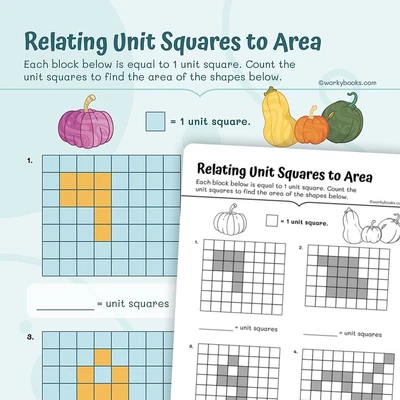
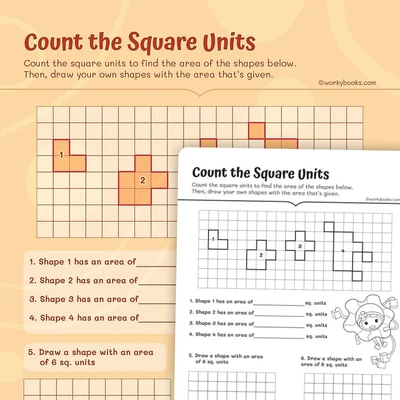
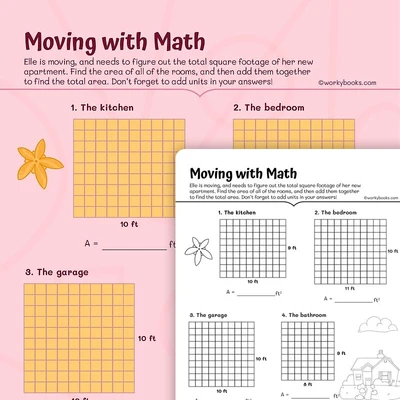
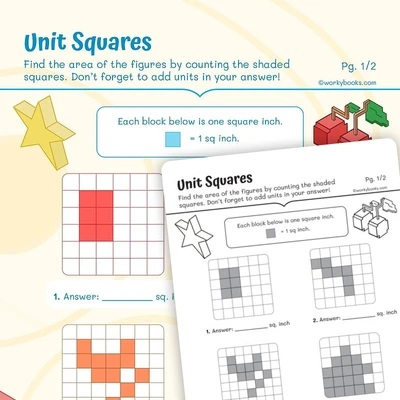
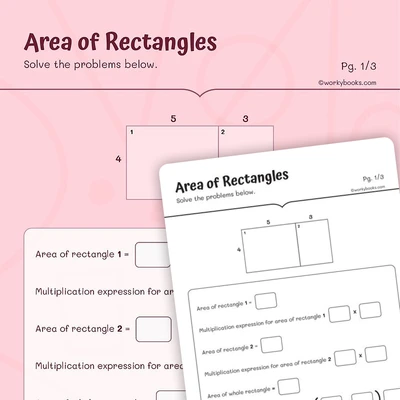
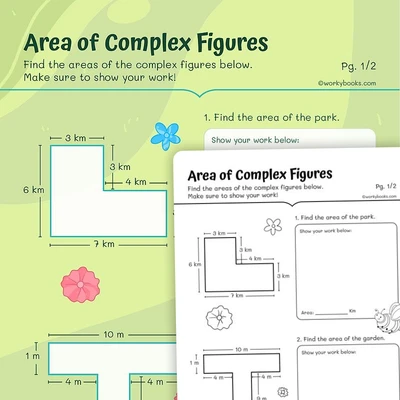
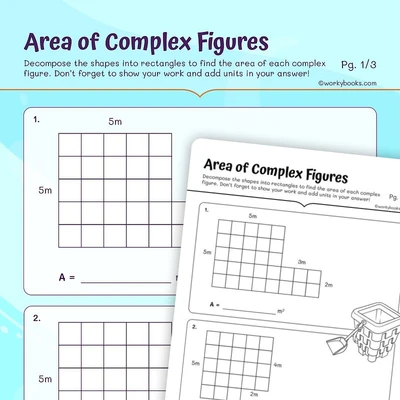
Decomposing Rectangular Figures: Area is an advanced mathematics worksheet designed to enhance students' understanding of complex shapes and area calculations. This interactive and printable worksheet consists of two pages, presenting a total of eight challenging problems. The first page introduces the concept of decomposing rectangular figures with four visual examples, allowing students to grasp the idea of breaking down complex shapes into simpler components.
This interactive and printable worksheet progresses to more complex tasks on the second page, where students are required to not only decompose the figures but also calculate the areas of individual sections and the entire shape. By incorporating different shading patterns (dark, light, striped, and dotted), the worksheet helps students visually distinguish between various components of each figure. This approach promotes critical thinking, spatial reasoning, and problem-solving skills while reinforcing the fundamental concepts of area calculation and shape composition. The worksheet's structure encourages a step-by-step approach to solving complex area problems, fostering a deeper understanding of geometric principles and their practical applications.
What will your child learn through this worksheet?
- How to decompose complex rectangular figures into simpler shapes
- Calculating areas of individual components within a larger shape
- Understanding the relationship between component areas and the total area of a figure
- Applying problem-solving strategies to complex geometric scenarios
Learning Outcomes
Cognitive
- Students will accurately decompose complex rectangular figures into simpler components
- Students will correctly calculate and sum the areas of individual sections to find the total area of a complex shape
Psychomotor
- Students will improve their ability to visually break down complex shapes into simpler forms
- Students will enhance their skills in drawing or sketching geometric figures and their components
Affective
- Students will develop confidence in tackling complex geometric problems
- Students will appreciate the value of systematic approaches in problem-solving
Interpersonal/Social
- Students will be able to explain their decomposition and calculation strategies to peers or teachers
- Students will learn to collaborate with classmates to compare different approaches to solving complex area problems
Tags
area calculation, decomposing shapes, rectangular figures, geometry, spatial reasoning, problem-solving, complex shapes, mathematical analysis, visual mathematics
Common Core standards covered
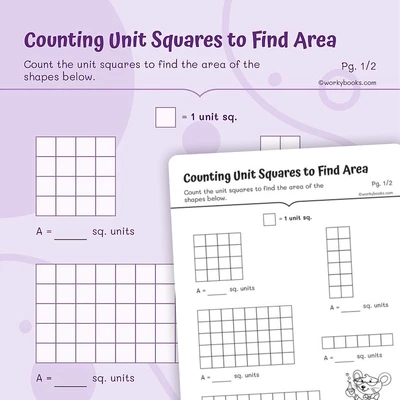
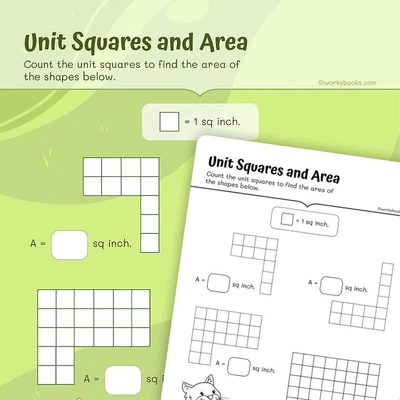
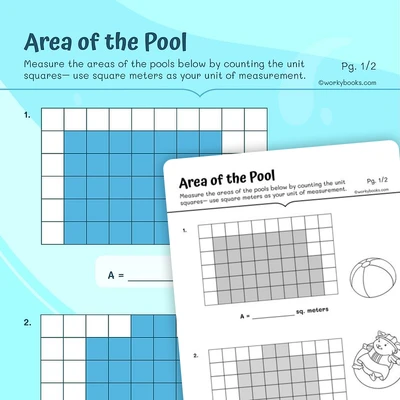
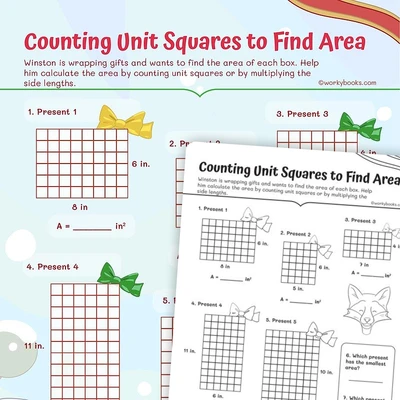
Measure areas by counting unit squares (square cm, square m, square in, square ft, and improvised units).
Recognize area as additive. Find areas of rectilinear figures by decomposing them into non-overlapping rectangles and adding the areas of the non-overlapping parts, applying this technique to solve real world problems.
Perfect for the way you teach
- Assign in one click
- Track progress per student
- Auto-graded results
- Practice at home
- Print or do on-screen
- Build skill mastery
- Standards-aligned
- Self-paced
- Ready-to-use today