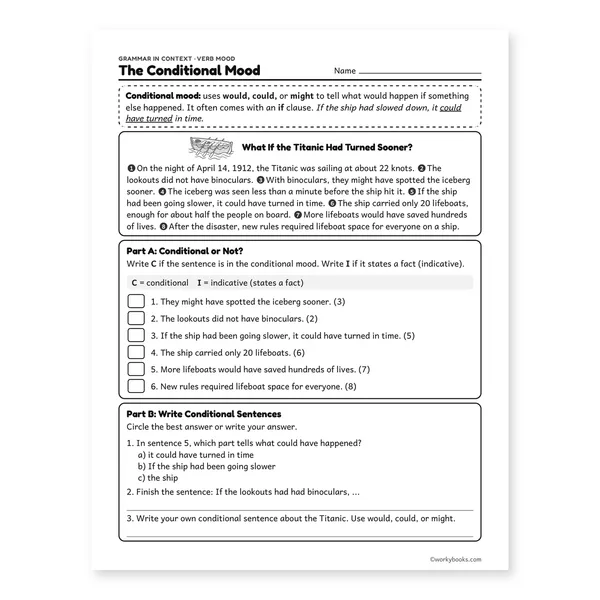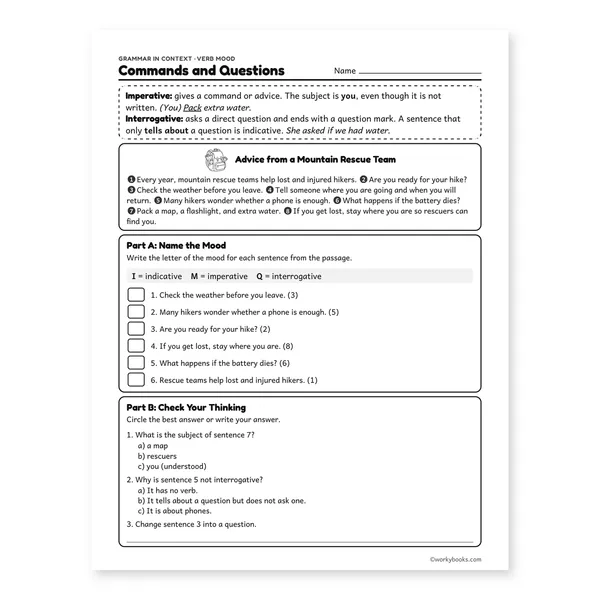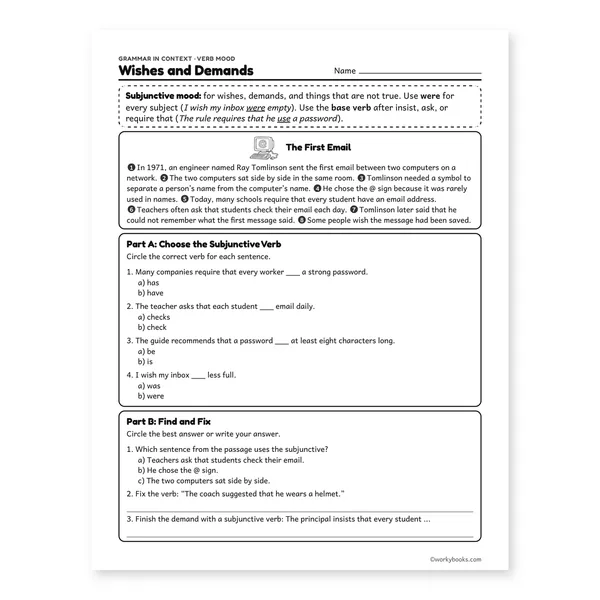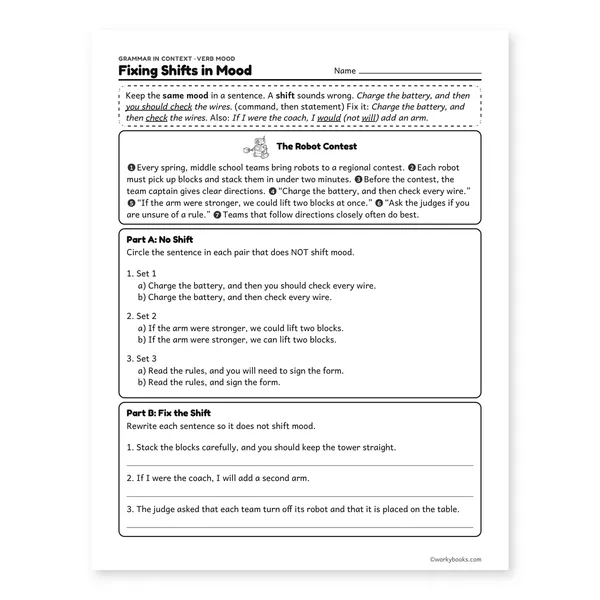

The Great Molasses Flood: Active and Passive Voice
Interactive worksheet with auto-grading, instant feedback, and printable PDF.
By completing this purchase you agree to our Terms of Use and Privacy Policy. Your subscription renews automatically until you cancel. You can cancel anytime from your account settings. All sales are final and non-refundable. Digital content is available for download in your account immediately upon purchase.
What's included
The Great Molasses Flood: Active and Passive Voice preview and details
About this worksheet
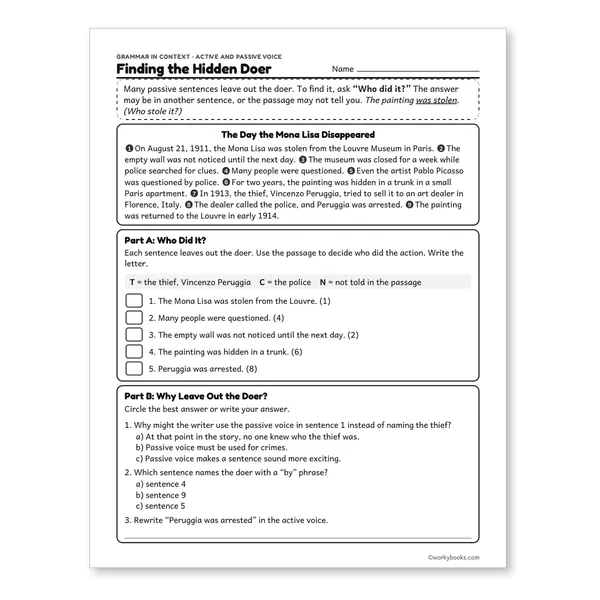
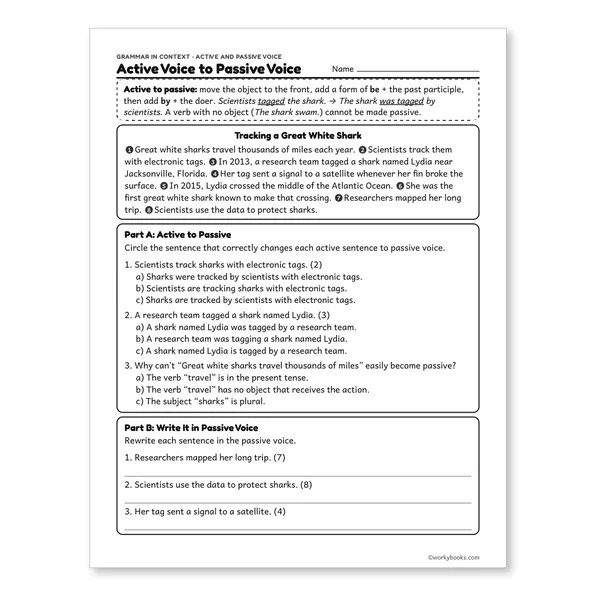
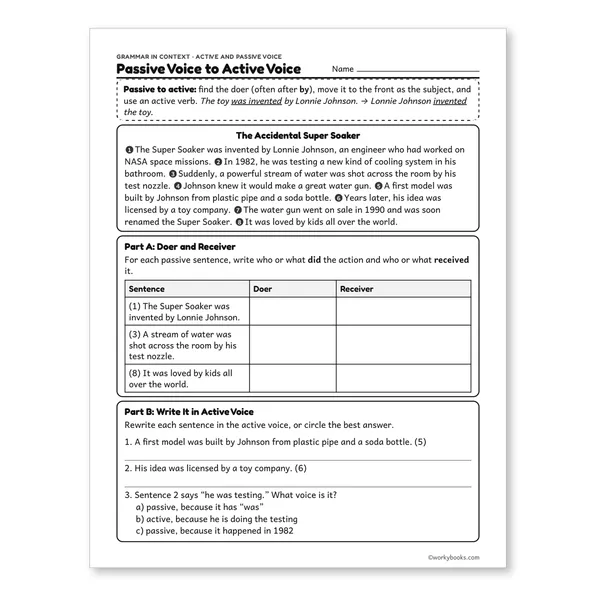
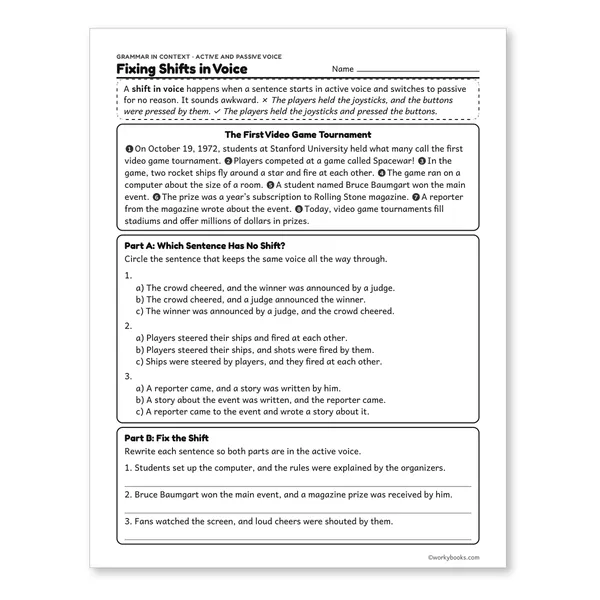
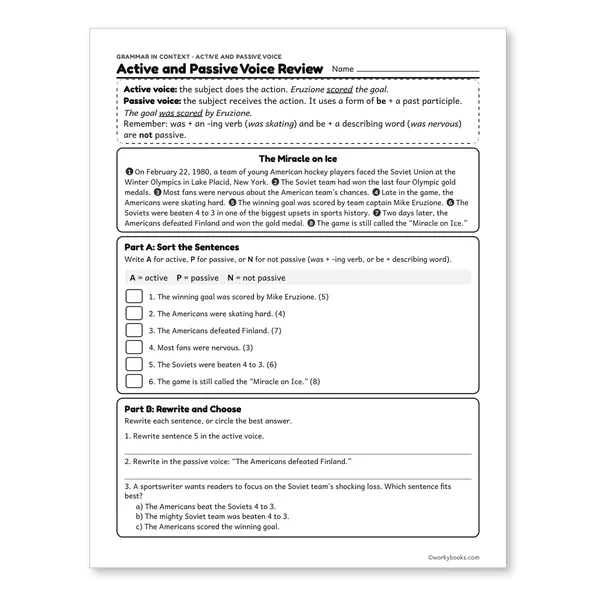
Active and Passive Voice: The Great Molasses Flood, an 8th Grade ELA Grammar Worksheet
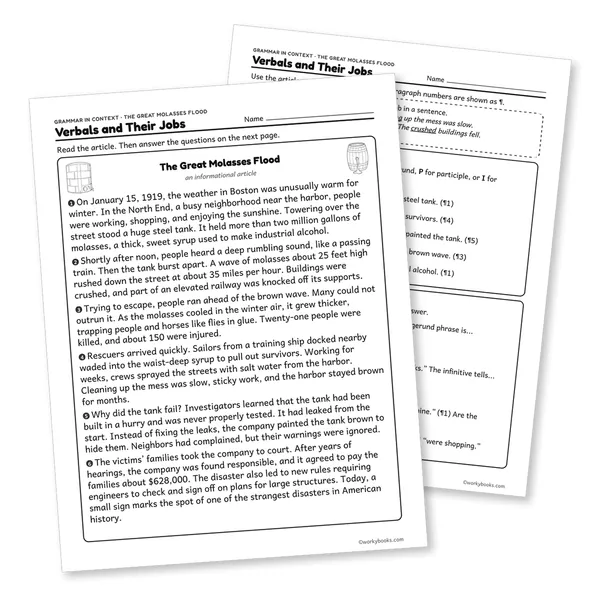
"Buildings were crushed." "Sailors waded into the syrup." Which sentence names the doer? In this 8th grade ELA grammar worksheet, students learn active and passive voice through a true story: the 1919 Great Molasses Flood in Boston. The practice sentences come from the article, so students see how real writers use both voices.
What Students Do
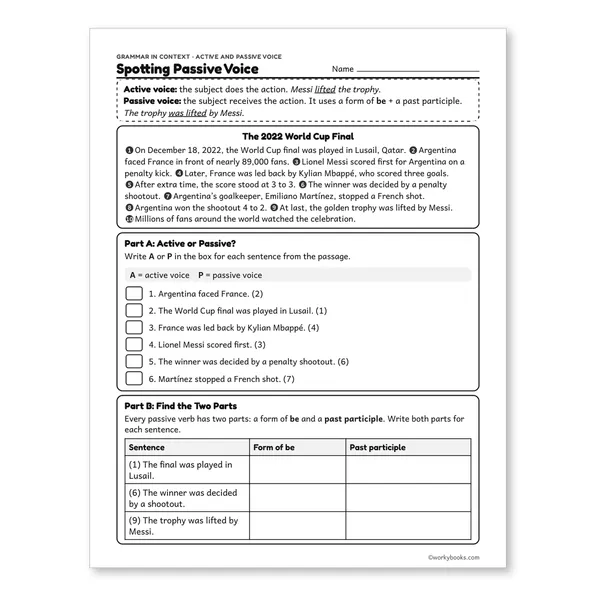
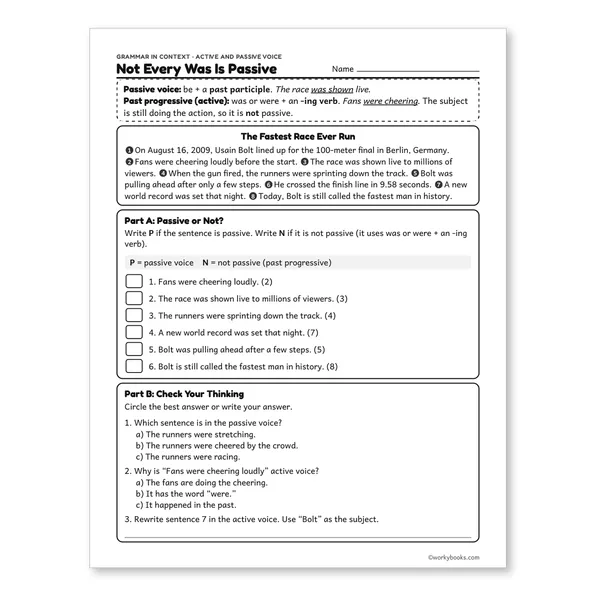
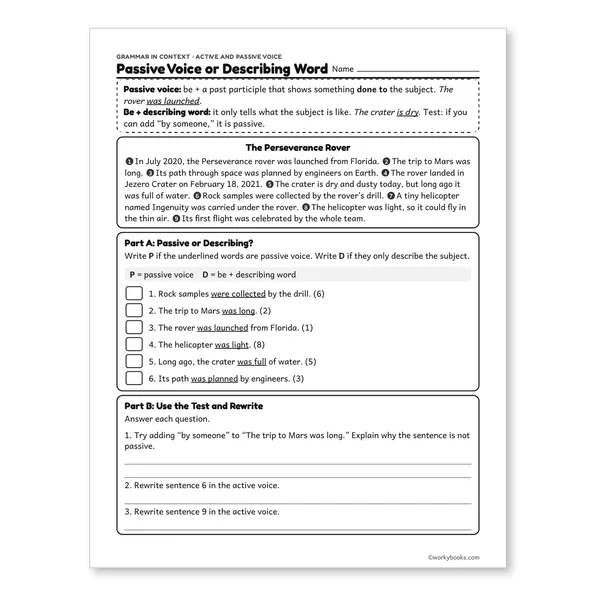
- A teach box explains active voice and passive voice (a form of "be" plus a past participle)
- Part A: label six sentences as active or passive
- Part B: rewrite one sentence in active voice and one in passive voice, then explain why the writer chose passive for "their warnings were ignored"
Standards
CCSS L.8.1b: form and use verbs in the active and passive voice. Supports L.8.3a (use verbs in the active and passive voice to achieve particular effects).
Teaching Tip
Passive voice is not wrong. Ask students who the writer was protecting, or focusing away from, in "their warnings were ignored."
- 3 pages: the full article, one activity page, and a visual answer key
- No prep, print and go, black and white friendly
- A quick grammar lesson that also builds reading stamina
Perfect for the way you teach
- Assign in one click
- Track progress per student
- Auto-graded results
- Practice at home
- Print or do on-screen
- Build skill mastery
- Standards-aligned
- Self-paced
- Ready-to-use today