Ming's Wind Turbine Project
Interactive passage with audio narration, comprehension questions, and printable PDF.
What's included
Ming's Wind Turbine Project preview and details
About this printable Ming's Wind Turbine Project science reading passage, NGSS-aligned (Grades 4-5)
Sample passage and quiz from Ming's Wind Turbine Project
Reading passage and comprehension quiz preview
Energy from Wind
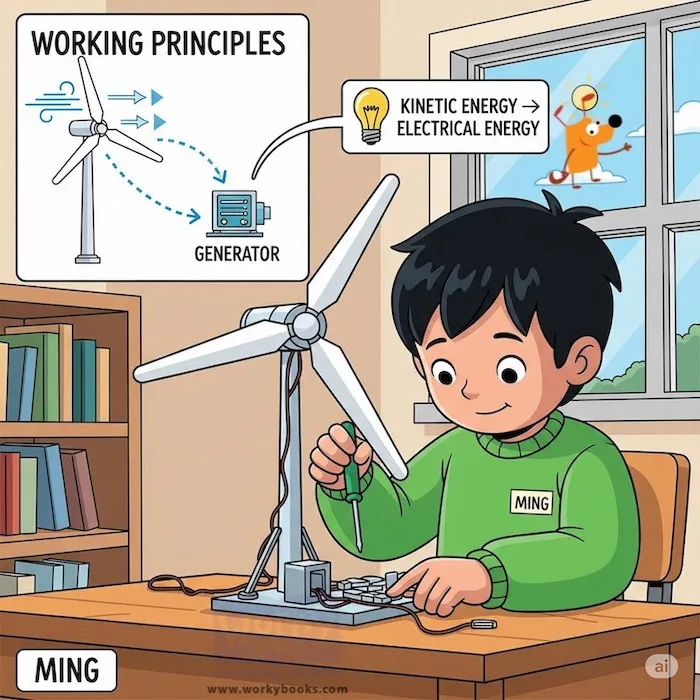
For his engineering class project, Ming is building a miniature wind turbine. He has been learning about wind energy and how wind is used to generate electricity. When wind spins the blades of a turbine, it captures kinetic energy and converts it into electrical energy using a generator.
Many wind farms around the world use hundreds of huge turbines to capture wind energy. Wind is considered a renewable energy source because it won’t run out like fossil fuels. Ming read that over 50 countries now use wind power. Some advantages are that wind energy doesn’t pollute air or water like burning coal or natural gas. A disadvantage is that areas must have the right wind conditions.
Ming created a model wind turbine using wood, plastic blades, motors and LEDs. When he blows air on the blades with a fan, the LEDs light up to show the wind energy being converted to electricity. Ming put together an awesome project about wind power!
Comprehension quiz (4 questions)
1. What is Ming building for his project?
2. What energy is converted by wind turbines?
3. What are some advantages of wind power?
4. How does Ming demonstrate wind energy conversion?
Common Core standards for Ming's Wind Turbine Project
By the end of the year, read and comprehend informational texts, including history/social studies, science, and technical texts, at the high end of the grades 2–3 text complexity band independently and proficiently.
By the end of the year, read and comprehend literature, including stories and poetry, in the grades 2–3 text complexity band proficiently, with scaffolding as needed at the high end of the range.
Recount stories, including fables and folktales from diverse cultures, and determine their central message, lesson, or moral.
Ask and answer questions to demonstrate understanding of a text, referring explicitly to the text as the basis for the answers.
By the end of the year, read and comprehend literature, including stories, dramas, and poetry, at the high end of the grades 2–3 text complexity band independently and proficiently.
Recount stories, including fables, folktales, and myths from diverse cultures; determine the central message, lesson, or moral and explain how it is conveyed through key details in the text.
Describe characters in a story (e.g., their traits, motivations, or feelings) and explain how their actions contribute to the sequence of events.
Perfect for the way you teach
- Build comprehension skills
- Auto-graded quiz
- Differentiated reading
- Read together at home
- Improve fluency
- Quiet reading time
- Reading curriculum support
- Independent practice
- Track Lexile growth