Chesapeake Bay: An Important Estuary — Reading Comprehension
Rate this
Premium Resource
Present
Present in classroom. No work saved
Assign
Classroom with student accounts, Track progress
Quick Play
No student accounts, assign with a link
Grades
3
4
5
6
7
8
PRINT+DIGITAL RESOURCE
This learning resource is available in interactive and printable formats. The interactive worksheet can be played online and assigned to students. The Printable PDF version can be downloaded and printed for completion by hand.
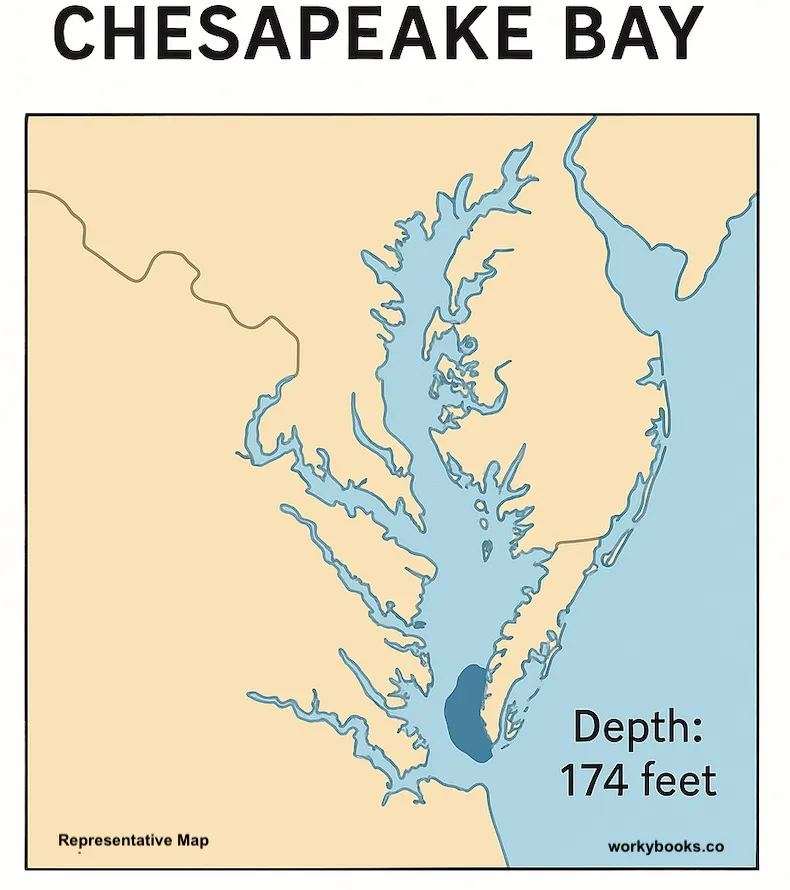
This audio passage introduces students to the Chesapeake Bay, the largest estuary in the United States. Located between Maryland and Virginia, it stretches 200 miles and averages just 21 feet deep, with its deepest point, 'The Hole,' reaching 174 feet. Students learn about its unique characteristics, including its brackish water ecosystem that supports blue crabs, oysters, striped bass, wetlands, and marshes. The passage emphasizes the bay’s importance for humans as a center of fishing, crabbing, and coastal protection. It also covers environmental challenges such as pollution and excess nutrients and highlights restoration efforts. This reading aligns with NGSS Life Science: Structure and Function and helps students understand the relationship between estuarine ecosystems and living organisms. Fun facts make learning engaging, and audio integration ensures accessibility for all learners.
CONTENT PREVIEW
Expand content preview
Chesapeake Bay: A Giant Bathtub Where Rivers Meet the Ocean
Chesapeake Bay is America’s largest estuary. An estuary is a special place where fresh water from rivers mixes with salt water from the ocean. The Bay is shaped like a huge arm, stretching about 200 miles between the states of Maryland and Virginia. Over 150 rivers and streams flow into it, carrying water, soil, and nutrients.
This mixture of fresh and salt water creates a unique home for many plants and animals. Chesapeake Bay is famous for its blue crabs. These crabs are not only important to the Bay’s ecosystem, but also to the people who catch them for food. Oysters are another special animal here. Oysters act like natural filters; they clean the water by eating tiny particles. Fish such as striped bass swim through the Bay, and birds like the great blue heron hunt for fish along the shores.
For thousands of years, Native Americans and early settlers depended on the Chesapeake Bay for food and transportation. They caught fish, gathered oysters, and used the rivers to travel. Today, more than 17 million people live near the Bay. Cities, farms, and factories all use its water resources.
However, Chesapeake Bay faces challenges. Pollution from cities and farms can wash into the Bay, making the water dirty and harming animals. That’s why conservation is so important. People work together to keep the Bay clean by reducing pollution and protecting the land around it. Healthy waterways mean healthy homes for animals and people.
Interesting Fact: Chesapeake Bay is so big that it has over 11,000 miles of shoreline—more than the entire U.S. West Coast!
What is Chesapeake Bay?
Largest estuary in the U.S.A mountain rangeA desertA rainforest
What animal helps clean Bay water?
OystersBlue crabsGreat blue heronsStriped bass
How many people live near the Bay?
Over 17 millionOne million100,000500,000
Why is conservation important for the Bay?
To keep water cleanTo build more citiesTo make desertsTo remove rivers
What could happen if pollution increases?
Animals get harmedMore blue crabsCleaner waterMore rivers
If oysters were gone, what might happen?
Water gets dirtierMore fishNo riversMore animals
Chesapeake Bay is shaped like a giant arm. True or false?
TrueFalse
What is an estuary?
Where rivers meet oceanA dry areaA mountainA forest
Perfect For:
👩🏫 Teachers
• Reading comprehension practice
• Auto-graded assessments
• Literacy skill development
👨👩👧👦 Parents
• Reading practice at home
• Comprehension improvement
• Educational reading time
🏠 Homeschoolers
• Reading curriculum support
• Independent reading practice
• Progress monitoring
Reading Features:
📖
Reading Passage
Engaging fiction or nonfiction text
❓
Comprehension Quiz
Auto-graded questions
📊
Instant Feedback
Immediate results and scoring
📄
Printable Version
Download for offline reading
🔊
Read Aloud
Voice-over with word highlighting
Reviews & Ratings
No reviews yet. Be the first to share your experience!
Related Content
What's The Main Idea?
These short science texts are a great way to practice main idea. Students will read the paragraphs and then choose the m...
RI.2.6
Reading for Main Details—Birds
This informational text on birds is a great way to practice main idea. Students will read the passage, then give the mai...
RI.2.6RI.2.8
Koi Fish—What’s the Main Idea?
This informational text on koi fish is a great introduction to teaching main idea. Students will be asked, in multiple c...
RI.3.2RF.3.4RI.3.1
Spider—Main Idea
This informational text on spiders is a great introduction to teaching main idea. Students will be asked, in multiple ch...
RI.3.2RF.3.4RI.3.1RI.2.6
Reading for Main Details—Beavers Teeth
This informational text on beavers is a great way to practice main idea. Students will read the passage, then give the m...
RI.2.6RI.2.10
Reading for Main Details—Veternarians
Practie summarizing paragraphs with this fun informational text on veternarians! Students will give the main idea of eac...
RI.2.2RI.2.10
Penguins— Main Purpose
This informational text on penguins with comprehension questions is a great way to practice reading fluency and main ide...
RI.1.2RI.1.10RF.1.4.ARF.1.4.B
Reading for Main Details—Orcas
Practie summarizing paragraphs with this fun science informational text on orcas! Students will give the main idea of ea...
RI.2.2RI.2.10
Informational Text —Learn About Dinosaurs
This informational text on dinosaurs with comprehension questions to follow is perfect for teaching main idea. Students ...
RF.3.4RF.3.4.ARF.3.4.CRI.3.2
Informational Text — Habitats
This short informational text on habitats will teach your students what a habitat is, as well as provide some examples o...
RF.3.4.A
Informational Text —Elephants Facts
This informational text on elephants with comprehension questions to follow is perfect for teaching main idea. Students ...
RF.2.4.ARI.2.1RI.2.2RI.2.6
Main Idea and Supporting Details in Informational Text
RI.3.1RI.3.2RI.3.8
Informational Text — Astronauts
Practice this second grade context clues worksheet with this informational text on astronauts. Students will read the te...
RI.2.4RI.2.10RI.3.4RI.3.10
What Is the Main Source of Carbon in an Ecosystem?
This NGSS-aligned science reading passage helps middle school students explore the main source of carbon in ecosystems: ...
MS-LS2-3
Informational Text —Importance of Sound
This Reading Informational Text Common Core standards calls for 4th graders to be able to effectively describe and analy...
RI.4.5
Informational Text — Armadillos
This informational text on armadillos is a great way to practice reading comprehension. Students will read the short pas...
RI.2.1RI.2.10
Informational Text — Penguins
This informational text on penguins is a great way to practice reading comprehension. Students will read the short passa...
RI.2.1RI.2.10
Informational Text —Sea Stars
Use this second grade worksheet on context clues with this informational text on sea stars. Students will read the text ...
RI.2.4RI.2.10RI.3.4RI.3.10
Informational Text —Bioluminescence
This informational text on bioluminescence will teach your students about this phenomenon. Examples in nature are provid...
RI.3.10RF.3.4RF.3.4.ARI.3.1
Informational Text —Snowflakes
This informational text on snowflakes will teach your students how snowflakes are formed. Images of several different fl...