Carbon in Ecosystems
Interactive passage with audio narration, comprehension questions, and printable PDF.
What's included
Carbon in Ecosystems preview and details
About this printable Carbon in Ecosystems science reading passage, NGSS-aligned (Grades 3-7)
Sample passage and quiz from Carbon in Ecosystems
Reading passage and comprehension quiz preview
What Is the Main Source of Carbon in an Ecosystem?
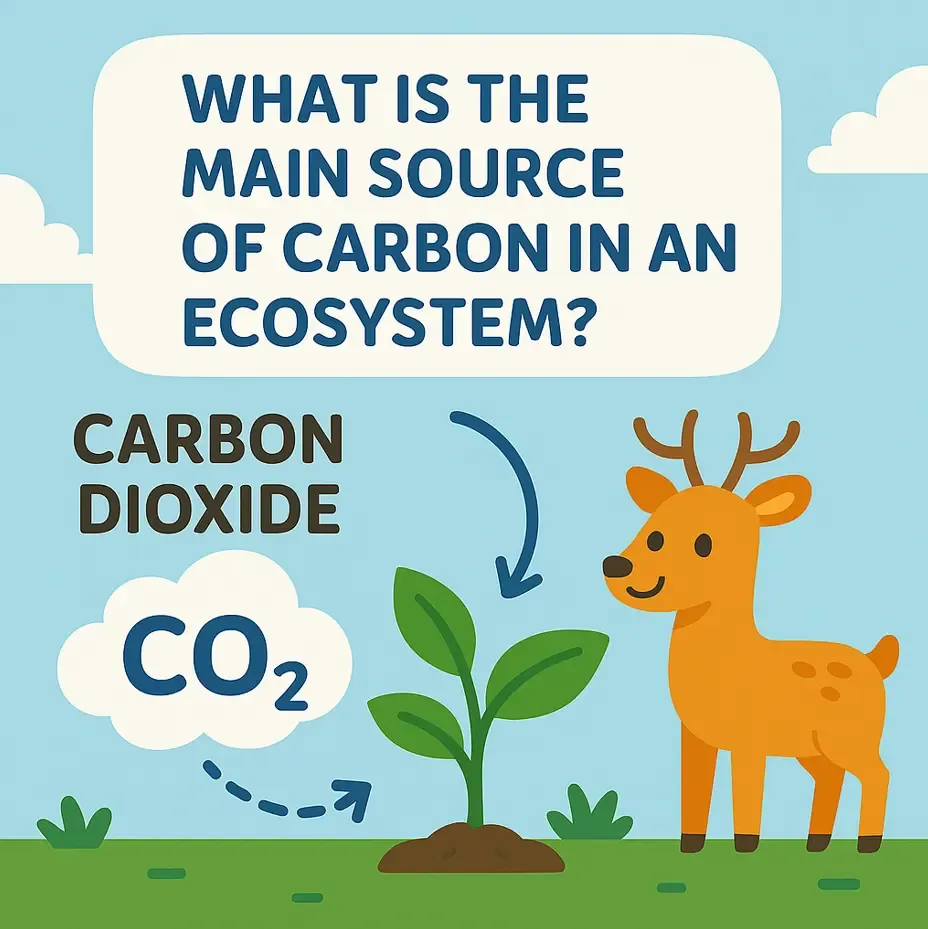
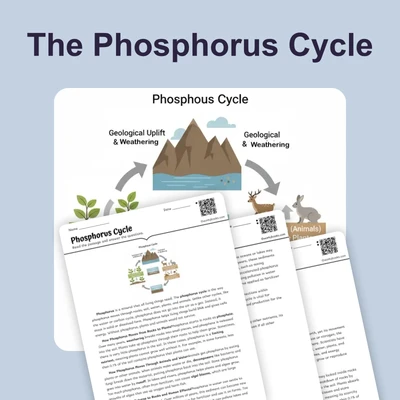
Carbon is a key element in all living things. It is part of the molecules that make up our bodies, the food we eat, and the air we breathe. In an ecosystem, the main source of carbon is carbon dioxide (CO₂) in the atmosphere. This gas plays a major role in the carbon cycle, which moves carbon through the air, water, soil, and living organisms.
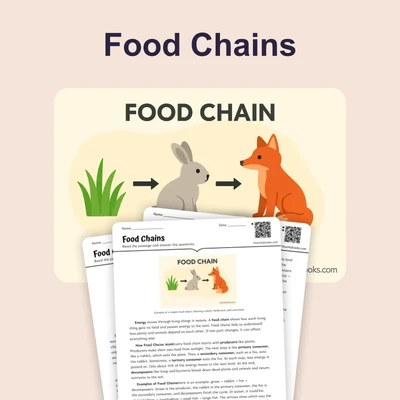
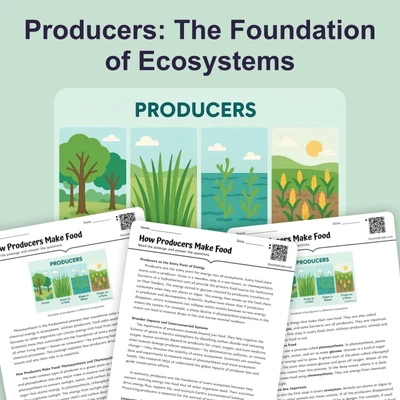
Plants use carbon dioxide during photosynthesis, a process where they take in CO₂ from the air and use sunlight to make food. This is how carbon enters the food chain. When animals eat plants (or other animals), the carbon in the plant becomes part of their bodies. In this way, carbon moves through the ecosystem as energy and matter are passed from one organism to another.
When living things die or release waste, decomposers like bacteria and fungi break them down. This releases carbon back into the air or soil. In some cases, carbon gets stored underground for millions of years as fossil fuels like coal and oil. When humans burn these fuels, carbon returns to the atmosphere as carbon dioxide, increasing greenhouse gases and affecting climate.
Carbon is constantly cycling, but the original and ongoing source in most ecosystems is atmospheric CO₂. Without it, plants couldn’t grow, animals couldn’t survive, and life as we know it wouldn’t exist.
Fun Fact: A single large tree can absorb over 40 pounds of carbon dioxide from the atmosphere in just one year!
Comprehension quiz (8 questions)
1. What is the main source of carbon in most ecosystems?
2. How does carbon enter the food chain?
3. What role do decomposers play in the carbon cycle?
4. What process do plants use to take in carbon dioxide?
5. What happens when fossil fuels are burned?
6. Why is carbon important in living things?
7. What is the main idea of the passage?
8. If plants disappeared from an ecosystem, what would happen to carbon flow?
Perfect for the way you teach
- Build comprehension skills
- Auto-graded quiz
- Differentiated reading
- Read together at home
- Improve fluency
- Quiet reading time
- Reading curriculum support
- Independent practice
- Track Lexile growth