MS-LS2-4: CONSTRUCT AN ARGUMENT SUPPORTED BY EMPIRICAL EVIDENCE THAT CHANGES TO PHYSICAL OR BIOLOGICAL COMPONENTS OF AN ECOSYSTEM AFFECT POPULATIONS.
PRINT+DIGITAL RESOURCE
This learning resource is available in interactive and printable formats. The interactive worksheet can be played online and assigned to students. The Printable PDF version can be downloaded and printed for completion by hand.
This educational passage, audio integrated, explores how climate change affects bird migration patterns. Students will learn about the impact of rising global temperatures on bird habitats, food sources, and timing of migration. Key terms like 'migration,' 'habitat,' and 'ecosystem' are defined to ensure a clear understanding of the scientific concepts. The content aligns with NGSS standard MS-LS2-4, which focuses on constructing arguments supported by empirical evidence that changes to physical or biological components of an ecosystem affect populations. This passage helps students understand the real-world consequences of environmental shifts on bird populations and broader ecosystems, emphasizing the interconnectedness of nature.
CONTENT PREVIEW
Expand content preview
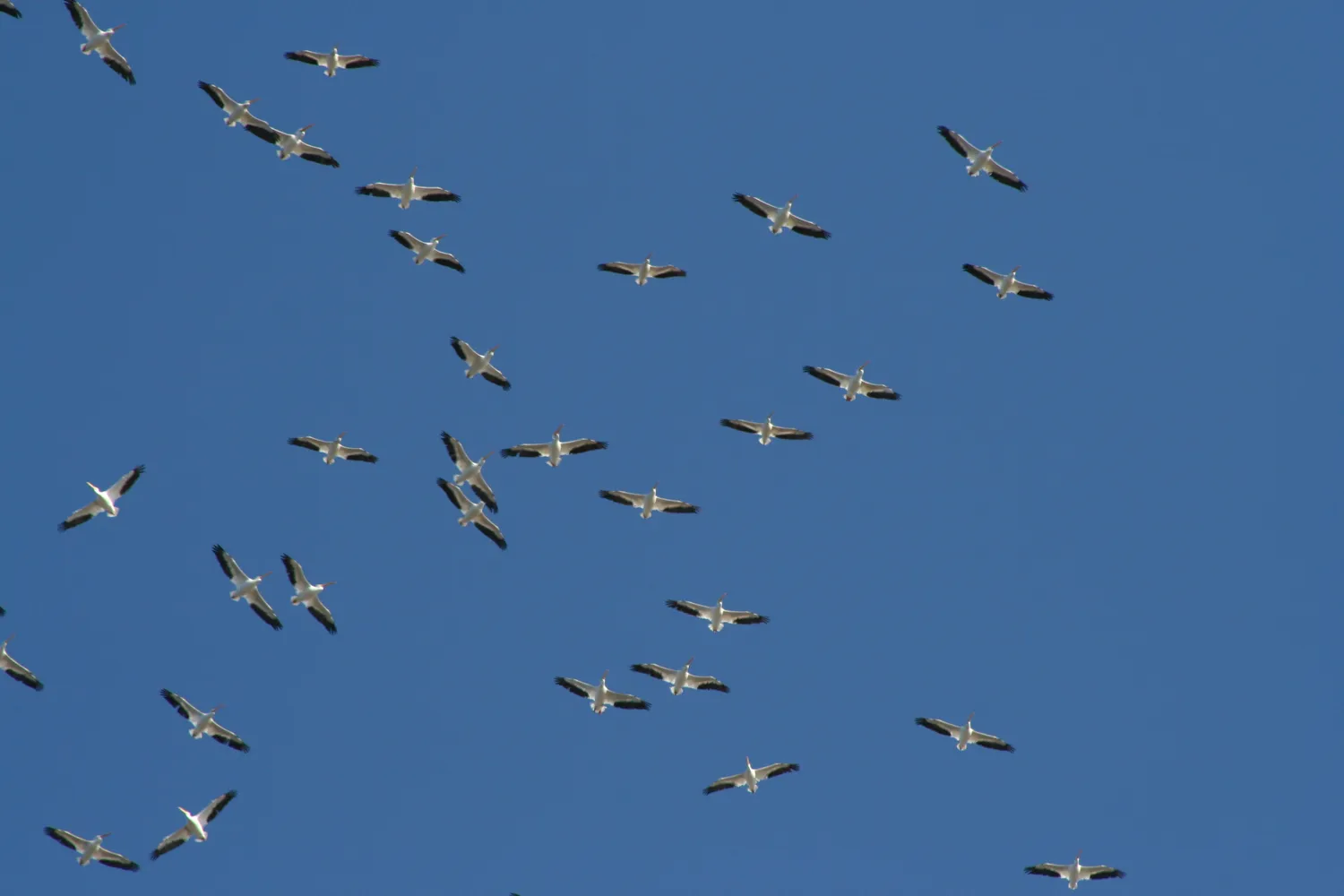
"Pelicans Migrating (11192633926)" by U.S. Fish and Wildlife Service - Midwest Region / Wikimedia Commons.
Have you ever wondered what some animals do when the weather gets super cold and food is hard to find? Many animals, like bears, bats, and groundhogs, go into a deep sleep called hibernation. Hibernation is a special survival strategy where animals slow down their body functions, like their heart rate and breathing, to save energy. It's like pressing a pause button on winter! They rely on the fat they've stored up during warmer months to get them through this long nap. This incredible adaptation helps them survive harsh winter conditions when resources are scarce.
But what happens when the world's climate starts to change? Climate change refers to significant, long-term shifts in global weather patterns. One of the biggest parts of climate change is global warming, which means the Earth's average temperature is rising. For animals that hibernate, these changes can be a real problem. Think about it: if winter isn't as cold or doesn't last as long, what might happen to an animal that's programmed to sleep through it?
Warmer temperatures due to climate change can confuse hibernating animals. Sometimes, animals wake up too early from hibernation because they sense that the weather is getting warmer. If they wake up and there's no food available yet, or if another cold snap hits, they could be in big trouble. They've used up a lot of their stored energy waking up, and without food, they might not survive. This early awakening can also expose them to predators that are already active, or to diseases they wouldn't normally encounter.
Another issue is that some animals might not be able to build up enough fat reserves before winter. If seasons become less predictable, with warmer periods disrupting the normal growth of plants and insects, animals might not have the food they need to prepare for hibernation. This directly impacts their ability to successfully enter and complete their long winter sleep. For example, some insect populations, which serve as food for hibernating animals, are also affected by climate change, creating a ripple effect through the ecosystem.
The duration of hibernation can also be affected. If winters are shorter, animals might hibernate for a shorter period. While this might sound good, it means they are active for longer periods and need more food. If food sources are already limited due to changing weather patterns, this extra demand can put more stress on animal populations. This interconnectedness shows how changes to one part of an ecosystem – like temperature – can have a big impact on the entire system and the populations within it. Protecting habitats and reducing human-caused climate change are crucial steps in helping these incredible hibernators adapt.
Fun Fact: While bears are known for their long winter sleep, their hibernation is not as deep as some other animals; they can actually be easily awakened!
What is hibernation?
Animals eating more foodDeep sleep to save energyAnimals moving southRunning from predators