Echidna Puggle
Interactive passage with audio narration, comprehension questions, and printable PDF.
What's included
Echidna Puggle preview and details
About this printable Echidna Puggle science reading passage, NGSS-aligned (Grades 3-8)
Sample passage and quiz from Echidna Puggle
Reading passage and comprehension quiz preview
Echidna Puggle
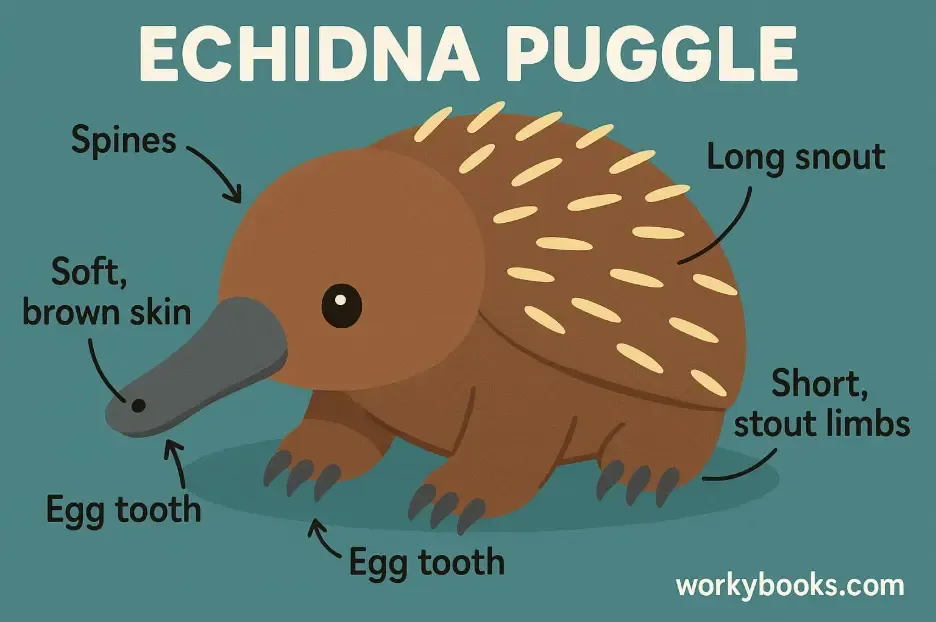
Did you know that not all mammals are born live? The Echidna is one of Earth's most amazing exceptions! This unique animal holds a special place in the world of mammals because it is a monotreme, meaning it's an egg-laying mammal. This fascinating fact sets it apart from most other mammals, like cats or dogs, which give birth to live young.
After mating, the female echidna lays just one small, leathery egg. She doesn't build a nest or leave it alone. Instead, she tucks her precious egg into a special temporary pouch on her belly! She keeps the egg warm and safe in this pouch for about 10 days until it hatches.
When the tiny baby echidna, called a puggle, hatches, it's very small and helpless, about the size of a jellybean! Even though it hatched from an egg, it's still a mammal, so it needs milk. Echidnas don't have nipples like other mammals. Instead, the puggle drinks milk that oozes out from special milk patches on the mother's skin inside her pouch. The puggle stays in the pouch, growing bigger and developing its spines, for several months before it's ready to venture out.
This incredible way of life, from laying eggs to producing milk from skin patches, shows just how diverse and wonderfully adapted life on our planet can be. The Echidna's unique reproduction story is a true marvel of biodiversity.
Fun Fact: A baby echidna (puggle) is so tiny when it hatches that it weighs less than a paperclip!
Comprehension quiz (8 questions)
1. How many eggs does a female echidna usually lay at a time?
2. Where does the mother echidna keep her egg?
3. What is a baby echidna called?
4. How long does an echidna egg stay in the pouch before hatching?
5. How does a baby echidna get milk from its mother?
6. Why is the echidna's reproduction considered unique for a mammal?
7. What is the main idea of this passage?
8. If an animal has a special way to care for its young, like the echidna's pouch, what is that an example of?
Perfect for the way you teach
- Build comprehension skills
- Auto-graded quiz
- Differentiated reading
- Read together at home
- Improve fluency
- Quiet reading time
- Reading curriculum support
- Independent practice
- Track Lexile growth