What Is the Floor of an Aquatic Biome Called? — Reading Comprehension
Rate this
Premium Resource
Present
Present in classroom. No work saved
Assign
Classroom with student accounts, Track progress
Quick Play
No student accounts, assign with a link
Grades
3
4
5
6
7
Standards
MS-LS1-4
PRINT+DIGITAL RESOURCE
This learning resource is available in interactive and printable formats. The interactive worksheet can be played online and assigned to students. The Printable PDF version can be downloaded and printed for completion by hand.
This NGSS-aligned science reading passage explains the benthic zone, which is the floor of an aquatic biome such as oceans, lakes, and rivers. Designed for middle school students, the passage describes how the benthic zone varies with depth and what kinds of organisms live there. Students will learn about benthic organisms (benthos), marine snow, and how these organisms help recycle nutrients and support ecosystem health. The passage introduces vocabulary like seagrass, pressure, and sediment, and explains how life can survive even in deep, dark environments. It connects to NGSS standard MS-LS2-1 by helping students understand how energy and matter move through ecosystems, especially in underwater environments. This reading supports comprehension in life science, ecosystem dynamics, and environmental study.
CONTENT PREVIEW
Expand content preview
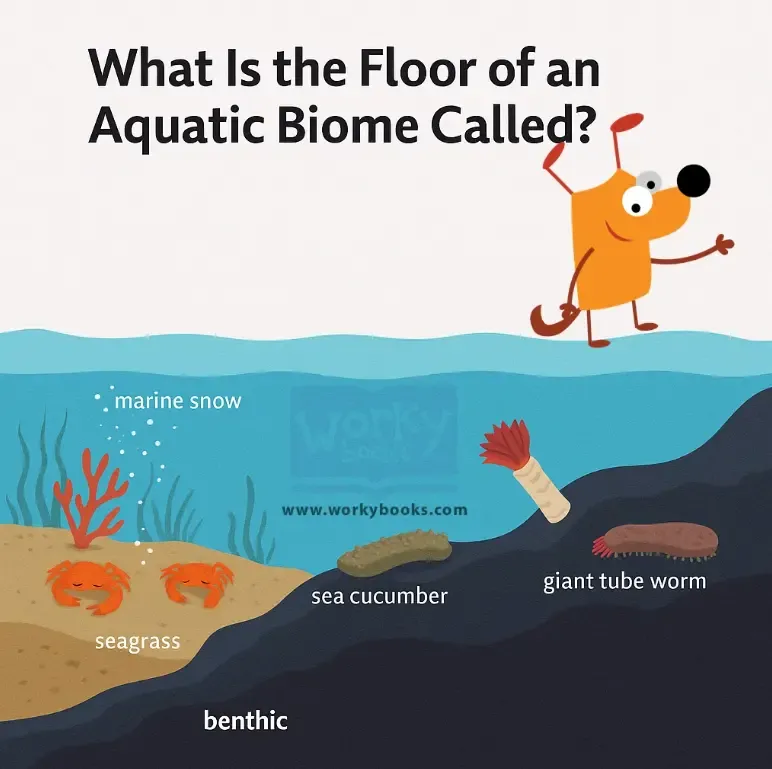
The floor of an aquatic biome is called the benthic zone. This zone includes the bottom surface of oceans, lakes, rivers, and other bodies of water. It stretches from shallow coastal areas to the deepest parts of the ocean floor. The benthic zone plays an important role in aquatic ecosystems because it supports many organisms and helps recycle nutrients.
The benthic zone varies depending on its depth and location. In shallow waters, it receives sunlight, allowing plants like seagrasses and algae to grow. These plants provide food and shelter for small fish, crabs, and snails. In deeper waters, where sunlight ca
nnot reach, the benthic zone is cold, dark, and high in pressure. Here, strange creatures like sea cucumbers, giant tube worms, and deep-sea fish live. These organisms often rely on dead matter, called marine snow, that sinks down from above.
The benthic zone is home to benthic organisms, also known as benthos. These include both plants and animals that live on or in the bottom sediments. Some benthos crawl or swim just above the floor, while others burrow into the mud or attach to rocks. They are essential to the health of aquatic ecosystems because they help break down dead plants and animals, recycling nutrients back into the environment.
In real life, the benthic zone is also important for humans. Many people depend on bottom-dwelling fish and shellfish for food. Scientists study the benthic zone to learn about pollution, climate change, and the health of aquatic habitats.
Fun Fact: The benthic zone in the Mariana Trench is so deep that the pressure is over 1,000 times greater than at sea level—yet life still exists there!
What is the floor of an aquatic biome called?
Surface zonePelagic zoneBenthic zoneTidal zone
What can be found in the benthic zone of shallow water?
IcebergsCoral and seagrassFlying fishFloating algae
What is marine snow?
Real snow underwaterBits of dead matter that sinkA type of saltOcean foam
Which animals are benthic organisms?
Birds and frogsWhales and sharksCrabs and sea cucumbersDolphins and jellyfish
How do benthic organisms help aquatic ecosystems?
By eating each otherBy causing pollutionBy recycling nutrientsBy blocking sunlight
Why is the deep benthic zone different from shallow areas?
It has more lightIt has more sandIt has no waterIt is dark and high-pressure
What is the main idea of the passage?
The ocean floor is sandyThe benthic zone is the bottom layer and supports important lifeAll fish live on the surfaceSeaweed grows in space
How do scientists use the benthic zone in research?
To catch birdsTo measure windTo study pollution and ecosystem healthTo build boats
Perfect For:
👩🏫 Teachers
• Reading comprehension practice
• Auto-graded assessments
• Literacy skill development
👨👩👧👦 Parents
• Reading practice at home
• Comprehension improvement
• Educational reading time
🏠 Homeschoolers
• Reading curriculum support
• Independent reading practice
• Progress monitoring
Reading Features:
📖
Reading Passage
Engaging fiction or nonfiction text
❓
Comprehension Quiz
Auto-graded questions
📊
Instant Feedback
Immediate results and scoring
📄
Printable Version
Download for offline reading
🔊
Read Aloud
Voice-over with word highlighting
Reviews & Ratings
No reviews yet. Be the first to share your experience!
Related Content
Venus Flytrap Facts
This passage explains where Venus flytraps live in North Carolina bogs, how their snap traps work, and their unique way ...
MS-LS1-4RI.6.3RI.7.3RI.8.8
Pitcher Plants: Reproduction Facts
This passage describes tropical and North American pitcher plants, their liquid-filled traps, and how they get nutrients...
MS-LS1-4RI.6.3RI.7.3RI.8.8
Echidna Puggle
This interactive science reading passage, titled "Echidna Life: From Egg to Puggle," delves into the fascinating reprodu...
MS-LS1-4
Seed Dispersal
This middle school science passage examines the fascinating process of seed dispersal and the diverse strategies plants ...
MS-LS1-4
Cell Division: Mitosis
This comprehensive science passage for middle school students explores the key concept of mitosis, the division of the n...
MS-LS1-4
Desert Birds
This informational passage for grades 6-8 examines how desert birds survive and thrive in some of the harshest environme...
MS-LS2-1MS-LS2-2MS-LS1-4
Asexual vs Sexual Reproduction
This NGSS-aligned passage for grades 6-8 explores sexual and asexual reproduction, comparing their underlying mechanisms...
MS-LS1-4MS-LS3-2
Reproductive System
This passage provides a comprehensive overview of the human reproductive system for middle school students, aligning wit...
MS-LS1-3MS-LS1-4
Fertilization and Early Development
This passage explores the scientific process of fertilization and early human development, aligning with NGSS standards ...
MS-LS1-4MS-LS3-2
Cytokinesis and Cell Growth
This middle school science reading passage explores the essential biological process of cytokinesis, the division of a c...
MS-LS1-4
Plant Reproduction
This comprehensive passage for grades 6-8 explores the fascinating world of plant reproduction, aligning with NGSS stand...
MS-LS1-4MS-LS3-2
Mammal Migration
This comprehensive passage on mammal migration, designed for grades 6-8 and aligned with NGSS standards MS-LS2-2 and MS-...
MS-LS2-2MS-LS1-4
How Animals Navigate
This engaging science passage for grades 6-8 examines the fascinating world of navigation strategies. Aligned with NGSS ...
MS-LS1-4MS-ESS3-3MS-ETS1-1
Growth and Development of Organisms
This middle school science passage, aligned with NGSS standards MS-LS1-4 and MS-LS1-5, provides an in-depth look at the ...
MS-LS1-4MS-LS1-5
What Is a Tropical Savanna?
This NGSS-aligned science passage for grades 6-8 explores the rich animal diversity of the savanna ecosystem. Students w...
MS-LS2-1MS-LS2-2MS-LS2-4MS-LS1-4
The Cell Cycle
This middle school science reading passage introduces the cell cycle as the life of a cell from formation to division. A...
MS-LS1-4
Animal Survival Behaviors
This passage, aligned with NGSS standards MS-LS1-4 and MS-LS1-5, explores the complex and fascinating world of animal be...
MS-LS1-4MS-LS1-5
Reproductive Success
This middle school science passage explores the essential concepts of reproductive success and adaptation in plants and ...