This learning resource is available in interactive and printable formats. The interactive worksheet can be played online and assigned to students. The Printable PDF version can be downloaded and printed for completion by hand.
Starfish, despite their name, are not fish at all but fascinating echinoderms with an array of surprising characteristics. These marine animals lack blood in the traditional sense, instead using a water vascular system to circulate nutrients and oxygen. Some species of starfish can live for an impressive 35 years or more in the wild. Remarkably, starfish navigate their underwater world without a centralized brain, relying on a complex nervous system that allows them to detect food, avoid predators, and even exhibit basic learning behaviors. Their ability to regenerate lost arms is another captivating feature, with some species capable of regrowing an entire body from a single arm. These unique attributes of starfish not only make them popular subjects in marine biology studies but also serve as excellent examples of the diverse and often unexpected adaptations found in ocean ecosystems.
CONTENT PREVIEW
Expand content preview
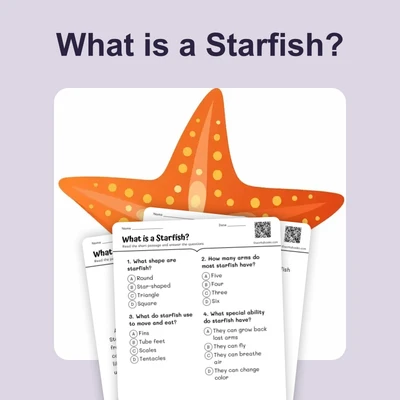
Starfish are amazing animals with lots of cool facts. Did you know that starfish aren't really fish? They're actually related to sea urchins and sand dollars. Starfish don't have blood like we do. Instead, they use sea water to move nutrients around their body. Some starfish can live for up to 35 years! Starfish don't have a brain, but they can still find food and avoid danger. They can even remember things and learn from experience. These facts show how special and unique starfish are.
What animals are starfish related to?
Sharks and dolphinsCrabs and lobstersSea urchins and sand dollarsJellyfish and squid
What do starfish use instead of blood?
AirSea waterSandPlant juice
How long can some starfish live?
Up to 1 yearUp to 5 yearsUp to 15 yearsUp to 35 years
What can starfish do even though they don't have a brain?
SpeakFlyRemember thingsBreathe air
Perfect For:
👩🏫 Teachers
• Reading comprehension practice
• Auto-graded assessments
• Literacy skill development
👨👩👧👦 Parents
• Reading practice at home
• Comprehension improvement
• Educational reading time
🏠 Homeschoolers
• Reading curriculum support
• Independent reading practice
• Progress monitoring
Reading Features:
📖
Reading Passage
Engaging fiction or nonfiction text
❓
Comprehension Quiz
Auto-graded questions
📊
Instant Feedback
Immediate results and scoring
📄
Printable Version
Download for offline reading
🔊
Read Aloud
Voice-over with word highlighting
Reviews & Ratings
No reviews yet. Be the first to share your experience!
Related Content
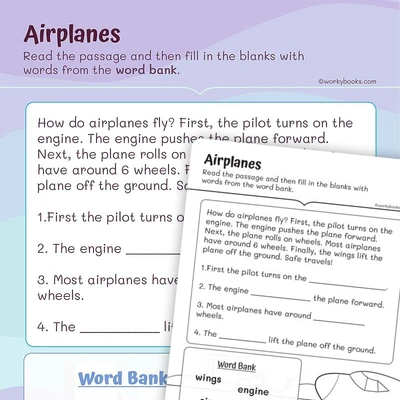
Airplanes Informational Text
This informational text on airplanes is a great way to practice reading comprehension. Students will read the short para...
RI.1.1RI.1.10RF.1.4.ARF.1.4.B
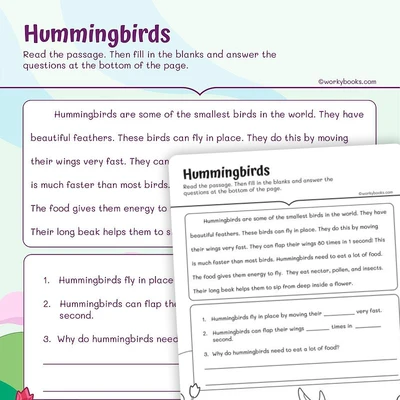
Hummingbirds—Reading Fluency
This informational text on hummingbirds with comprehension questions is a great way to practice reading comprehension. S...
RI.1.1RI.1.10RF.1.4.ARF.1.4.B
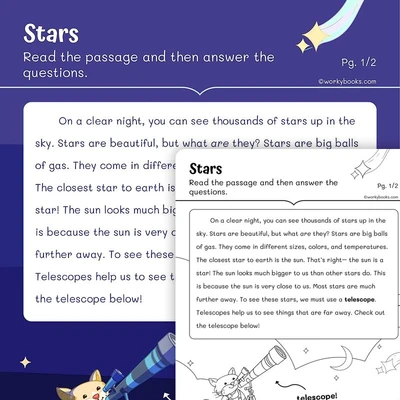
Stars—Reading for Purpose
This informational text on stars with comprehension questions is a great way to practice reading comprehension. Students...
RI.1.1RI.1.10RF.1.4.ARF.1.4.B
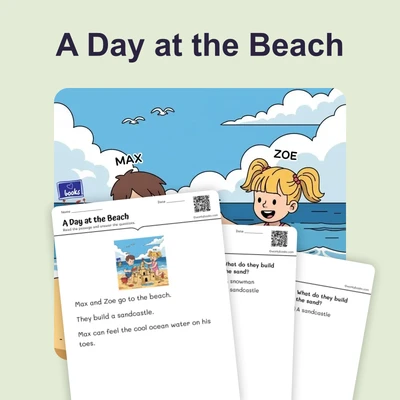
Max and Zoe's Beach Adventure-Short Story
Experience the excitement of Max and Zoe's beach adventure as they build a sandcastle and enjoy the refreshing sensation...
RF.1.4.ARF.1.4.BRI.1.1RI.1.2
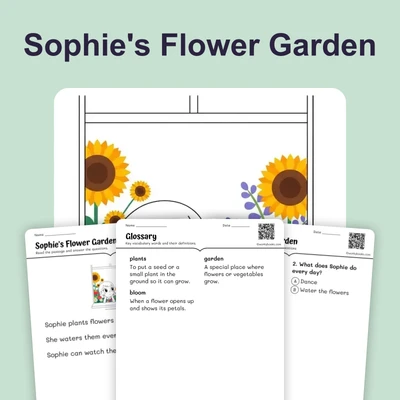
Sophie's Garden Flower-Short Story
Embark on a garden adventure with Sophie as she plants flowers and diligently waters them every day. Experience the joy ...
RF.1.4.ARF.1.4.BRI.1.1RI.1.2
Olivia's Kite Flying Adventure -Short Story
Experience the excitement of Olivia's kite flying adventure as she holds her kite on a windy day and watches it dance gr...
RF.1.4.ARF.1.4.BRI.1.1RI.1.2
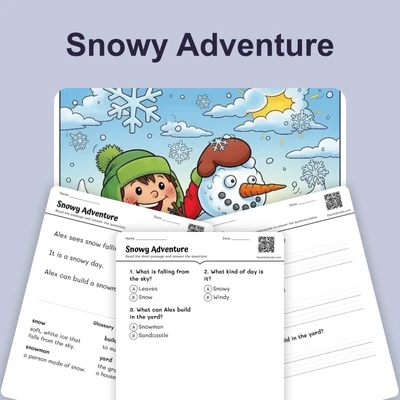
Alex's Snowy Adventure-Short Story
Experience the magic of a snowy day with Alex as he observes the snow falling and embraces the opportunity to build a sn...
RF.1.4.ARF.1.4.BRI.1.1RI.1.2
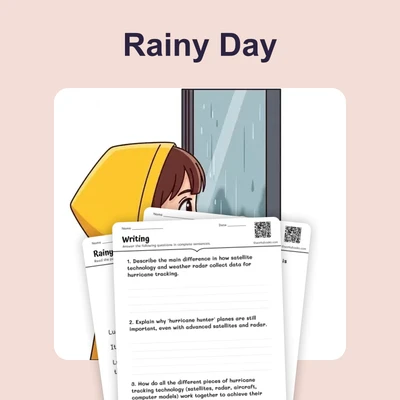
Rainy Day-Lucy's Observation
Main idea reading passage: Lucy observes a rainy day and listens to raindrops on the roof.
RF.1.4.ARF.1.4.BRI.1.1RI.1.2
The Weather
This reading passage on sunny day will enhance and test the reading comprehension skills of Grade 1 student. This onlin...
RF.1.4.ARF.1.4.BRI.1.1RI.1.2
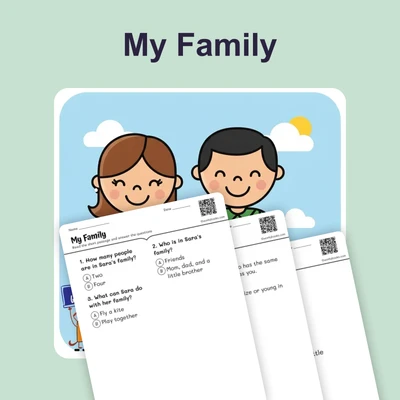
My Family
This reading passage on Sara's family will enhance and test the reading comprehension skills of Grade 1 student. This o...
RF.1.4.ARF.1.4.BRI.1.1RI.1.2
How Starfish Move
Starfish, also known as sea stars, have a fascinating method of locomotion that sets them apart from other marine creatu...
RI.1.1RI.1.2RI.1.8
What Turtles Eat?
Turtles exhibit a wide range of dietary preferences, reflecting their diverse habitats and evolutionary adaptations. Her...
RI.1.2RI.1.1
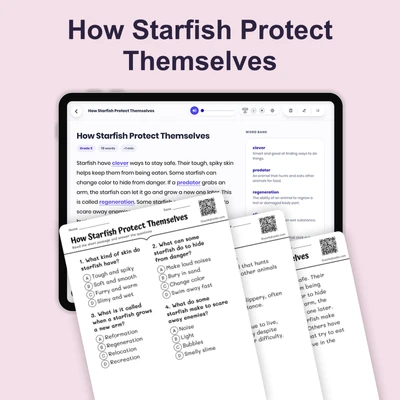
How Starfish Protect Themselves
Starfish, or sea stars, have evolved a fascinating array of defense mechanisms to survive in their marine habitats. Thes...
RI.1.1RI.1.2RI.1.8
Why Starfish are Important
Starfish play a crucial role in maintaining the delicate balance of marine ecosystems. As key predators, they help contr...
RI.1.1RI.1.2RI.1.8
Types of Coral: Hard and Soft
This passage delves into the two primary types of coral: hard and soft coral. First-grade readers are introduced to the ...
RI.1.1RI.1.2RI.1.10
Coral Habitats: Where the Ocean Comes Alive
This passage introduces first-graders to the specific habitats where coral thrives. It explains that coral requires warm...
RI.1.1RI.1.2RI.1.11
How Coral Eats
This passage delves into the fascinating feeding habits of coral, introducing first-graders to the concept of how sessil...
RI.1.1RI.1.2RI.1.15
What is a Starfish?
Starfish, also known as sea stars, are fascinating marine animals that captivate young learners. These unique echinoderm...
RI.1.1RI.1.2RI.1.8
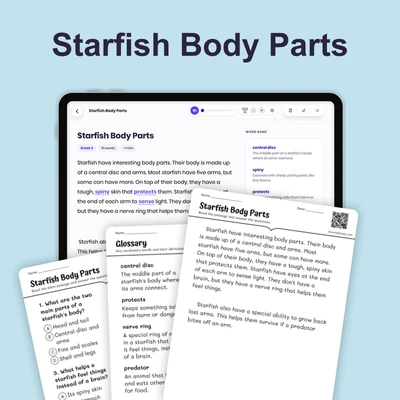
Starfish Body Parts
Starfish, or sea stars, possess a remarkable anatomy that enables them to thrive in diverse marine environments. The bod...