Types of Coral: Hard and Soft — Reading Comprehension
Rate this
Premium Resource
Present
Present in classroom. No work saved
Assign
Classroom with student accounts, Track progress
Quick Play
No student accounts, assign with a link
Grades
1
2
Standards
RI.1.1
RI.1.2
RI.1.10
PRINT+DIGITAL RESOURCE
This learning resource is available in interactive and printable formats. The interactive worksheet can be played online and assigned to students. The Printable PDF version can be downloaded and printed for completion by hand.
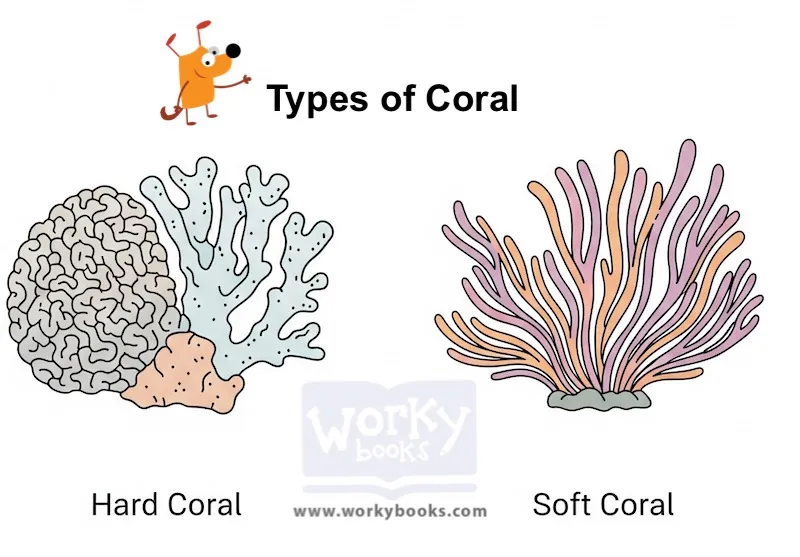
This passage delves into the two primary types of coral: hard and soft coral. First-grade readers are introduced to the distinctive features of each type, learning that hard coral builds a tough limestone shell, while soft coral has a more plant-like appearance with flexible branches. The text describes the various shapes hard coral can take, such as branches, fans, or domes, and how soft coral can sway in ocean currents. Both types are presented as homes for polyps, emphasizing the collaborative nature of these tiny animals in obtaining food and ensuring their safety. This exploration of coral types helps young learners understand the diversity within coral species and their adaptations to marine environments.
CONTENT PREVIEW
Expand content preview
There are two main types of coral: hard coral and soft coral. Hard coral builds a tough shell made of limestone. It grows in shapes that look like branches, fans, or round domes. Soft coral doesn't make a hard shell. It looks more like plants with bendy branches. Some soft corals wave in the water like trees in the wind. Both types of coral are home to small animals called polyps. These polyps work together to get food and stay safe.
What are the two main types of coral?
Big and small coralHard and soft coralRed and blue coralFast and slow coral
What does hard coral build?
A soft pillowA tough shell made of limestoneA sand castleA bubble
What does soft coral look like?
RocksFishPlants with bendy branchesSharks
What lives inside both types of coral?
FishCrabsPolypsSharks
Perfect For:
👩🏫 Teachers
• Reading comprehension practice
• Auto-graded assessments
• Literacy skill development
👨👩👧👦 Parents
• Reading practice at home
• Comprehension improvement
• Educational reading time
🏠 Homeschoolers
• Reading curriculum support
• Independent reading practice
• Progress monitoring
Reading Features:
📖
Reading Passage
Engaging fiction or nonfiction text
❓
Comprehension Quiz
Auto-graded questions
📊
Instant Feedback
Immediate results and scoring
📄
Printable Version
Download for offline reading
🔊
Read Aloud
Voice-over with word highlighting
Reviews & Ratings
No reviews yet. Be the first to share your experience!
Related Content
Airplanes Informational Text
This informational text on airplanes is a great way to practice reading comprehension. Students will read the short para...
RI.1.1RI.1.10RF.1.4.ARF.1.4.B
Hummingbirds—Reading Fluency
This informational text on hummingbirds with comprehension questions is a great way to practice reading comprehension. S...
RI.1.1RI.1.10RF.1.4.ARF.1.4.B
Stars—Reading for Purpose
This informational text on stars with comprehension questions is a great way to practice reading comprehension. Students...
RI.1.1RI.1.10RF.1.4.ARF.1.4.B
Max and Zoe's Beach Adventure-Short Story
Experience the excitement of Max and Zoe's beach adventure as they build a sandcastle and enjoy the refreshing sensation...
RF.1.4.ARF.1.4.BRI.1.1RI.1.2
Sophie's Garden Flower-Short Story
Embark on a garden adventure with Sophie as she plants flowers and diligently waters them every day. Experience the joy ...
RF.1.4.ARF.1.4.BRI.1.1RI.1.2
Olivia's Kite Flying Adventure -Short Story
Experience the excitement of Olivia's kite flying adventure as she holds her kite on a windy day and watches it dance gr...
RF.1.4.ARF.1.4.BRI.1.1RI.1.2
Alex's Snowy Adventure-Short Story
Experience the magic of a snowy day with Alex as he observes the snow falling and embraces the opportunity to build a sn...
RF.1.4.ARF.1.4.BRI.1.1RI.1.2
Rainy Day-Lucy's Observation
Main idea reading passage: Lucy observes a rainy day and listens to raindrops on the roof.
RF.1.4.ARF.1.4.BRI.1.1RI.1.2
The Weather
This reading passage on sunny day will enhance and test the reading comprehension skills of Grade 1 student. This onlin...
RF.1.4.ARF.1.4.BRI.1.1RI.1.2
My Family
This reading passage on Sara's family will enhance and test the reading comprehension skills of Grade 1 student. This o...
RF.1.4.ARF.1.4.BRI.1.1RI.1.2
How Starfish Move
Starfish, also known as sea stars, have a fascinating method of locomotion that sets them apart from other marine creatu...
RI.1.1RI.1.2RI.1.8
Fun Facts About Starfish
Starfish, despite their name, are not fish at all but fascinating echinoderms with an array of surprising characteristic...
RI.1.1RI.1.2RI.1.8
What Turtles Eat?
Turtles exhibit a wide range of dietary preferences, reflecting their diverse habitats and evolutionary adaptations. Her...
RI.1.2RI.1.1
How Starfish Protect Themselves
Starfish, or sea stars, have evolved a fascinating array of defense mechanisms to survive in their marine habitats. Thes...
RI.1.1RI.1.2RI.1.8
Why Starfish are Important
Starfish play a crucial role in maintaining the delicate balance of marine ecosystems. As key predators, they help contr...
RI.1.1RI.1.2RI.1.8
Coral Habitats: Where the Ocean Comes Alive
This passage introduces first-graders to the specific habitats where coral thrives. It explains that coral requires warm...
RI.1.1RI.1.2RI.1.11
How Coral Eats
This passage delves into the fascinating feeding habits of coral, introducing first-graders to the concept of how sessil...
RI.1.1RI.1.2RI.1.15
What is a Starfish?
Starfish, also known as sea stars, are fascinating marine animals that captivate young learners. These unique echinoderm...
RI.1.1RI.1.2RI.1.8
Starfish Body Parts
Starfish, or sea stars, possess a remarkable anatomy that enables them to thrive in diverse marine environments. The bod...