Hardness as a Property
Interactive passage with audio narration, comprehension questions, and printable PDF.
By completing this purchase you agree to our Terms of Use and Privacy Policy. Your subscription renews automatically until you cancel. You can cancel anytime from your account settings. All sales are final and non-refundable. Digital content is available for download in your account immediately upon purchase.
What's included
Hardness as a Property preview and details
About this printable Hardness as a Property science reading passage, NGSS-aligned (Grades 4-6)
Sample passage and quiz from Hardness as a Property
Reading passage and comprehension quiz preview
Hardness as a Property
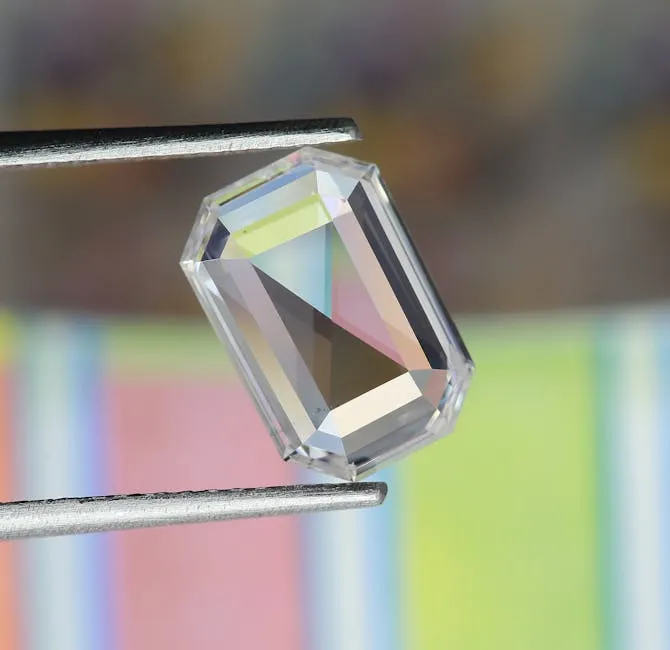
A diamond is one of the hardest materials on Earth.. Image credit Arjiv Exports / Pexels.
Hardness is a property that describes how resistant a material is to being scratched. When we say something is hard, we mean it is difficult to make a mark or scratch on its surface. This property helps scientists and engineers choose the right materials for different jobs.
Scientists measure hardness by performing a simple test called the scratch test. In this test, they try to scratch one material with another material. If material A can scratch material B, then material A is harder than material B. If material B cannot scratch material A, then material B is softer. This is a measurable property because scientists can observe and record which materials scratch others.
Think about a diamond and a piece of chalk. A diamond is one of the hardest materials on Earth. It can scratch almost any other material, including glass and metal. Chalk, on the other hand, is very soft. You can easily scratch chalk with your fingernail. In fact, when you write with chalk on a board, tiny pieces of the soft chalk rub off and stick to the surface. This happens because the board is harder than the chalk.
Understanding hardness is important for many reasons. Construction workers need hard materials like steel and concrete to build strong buildings that will last for many years. Jewelers value diamonds not only because they sparkle, but also because their hardness means they won't easily scratch or wear down over time. Scientists use a hardness scale that goes from 1 to 10, with talc (a very soft mineral) at 1 and diamond at 10.
You can test hardness yourself using everyday objects. A fingernail has a hardness of about 2.5, while a copper penny has a hardness of about 3.5. If you can scratch something with your fingernail, it's softer than 2.5. If you need a penny to scratch it, the material is harder than your fingernail but softer than the penny. This simple test helps you compare the hardness of different materials around you.
Interesting Fact: Your teeth are covered with enamel, the hardest substance in the human body, with a hardness of about 5 on the mineral hardness scale. This hardness protects your teeth when you chew hard foods!
Comprehension quiz (8 questions)
1. What does hardness measure?
2. How do scientists perform a scratch test?
3. What is diamond's number on the hardness scale?
4. Why do construction workers use hard materials?
5. If material A scratches material B, what is true?
6. Why does chalk leave marks on a board?
7. Hardness is a measurable property of materials.
8. What does 'resistant' mean in this passage?
Perfect for the way you teach
- Build comprehension skills
- Auto-graded quiz
- Differentiated reading
- Read together at home
- Improve fluency
- Quiet reading time
- Reading curriculum support
- Independent practice
- Track Lexile growth