


This learning resource is available in interactive and printable formats. The interactive worksheet can be played online and assigned to students. The Printable PDF version can be downloaded and printed for completion by hand.
This engaging 250-word science passage explains how turbines work for Grade 4-5 students. Aligned with NGSS 4-PS3-4, the passage describes how turbines are machines with blades that spin when pushed by moving water, steam, or wind to generate power. Students learn how the spinning motion of turbines turns generators that convert motion energy into electrical energy. The passage connects to real-world applications by explaining how giant turbines in power plants spin constantly to generate the electricity that powers communities. Audio-integrated features support diverse learners. The lesson includes a simplified differentiated version, Spanish translations of both versions, a comprehensive glossary, multiple-choice questions testing recall and comprehension, writing activities requiring explanations and applications, and graphic organizers including a sequence/process table and input-process-output table. Students explore key vocabulary including turbines, spinning blades, motion energy, generators, and power generation through concrete examples and clear cause-and-effect relationships appropriate for elementary learners.
CONTENT PREVIEW
Expand content preview
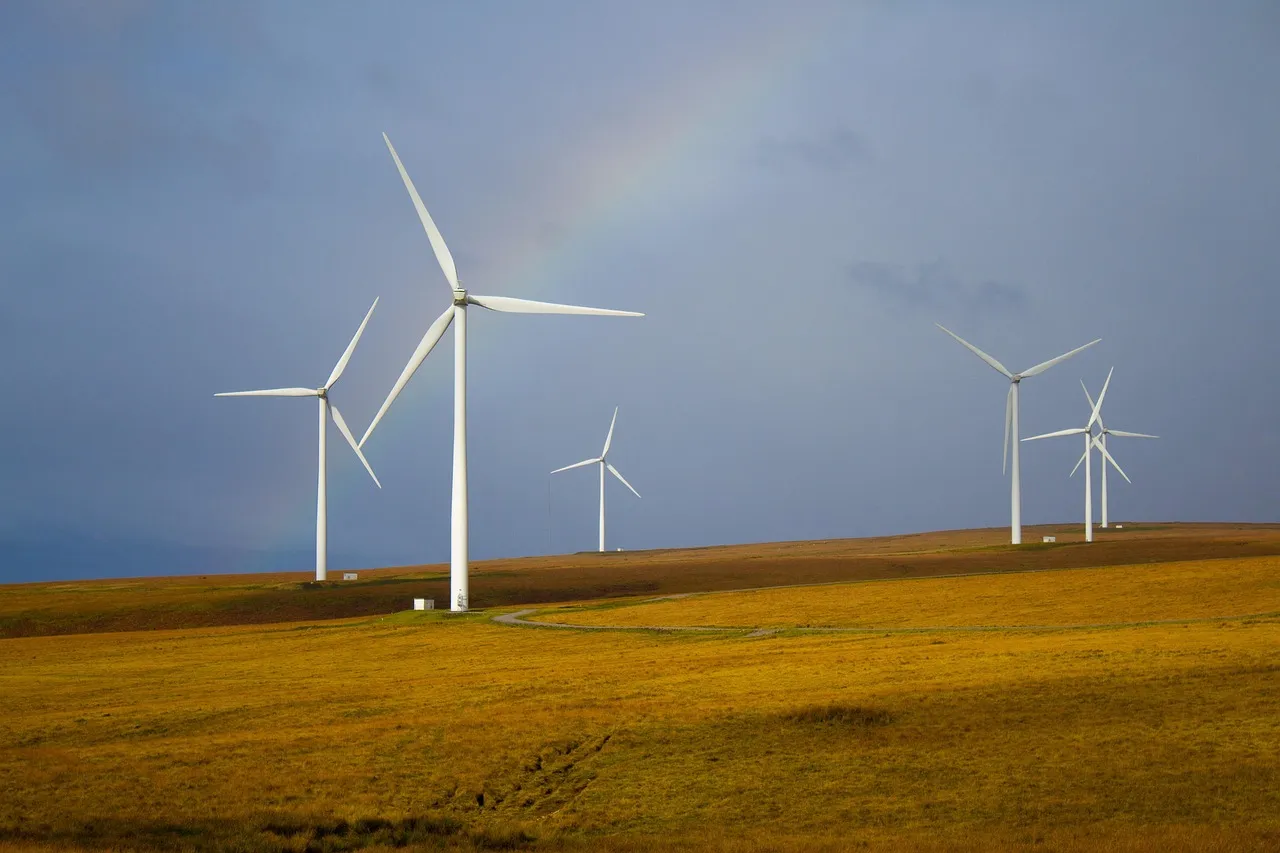
When wind turbine blades spin, they are connected to another machine called a generator. Image credit EdWhiteImages / Pixabay.
A turbine is a special machine with blades that spin when something pushes them. Turbines help us make electricity, which powers lights, computers, and everything else that uses energy in our homes and schools.
Turbines have large blades shaped like fans or propellers. Moving water, steam, or wind pushes against these blades, causing them to spin around and around. Think of a pinwheel toy spinning when you blow on it—turbines work the same way, but they are much bigger and stronger. Water turbines sit in rivers or dams where flowing water pushes the blades. Wind turbines stand tall on hills where wind keeps them spinning. Steam turbines use hot steam from boiling water to make the blades turn.
When turbine blades spin, they are connected to another machine called a generator. The generator is like a special motor that changes the spinning motion energy from the turbine into electrical energy. This is similar to how a bicycle generator creates light for your bike lamp when the wheel spins.
Inside power plants, giant turbines spin constantly, day and night. These turbines are as tall as buildings and their blades can be longer than school buses. As they spin, the generators make huge amounts of electricity that travels through power lines to homes, schools, hospitals, and businesses throughout your community.
Some power plants use water from rivers or ocean tides to spin turbines. Others burn coal or natural gas to make steam that pushes the turbine blades. Wind farms use the natural movement of air to keep turbines spinning without burning any fuel at all.
Turbines are important machines because they convert motion energy into the electrical energy we use every day. Whether powered by water, steam, or wind, these spinning machines work together with generators to keep the lights on and power flowing to millions of people.
What makes turbine blades spin?
Moving water, steam, or windElectricity from power linesBatteries and solar panelsHeat from the sun
What does a generator do?
It makes water flow fasterIt changes motion into electrical energyIt creates wind and steamIt stops turbines from spinning
Where do giant turbines work constantly?
In playgrounds and parksInside homes and schoolsIn power plantsOn bicycles and cars
Why would an engineer need turbines?
To design machines that generate electricityTo make toys spin fasterTo create stronger windTo build taller buildings
How are turbines like pinwheels?
They are the same sizeThey both need batteriesThey both spin when pushedThey both make steam
What happens after turbine blades spin?
They create more windThey turn generators to make electricityThey stop moving immediatelyThey boil water into steam
Turbines can only use wind energy.
TrueFalse
Motion energy means:
Energy from things that moveEnergy stored in batteriesEnergy from the sunEnergy that never changes
Perfect For:
👩🏫 Teachers
• Reading comprehension practice
• Auto-graded assessments
• Literacy skill development
👨👩👧👦 Parents
• Reading practice at home
• Comprehension improvement
• Educational reading time
🏠 Homeschoolers
• Reading curriculum support
• Independent reading practice
• Progress monitoring
Reading Features:
📖
Reading Passage
Engaging fiction or nonfiction text
❓
Comprehension Quiz
Auto-graded questions
📊
Instant Feedback
Immediate results and scoring
📄
Printable Version
Download for offline reading
🔊
Read Aloud
Voice-over with word highlighting
Reviews & Ratings
No reviews yet. Be the first to share your experience!
Related Content
What Is Radiation
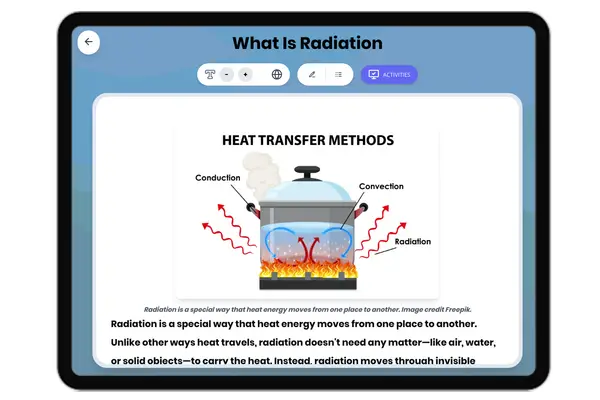
This engaging Grade 4-5 science passage explores radiation as a method of heat energy transfer, aligned with NGSS standa...