This learning resource is available in interactive and printable formats. The interactive worksheet can be played online and assigned to students. The Printable PDF version can be downloaded and printed for completion by hand.
This Grade 4-5 science reading passage introduces students to Malala Yousafzai, a courageous young woman from Pakistan who stood up for every child’s right to go to school—even when it was dangerous. The passage covers Malala’s early life in Swat Valley, the scientific and social challenges she faced when the Taliban banned girls from receiving an education, and her journey from surviving a life-threatening attack to becoming the youngest Nobel Peace Prize winner. Students will learn key vocabulary such as Nobel Prize, education, courage, and rights, and understand how one person’s actions can create positive change in the world. The resource includes a glossary, Spanish translation, a differentiated reading version, multiple-choice and writing activities, and graphic organizers aligned to NGSS, RI.3.1, RI.3.2, RI.4.3, and RI.5.6 standards. Audio integration supports diverse learning needs. Perfect for exploring science, history, and social impact in the classroom.
CONTENT PREVIEW
Expand content preview
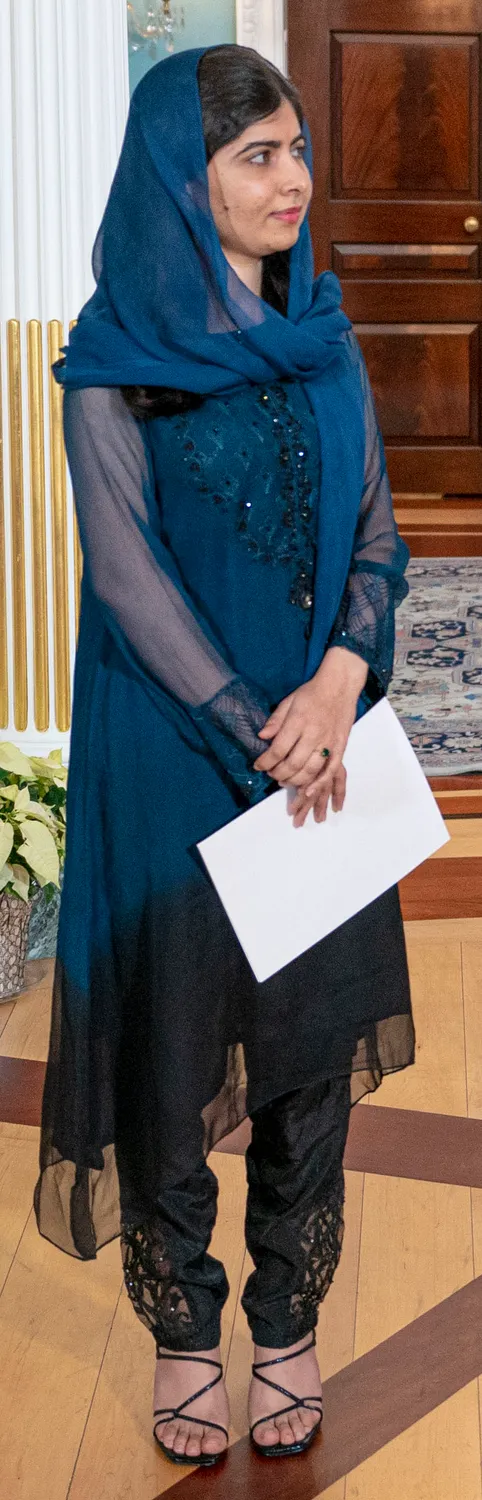
"Malala Yousafzai - 2021 (51728088292)" by U.S. Department of State from United States / Wikimedia Commons.
Malala Yousafzai was born on July 12, 1997, in Pakistan. She grew up in a small town called Mingora in the Swat Valley. Malala loved going to school and learning new things. Her father ran a school, and he believed that girls should have the same right to education as boys.
When Malala was about 10 years old, a group called the Taliban took control of her region. The Taliban had very strict rules. One of their rules was that girls should not go to school. They closed many girls' schools and threatened families who sent their daughters to learn.
Malala and her father thought this rule was unfair. In 2009, when Malala was just 11 years old, she began writing a blog for the BBC (British Broadcasting Corporation). In her blog, she wrote about what life was like under Taliban rule and why girls deserved to go to school. She used a fake name to protect herself, but she was still speaking out bravely.
As Malala continued to speak up for girls' education, she became well-known. She appeared in a documentary and gave interviews. She said, "One child, one teacher, one book, one pen can change the world." The Taliban were angry about her speaking out against their rules.
On October 9, 2012, when Malala was 15 years old, she was riding the bus home from school. A Taliban gunman got on the bus, asked which girl was Malala, and shot her in the head. Malala was badly injured, but she survived. She was taken to a hospital in Pakistan and later transferred to England for better medical care.
The attack on Malala shocked people around the world. Many people were inspired by her courage. After recovering from her injuries, Malala continued her fight for education. She said that the attack only made her stronger and more determined.
In 2014, at age 17, Malala became the youngest person ever to win the Nobel Peace Prize. This is one of the most important awards in the world. She used the prize money to build schools and help girls get an education.
Today, Malala continues her work through the Malala Fund, which helps girls around the world go to school. She graduated from Oxford University in England in 2020. Malala shows us that young people can make a big difference in the world and stand up for what they believe in, even when it's difficult or dangerous.
Where was Malala Yousafzai born?
EnglandIndiaPakistanAfghanistan
What did Malala's father do for work?
He was a doctorHe ran a schoolHe was a government officialHe was a farmer
What group took control of Malala's region when she was growing up?
The United NationsThe TalibanThe Peace CorpsThe Red Cross
What rule did Malala speak out against?
Girls not being allowed to wear colorful clothesBoys not being allowed to play sportsGirls not being allowed to go to schoolChildren having to work instead of play
How did Malala first share her ideas with the world?
She wrote a blog for the BBCShe gave speeches at the United NationsShe wrote a bookShe made videos for YouTube
How old was Malala when she was attacked?
11 years old13 years old15 years old17 years old
What happened after Malala was attacked?
She stopped speaking about educationShe moved to a different part of PakistanShe was treated in a hospital and continued her activismShe became a teacher
What major award did Malala win in 2014?
The Academy AwardThe Nobel Peace PrizeThe Presidential Medal of FreedomThe Olympic Gold Medal
How old was Malala when she won this award?
15 years old16 years old17 years old18 years old
What is the Malala Fund?
Money set aside for Malala's educationAn organization that helps girls around the world go to schoolA prize given to brave studentsA scholarship program only for Pakistani girls
Perfect For:
👩🏫 Teachers
• Reading comprehension practice
• Auto-graded assessments
• Literacy skill development
👨👩👧👦 Parents
• Reading practice at home
• Comprehension improvement
• Educational reading time
🏠 Homeschoolers
• Reading curriculum support
• Independent reading practice
• Progress monitoring
Reading Features:
📖
Reading Passage
Engaging fiction or nonfiction text
❓
Comprehension Quiz
Auto-graded questions
📊
Instant Feedback
Immediate results and scoring
📄
Printable Version
Download for offline reading
🔊
Read Aloud
Voice-over with word highlighting
Reviews & Ratings
No reviews yet. Be the first to share your experience!
Related Content
Scientific Theories
This reading passage for grades 6-8 introduces students to the concept of scientific theories, emphasizing that these ar...
MS-PS1-1MS-PS1-4MS-PS3-4SCIENCE AND ENGINEERING PRACTICES
Informational Text —Meet the Governors
This worksheet will get your students thinking about their state governnor. Included is an informational text on the res...
RI.3.10RF.3.4RF.3.4.ARI.3.1
Koi Fish—What’s the Main Idea?
This informational text on koi fish is a great introduction to teaching main idea. Students will be asked, in multiple c...
RI.3.2RF.3.4RI.3.1
Informational Text —Bioluminescence
This informational text on bioluminescence will teach your students about this phenomenon. Examples in nature are provid...
RI.3.10RF.3.4RF.3.4.ARI.3.1
Informational Text —Learn About Dinosaurs
This informational text on dinosaurs with comprehension questions to follow is perfect for teaching main idea. Students ...
RF.3.4RF.3.4.ARF.3.4.CRI.3.2
Informational Text —Volcanoes
This informational text teaches students about the formation and eruptions of volcanoes. Comprehension questions follow ...
RI.3.7RI.3.1RI.3.3RI.3.10
Informational Text —Snowflakes
This informational text on snowflakes will teach your students how snowflakes are formed. Images of several different fl...
RI.3.10RF.3.4RF.3.4.ARI.3.1
Informational Text on Holi
This informational text on Holi is a great way to teach about this holiday and the story of Prahlad. Comprehension quest...
RI.3.10RF.3.4RF.3.4.ARI.3.1
Informational Text on Goods and Services
This short informational text on goods and services will get your students familliar with this concept. Students will re...
RI.3.10RF.3.4RF.3.4.ARI.3.1
Sharks—Informational Text
This informational text on the sharks will teach your students all about these incredible, ancient animals! Free respons...
RI.3.1RI.3.10RF.3.4RI.3.1
Informational Text — Cloud Gazing
This informational text teaches students how different types of clouds are formed. A page with pictures of the different...
RI.3.10RF.3.4RF.3.4.ARI.3.1
Spider—Main Idea
This informational text on spiders is a great introduction to teaching main idea. Students will be asked, in multiple ch...
RI.3.2RF.3.4RI.3.1RI.2.6
Reading Comprehension: The Grand Canyon
This informational text on the Grand Canyon will teach your students all about this incredible wonder of the world! Free...
RI.3.1RI.3.10RI.3.4RF.3.4
Carnivores, Herbivores, and Omnivores
This informational text on herbivores, omnivores, and carnivores is the perfect resource for comparing and contrasting ...
RI.3.10RI.3.9RI.3.1RF.3.4
PB Sandwich—Event Sequencing
This worksheet on event sequencing provides a short story that is in the correct chronological order. A jumbled up versi...
RL.3.3RI.3.1RL.3.3
The Butterfly Life Cycle
This informational text on the butterfly lifecycle is perfect for learning how to follow steps in a scientific text. Stu...
RF.3.4RF.3.4.ARI.3.1RI.3.3
Comparing Non-Fiction texts—All About Dolphins
This informational text on dolphins is the perfect resource for teaching compare and contrast. Students will read two s...
RI.3.9RF.3.4RF.3.4.ARI.3.1
Snorkeling & Scuba Diving
RI.2.2RI.2.6RI.2.10RF.2.4.A
Reading Comprehension— Storms
Practie summarizing paragraphs with this fun science informational text on storms! Students will give the main idea of t...