This learning resource is available in interactive and printable formats. The interactive worksheet can be played online and assigned to students. The Printable PDF version can be downloaded and printed for completion by hand.
Explore the world of Paleolithic spearheads and bone tools in this detailed ancient history reading passage. Learn how early humans crafted and used these technologies to hunt large animals, survive harsh environments, and adapt to changing climates. The passage includes archaeological evidence, examples from famous sites, and analysis of cause-and-effect relationships in tool development. Students will analyze historical change over time and connect these inventions to broader social and geographic contexts. Activities include a reading comprehension quiz, writing prompts, graphic organizers, and a timeline, all aligned with CA HSS 6.1.1 and CCSS RH.6-8.1 standards. The resource features a read aloud audio option and a full Spanish translation, making it accessible for diverse learners. Key vocabulary is highlighted and defined for academic growth. Engage with prehistoric innovation and discover how early technology shaped human history.
CONTENT PREVIEW
Expand content preview
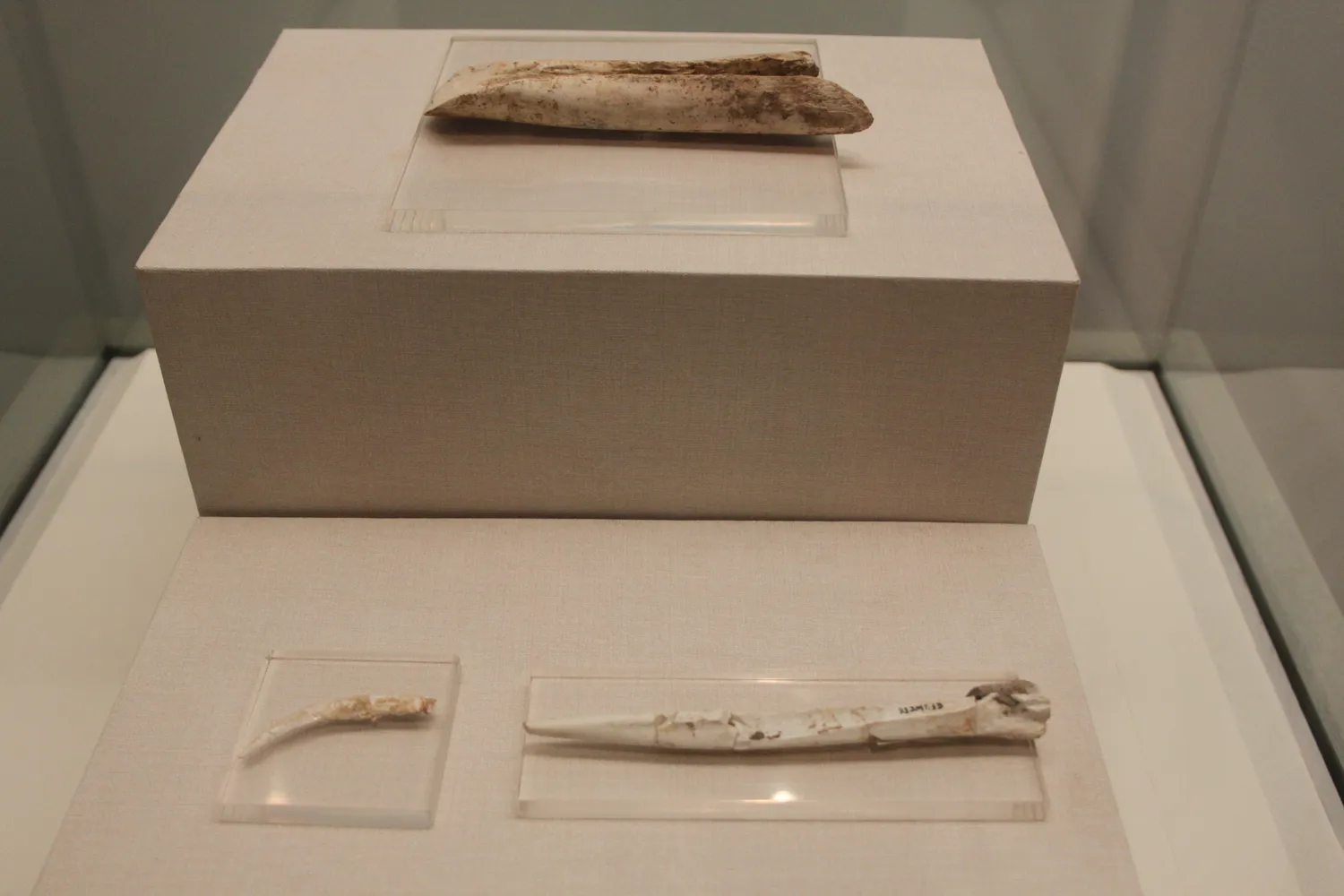
"Paleolithic Bone Tools (10112020286)" by Gary Todd from Xinzheng, China / Source: Wikimedia Commons
The Paleolithic era, also known as the Old Stone Age, marks a period in human history when people relied heavily on stone, bone, and antler tools for survival. Archaeological evidence shows that early humans, such as Homo sapiens and Neanderthals, developed specialized spearheads and bone tools between about 2.6 million and 10,000 years ago. These technologies played a crucial role in allowing humans to hunt large animals, adapt to different environments, and expand to new regions of the world.
One of the earliest known examples of stone spearheads comes from the site of Kathu Pan in South Africa, dating back around 500,000 years. Here, archaeologists found carefully shaped stone points likely attached to wooden shafts to form projectiles. In Europe, the Schöningen Spears, discovered in Germany and dated to about 300,000 years ago, provide direct evidence of wooden spears used by Homo heidelbergensis for hunting. These spears, each about two meters long, were balanced for throwing and thrusting at large prey such as horses and deer. The development of these weapons allowed groups of hunters to work together, increasing their chances of success and supporting larger, more stable communities.
Bone tools also became a vital part of daily life during the Upper Paleolithic period (around 50,000 to 10,000 years ago). Early humans fashioned bones into needles, fishing hooks, and barbed points. At sites like Abri Blanchard in France, archaeologists have discovered decorated bone tools, showing both functional and artistic abilities. The use of bone was especially important in regions where stone was scarce. For example, in the tundra of Siberia, people made harpoons and awls from reindeer antler and mammoth bone. These adaptations allowed humans to survive in diverse and harsh environments, from ice-age steppes to dense forests.
The innovation of specialized tools and weapons had a powerful impact on early human societies. Spearheads and bone tools made hunting more efficient and safer, leading to more reliable food supplies. This, in turn, supported the growth of population and the development of social hierarchies, as successful hunters often gained higher status within their groups. The ability to make and use these tools also reflects changes in cognitive skills, such as planning, cooperation, and symbolic thinking.
Studying Paleolithic spearheads and bone tools helps historians and archaeologists understand how early humans responded to changes in climate, landscape, and animal populations. These inventions demonstrate how technology, environment, and social organization are tightly connected throughout history.
Interesting Fact: Some of the oldest known bone needles, used for sewing clothing, were found at Denisova Cave in Siberia and are over 40,000 years old.
Where were the Schöningen Spears found?
GermanySouth AfricaFranceSiberia
What is a benefit of bone tools?
Used where stone was scarceCould only be used in desertsOnly for decorationMade hunting harder
When did humans begin using stone tools?
About 2.6 million years ago10,000 years ago1,000 years ago100,000 years ago
Why were spearheads important?
Helped hunt large animalsUsed for farmingBuilt housesMade jewelry
How did toolmaking affect communities?
Supported larger groupsEnded huntingCaused extinctionMade food harder to find
What does 'cognitive' mean in the passage?
Related to thinkingMade from boneA kind of animalVery old
Bone needles were found in Africa. True or False?
TrueFalse
What is a 'projectile'?
Thrown objectStone toolAnimalCave
Perfect For:
👩🏫 Teachers
• Reading comprehension practice
• Auto-graded assessments
• Literacy skill development
👨👩👧👦 Parents
• Reading practice at home
• Comprehension improvement
• Educational reading time
🏠 Homeschoolers
• Reading curriculum support
• Independent reading practice
• Progress monitoring
Reading Features:
📖
Reading Passage
Engaging fiction or nonfiction text
❓
Comprehension Quiz
Auto-graded questions
📊
Instant Feedback
Immediate results and scoring
📄
Printable Version
Download for offline reading
🔊
Read Aloud
Voice-over with word highlighting
Reviews & Ratings
No reviews yet. Be the first to share your experience!
Related Content
Neanderthals and Denisovans
This comprehensive history reading passage explores the fascinating story of Neanderthals, Denisovans, and other ancient...
CA HSS 6.1.1TEKS 6.2BCCSS.RH.6-8.1CCSS.RH.6-8.2
Early Human Migration
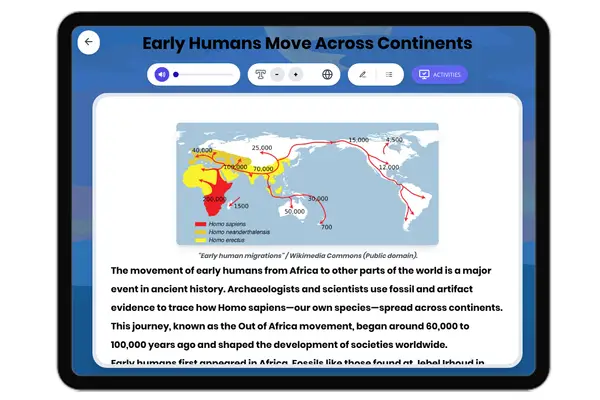
This comprehensive history reading passage explores the Out of Africa movement and how early humans migrated across cont...
CA HSS 6.1.1CCSS RH.6-8.1RH.6-8.2RH.6-8.4
Neolithic Pottery
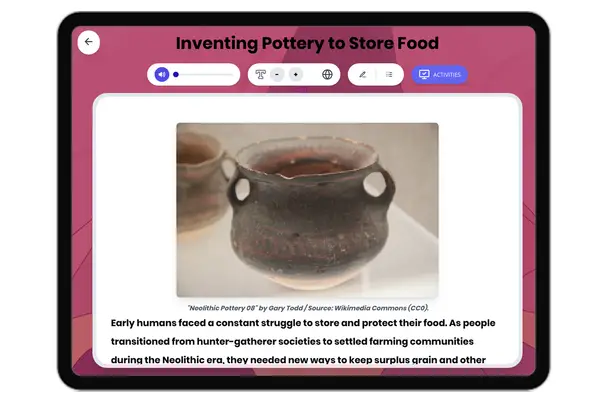
This engaging history reading passage explores how early humans invented pottery to solve the problem of long-term food ...
CA HSS 6.1.1CCSS RH.6-8.1CCSS RH.6-8.4
Introduction to the Paleolithic Age
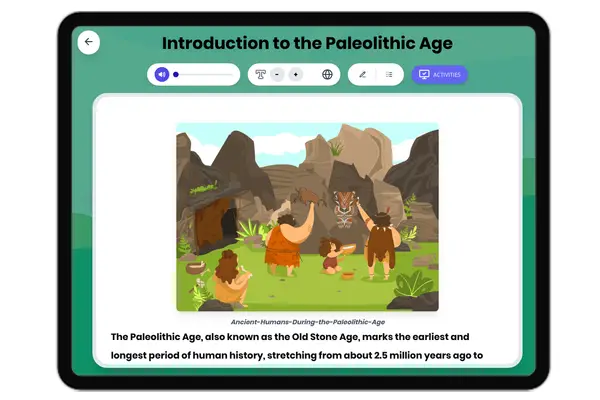
This engaging passage explores the lives and achievements of ancient humans during the Paleolithic Age, focusing on thei...
CA HSS 6.1.1CCSS RH.6-8.1CCSS RH.6-8.2CCSS RH.6-8.4
Early Humans in Europe and Asia
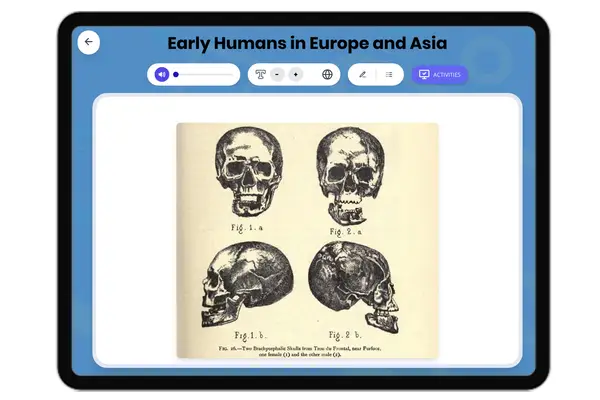
This passage explores the arrival of early humans in Europe and Asia around 40,000 BCE, highlighting their migration, ad...
CA HSS 6.1.1CCSS RH.6-8.1CCSS RH.6-8.2CCSS RH.6-8.4
Paleolithic Hand Axe
This engaging ancient history passage explores the development and significance of Acheulean hand axes, one of the earli...
CA HSS 6.1.1CCSS.RI.6.1CCSS.RI.6.4CCSS.W.6.2
Nomads to Farmers
This engaging passage explores the two major ways of life practiced by early humans: nomadic hunter-gathering and settle...