Renewable Resources: Energy for Our Future — Reading Comprehension
Rate this
Premium Resource
Present
Present in classroom. No work saved
Assign
Classroom with student accounts, Track progress
Quick Play
No student accounts, assign with a link
Grades
5
6
7
8
PRINT+DIGITAL RESOURCE
This learning resource is available in interactive and printable formats. The interactive worksheet can be played online and assigned to students. The Printable PDF version can be downloaded and printed for completion by hand.
This informative reading passage introduces elementary students to renewable resources and sustainable energy options. Written for grades 4-5, the content clearly explains the difference between renewable and non-renewable resources, emphasizing that renewable resources can be used repeatedly without being depleted. Students will learn about five major types of renewable energy: solar power from the sun's rays, wind energy captured by turbines, hydropower from moving water, biomass energy from plant and animal materials, and geothermal energy from Earth's internal heat. The passage highlights the environmental benefits of renewable resources, explaining how they produce little to no pollution compared to fossil fuels like coal and oil. Real-world applications and the future potential of renewable energy are discussed, along with simple actions students can take to conserve energy in their daily lives. The 10 accompanying multiple choice questions assess understanding of key concepts, examples, and environmental impacts.
CONTENT PREVIEW
Expand content preview
Renewable Resources: Energy for Our Future
Our world needs energy for almost everything we do, like turning on lights, riding the bus, or playing video games. There are two main kinds of energy sources: renewable resources and non-renewable resources. Renewable resources are energy sources that nature replaces quickly, or that never run out. Non-renewable resources, like coal, oil, and natural gas, take millions of years to form. When we use them up, they’re gone for our lifetimes.
Some important types of renewable energy are:
Solar energy: This comes from the sun. Solar panels on rooftops or fields catch sunlight and turn it into electricity. The sun shines every day, so we can keep using solar energy.
Wind energy: Wind turbines have big blades that spin when the wind blows. The spinning blades power a generator that makes electricity. Wind keeps blowing, so wind energy is always available when it’s windy.
Hydroelectric energy: This energy comes from moving water, like rivers. Dams are built on rivers to control water flow, and the water spins turbines to generate electricity. Rivers and rain keep the water moving.
Geothermal energy: This uses heat from inside the Earth. Pipes or special machines bring hot water or steam from underground to make electricity or heat buildings. Earth’s inside stays hot all the time.
Biomass: This means energy from plants and waste, like wood chips or food scraps. Plants grow back quickly, so we can keep using them for energy.
Renewable energy is good for our planet. It makes less pollution and fewer greenhouse gases than fossil fuels. Using more clean energy helps fight climate change and creates new jobs. But there are some challenges. The sun doesn’t always shine, and the wind doesn’t always blow, so we need to find ways to store energy for when we need it.
You can see renewable energy in action: solar panels on houses and schools, wind farms in fields and oceans, and dams on rivers. Even kids can help by turning off lights, supporting clean energy, and learning about energy careers. Renewable energy is like a garden—you can keep harvesting sunlight, wind, and water forever, while fossil fuels are like a piggy bank that empties and never refills!
Interesting Fact: The largest solar power plant in the world can create enough electricity to power over a million homes!
What are renewable resources?
Energy that never runs outEnergy from only coalEnergy used for busesEnergy that makes pollution
Which source is non-renewable?
SunlightWindCoalWater
What do wind turbines do?
Turn wind into electricityPump water from wellsCook foodGrow plants
Why is renewable energy good for Earth?
It makes more pollutionIt never runs outIt uses only coalIt makes the sun hotter
What is a challenge with renewable energy?
Sun always shinesWind always blowsSun and wind can stopWater never moves
How can kids help with clean energy?
Leave lights onTurn off lightsUse more oilUse only cars
Renewable energy is like a garden. True or False?
TrueFalse
What does 'biomass' mean?
Energy from plants and wasteEnergy from windEnergy from riversEnergy from the sun
Perfect For:
👩🏫 Teachers
• Reading comprehension practice
• Auto-graded assessments
• Literacy skill development
👨👩👧👦 Parents
• Reading practice at home
• Comprehension improvement
• Educational reading time
🏠 Homeschoolers
• Reading curriculum support
• Independent reading practice
• Progress monitoring
Reading Features:
📖
Reading Passage
Engaging fiction or nonfiction text
❓
Comprehension Quiz
Auto-graded questions
📊
Instant Feedback
Immediate results and scoring
📄
Printable Version
Download for offline reading
🔊
Read Aloud
Voice-over with word highlighting
Reviews & Ratings
No reviews yet. Be the first to share your experience!
Related Content
Reading Comprehension— Storms
Practie summarizing paragraphs with this fun science informational text on storms! Students will give the main idea of t...
RI.2.2RF.2.4.ARF.2.4RI.2.10
Certification of Sustainable Forestry Practices
Certification of sustainable forestry practices ensures responsible forest management by protecting biodiversity, reduci...
7.RI.7.3
Reading Comprehension: The Grand Canyon
This informational text on the Grand Canyon will teach your students all about this incredible wonder of the world! Free...
RI.3.1RI.3.10RI.3.4RF.3.4
Reading Informational Text Practice
RI.1.10RI.1.1RI.1.2RF.1.4
Reading Comprehension - Science and Social Studies
RI.2.10RI.2.1RI.2.2RI.2.4
Informational Text — Habitats
This short informational text on habitats will teach your students what a habitat is, as well as provide some examples o...
RF.3.4.A
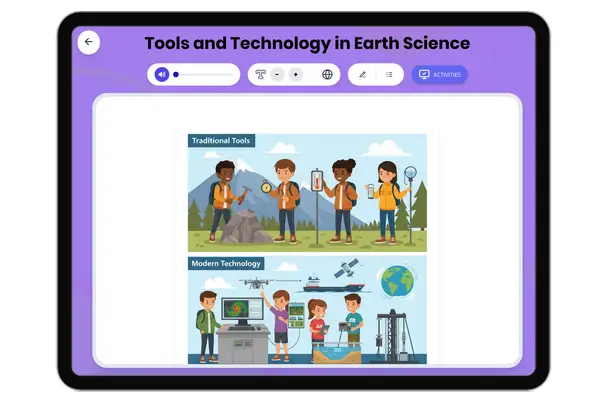
Tools and Technology in Earth Science
This middle school science reading passage explores the wide range of tools and technologies used in Earth science, from...
MS-ESS2-2MS-ESS3-2MS-ETS1-1MS-PS4-3
Informational Text — Penguins
This informational text on penguins is a great way to practice reading comprehension. Students will read the short passa...
RI.2.1RI.2.10
Informational Text — Armadillos
This informational text on armadillos is a great way to practice reading comprehension. Students will read the short pas...
RI.2.1RI.2.10
Interpreting visual information on Layers of the Earth
This informational text on the layers of the earth is a great way to practice using images during reading. Students will...
RI.1.7RI.10RF.1.4.ARF.1.4
Informational Text — Astronauts
Practice this second grade context clues worksheet with this informational text on astronauts. Students will read the te...
RI.2.4RI.2.10RI.3.4RI.3.10
Informational Text —Bioluminescence
This informational text on bioluminescence will teach your students about this phenomenon. Examples in nature are provid...
RI.3.10RF.3.4RF.3.4.ARI.3.1
Informational Text —Snowflakes
This informational text on snowflakes will teach your students how snowflakes are formed. Images of several different fl...
RI.3.10RF.3.4RF.3.4.ARI.3.1
Informational Text—Tardigrades
This informational text on tardigrades will teach your students all about this strange animal! Free response comprehensi...
RI.2.1RI.2.10RI.3.1RI.3.10
Informational Text —Importance of Sound
This Reading Informational Text Common Core standards calls for 4th graders to be able to effectively describe and analy...
RI.4.5
Reading Comprehension: Sun
This reading comprehension worksheet, aligned with CCSS.ELA-LITERACY.RF.5.4.a, features short informational passages fol...
RF.5.4.ARF.5.4.B
Hummingbirds—Reading Fluency
This informational text on hummingbirds with comprehension questions is a great way to practice reading comprehension. S...
RI.1.1RI.1.10RF.1.4.ARF.1.4.B
All about shells—Informational Text
This informational text on mollusks will teach your students all about these awesome animals! Free response comprehensio...
RI.3.1RI.3.5RI.3.10RI.4
Informational Text — Cloud Gazing
This informational text teaches students how different types of clouds are formed. A page with pictures of the different...
RI.3.10RF.3.4RF.3.4.ARI.3.1
Informational Text —Sea Stars
Use this second grade worksheet on context clues with this informational text on sea stars. Students will read the text ...