Soil Layers
Interactive passage with audio narration, comprehension questions, and printable PDF.
By completing this purchase you agree to our Terms of Use and Privacy Policy. Your subscription renews automatically until you cancel. You can cancel anytime from your account settings. All sales are final and non-refundable. Digital content is available for download in your account immediately upon purchase.
What's included
Soil Layers preview and details
About this printable Soil Layers science reading passage, NGSS-aligned (Grades 3-5)
Sample passage and quiz from Soil Layers
Reading passage and comprehension quiz preview
Soil Layers
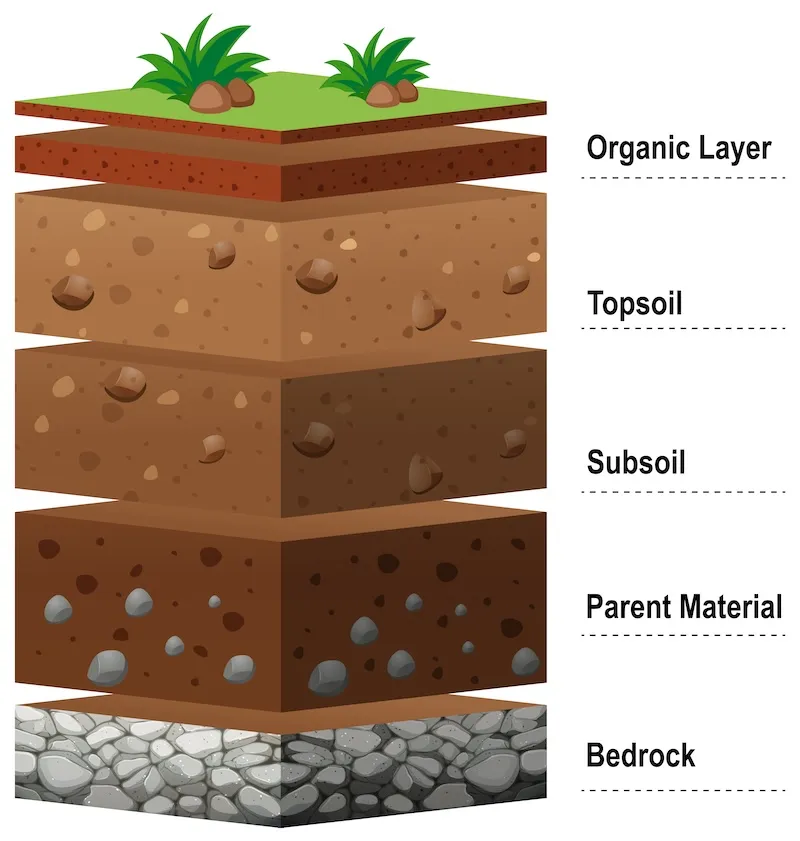
Soil is the loose material that covers much of Earth's land surface. Soil is not the same all the way down. If you could dig a very deep hole, you would see that soil is made of different layers stacked on top of each other. Scientists call these layers soil horizons. Each layer has different materials and looks different from the others.
The top layer is called topsoil. Topsoil is usually dark brown or black because it contains humus, which is decomposed plant and animal material. Humus is what makes soil rich and good for growing plants. Most plant roots grow in this layer because it has the nutrients plants need. Topsoil is like a nutritious meal for plants.
Below the topsoil is a layer called subsoil. Subsoil is lighter in color than topsoil because it has less humus. This layer contains more small rocks and clay. Water that drains through topsoil often carries nutrients down into the subsoil.
Even deeper is a layer made mostly of broken rock pieces. Below that is solid rock called bedrock. Bedrock is the hard rock layer that all the other layers rest on top of.
These soil layers form very slowly over thousands of years. Rocks break down into smaller pieces through a process called weathering. Dead plants and animals pile up on top and decompose. Together, these processes create the different soil layers we see today.
Interesting Fact: It can take 500 to 1,000 years to form just one inch of topsoil!
Comprehension quiz (8 questions)
1. What is the top soil layer called?
2. What makes topsoil dark in color?
3. What is bedrock?
4. Why do most plant roots grow in topsoil?
5. How does subsoil differ from topsoil?
6. What happens during weathering?
7. Soil layers form quickly in just a few years.
8. What are soil horizons?
Perfect for the way you teach
- Build comprehension skills
- Auto-graded quiz
- Differentiated reading
- Read together at home
- Improve fluency
- Quiet reading time
- Reading curriculum support
- Independent practice
- Track Lexile growth