Tectonic Estuary Example
Interactive passage with audio narration, comprehension questions, and printable PDF.
By completing this purchase you agree to our Terms of Use and Privacy Policy. Your subscription renews automatically until you cancel. You can cancel anytime from your account settings. All sales are final and non-refundable. Digital content is available for download in your account immediately upon purchase.
What's included
Tectonic Estuary Example preview and details
About this printable Tectonic Estuary Example science reading passage, NGSS-aligned (Grades 3-6)
Sample passage and quiz from Tectonic Estuary Example
Reading passage and comprehension quiz preview
Tectonic Estuary Example
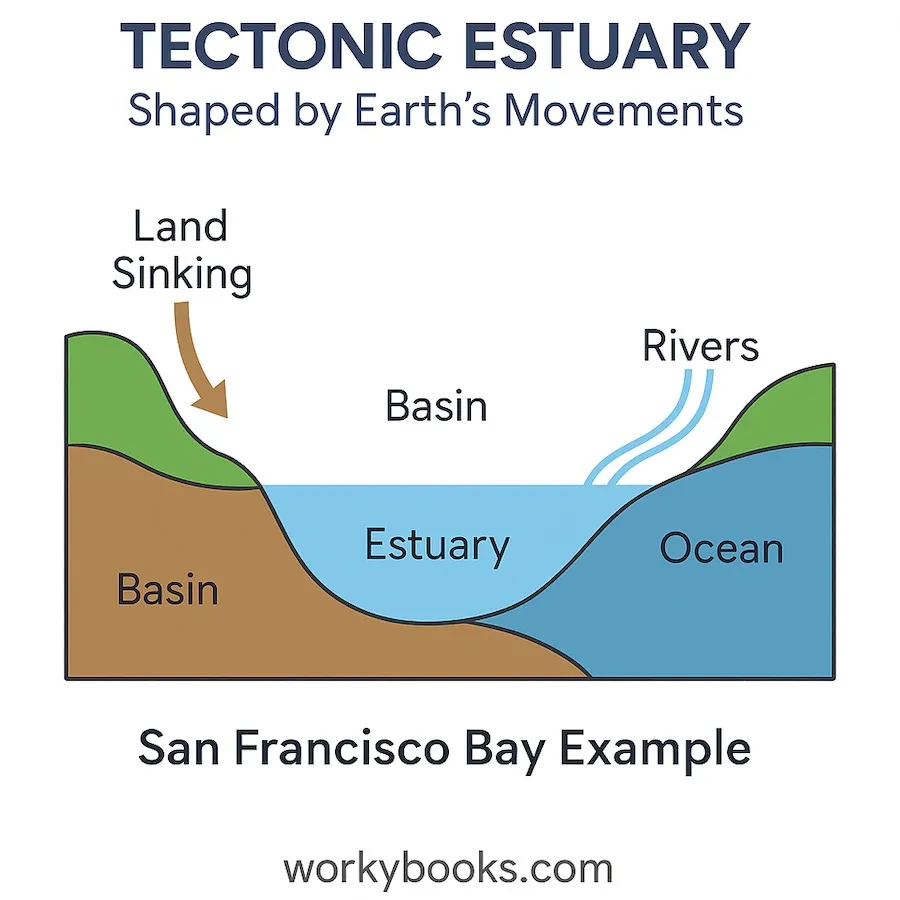
Tectonic Estuaries: How They Form
The surface of our planet is not one solid piece. It is made up of large sections called plates. These plates fit together like a cracked eggshell and are always moving, even though we can't usually feel it. When the plates move, they sometimes slide past each other, push together, or pull apart. This movement causes cracks called faults in the Earth's crust, which is the outermost layer of the planet.
Sometimes, when the plates move along a fault, a section of land sinks down. This creates a low spot or dip in the ground. If this area is near the ocean, water can rush in and fill it. This forms a special place called a tectonic estuary. It is a mix of fresh water from rivers and salty water from the ocean.
San Francisco Bay: A Real Example
San Francisco Bay in California is a famous tectonic estuary. It was formed when land along a fault line dropped down, and ocean water filled the low area. The Golden Gate Bridge crosses over this bay. Many ships travel through the bay each day, and sea lions rest on its shores. San Francisco Bay is special because it is home to more than 500 different kinds of animals and plants.
Earthquakes and Plate Movement
Because the plates under San Francisco Bay are still moving, the area sometimes has earthquakes. An earthquake is when the land shakes because the plates shift suddenly along a fault. Scientists study these movements to keep people safe.
Why Are Tectonic Estuaries Important?
Estuaries like San Francisco Bay are important habitats for many animals. They are also important for people, who use them for travel, fishing, and fun activities.
Interesting Fact: San Francisco Bay is home to more than 500 species of wildlife, including sea lions, birds, and fish!
Comprehension quiz (8 questions)
1. What is Earth's outer layer called?
2. What forms a tectonic estuary?
3. Which bridge crosses San Francisco Bay?
4. Why do earthquakes happen near San Francisco Bay?
5. What is a fault?
6. What makes estuaries special for animals?
7. San Francisco Bay was made by rising land. True or false?
8. What is 'plate movement'?
Perfect for the way you teach
- Build comprehension skills
- Auto-graded quiz
- Differentiated reading
- Read together at home
- Improve fluency
- Quiet reading time
- Reading curriculum support
- Independent practice
- Track Lexile growth