This learning resource is available in interactive and printable formats. The interactive worksheet can be played online and assigned to students. The Printable PDF version can be downloaded and printed for completion by hand.
This innovative passage combines plant science with space exploration, aligning with NGSS standards for life sciences and environmental systems. The narrative explores how plants grow in space and their crucial role in future space exploration. Through Sarah's observations of plants growing in different directions, students learn about gravity's effects on plant growth and the importance of plants for space travel. The passage effectively connects earth science with space science while highlighting the significance of sustainable space exploration.
CONTENT PREVIEW
Expand content preview
The final exhibit was Sarah's favorite. It was a special greenhouse where scientists were growing plants just like they do on the International Space Station.
"Plants are very important in space," Alex explained. "They provide fresh food for astronauts, help clean the air, and might help us grow food when we build bases on Mars!"
Sarah noticed that some plants were growing sideways and others upside down. "Why are they growing like that?" she asked.
Alex smiled. "In space, there's no up or down because there's no gravity. Plants can grow in any direction, but they always grow toward the light!"
What was the final exhibit Sarah's class visited?
A movie theaterA space gardenA gift shopA cafeteria
Why are plants important in space?
They look prettyThey make good petsThey provide food and clean airThey make the spaceship faster
What was unusual about how the plants were growing?
They were purpleThey were giantThey were growing sideways and upside downThey were made of plastic
Why do plants in space grow toward light?
Because they're scared of the darkBecause there's no gravity to tell them which way is upBecause they're special space plantsBecause astronauts tell them to
Perfect For:
👩🏫 Teachers
• Reading comprehension practice
• Auto-graded assessments
• Literacy skill development
👨👩👧👦 Parents
• Reading practice at home
• Comprehension improvement
• Educational reading time
🏠 Homeschoolers
• Reading curriculum support
• Independent reading practice
• Progress monitoring
Reading Features:
📖
Reading Passage
Engaging fiction or nonfiction text
❓
Comprehension Quiz
Auto-graded questions
📊
Instant Feedback
Immediate results and scoring
📄
Printable Version
Download for offline reading
🔊
Read Aloud
Voice-over with word highlighting
Reviews & Ratings
No reviews yet. Be the first to share your experience!
Related Content
Informational Text—Where Do You Live?
This informational text on urban, suburban, rural areas is a great way to practice reading fluency and comprehension whi...
RI.3.10RF.3.4RF.3.4.ARL.3.1
Story Summary Graphic Organizer
This story analysis graphic organizer includes space to write about the main characters, setting, summary, conflict, and...
RL.1.1RL.2.1RL.3.1RL.4.1
Story Map Graphic Organizer
This story analysis graphic organizer includes space to write about the main characters, setting, summary, conflict, and...
RL.1.1RL.2.1RL.3.1RL.4.1
What Do Humans Need? Informational text
This worksheet contains an informational text on what humans need to survive. Following the passage is a short comprehen...
RL.3.1
Fable on The King’s Quest—Author's Purpose
This fable with comprehension questions will teach students that it is never a smart idea to judge a book by its cover. ...
RL.3.2RL.3.1RL.3.3RL.2.2
Valentine's Day— Short Fiction Passage
This short fiction passage on Valentine's Day is perfect for reading comprehension, as well as interacting with illustra...
RL.3.7RL.3.10RL.2.1
Story Elements Graphic Organizer
This story analysis graphic organizer includes space to write about the main characters, setting, summary, conflict, and...
RL.1.1RL.2.1RL.3.1RL.4.1
The Honey Jar—Evidence from text
This fable with comprehension questions will teach students about being truthful. Students will identify character trait...
RL.3.3RL.3.2RL.3.1RL.3.10
Story Analysis Graphic Organizer
This story analysis graphic organizer includes space to write about the main characters, setting, summary, conflict, and...
RL.1.1RL.2.1RL.3.1RL.4.1
Story Graphic Organizer
This story analysis graphic organizer includes space to write about the main characters, setting, summary, conflict, and...
RL.1.1RL.2.1RL.3.1RL.4.1
Luca and Lily—Understanding Text
This short story about a trip to the animal shelter is a great way to practice comprehension. Students will read the tex...
RF.2.4.ARF.2.4RL.2.1
Squirrel & Badger—Moral of the Story
This short fable is a great way to teach central lessons or morals. Students will read the passage about the badger and ...
RL.2.2RL.2.1RL.2.10RL.3.2
Froggie—Main Idea
This short fable is a great way to teach central lessons or morals. Students will read the passage about the frog who do...
RL.2.2RL.2.1RL.2.10RL.3.2
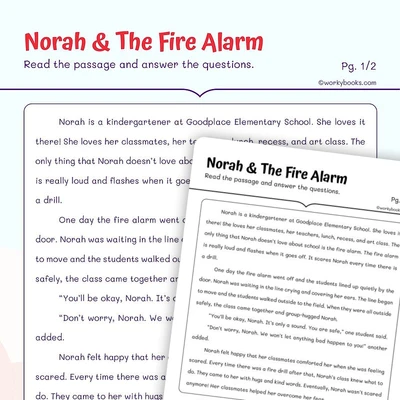
Short Story —Norah and the Fire Alarm
This short story about a girl who is afraid of the fire alarm is a great way to practice comprehension. Students will re...
RL.2.1RL.2.10
Mark's Awesome Birthday Party
This fiction passage about a child's birthday party with comprehension questions will keep your students engaged. They w...
RL.3.1RL.3.3RF.3.4.CL.3.4.A
Story Summary Graphic Organizer |
This story analysis graphic organizer includes space to write about the main characters, setting, summary, conflict, and...
RL.1.1RL.2.1RL.3.1RL.4.1
Andrew’s First Day of Second Grade
This short story about a boy on his first day of school is perfect for practicing character response. Students will read...
RL.2.3RL.2.10RL.2.1RL.2.5
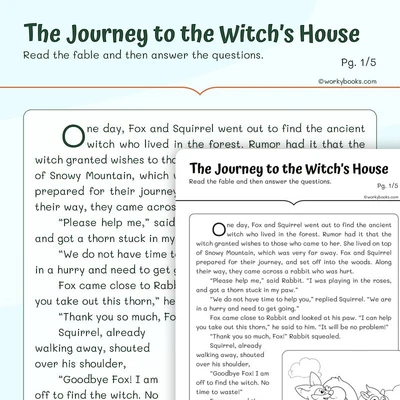
Fable —The Journey to the Witch’s House
This short fable is a great way to teach central lessons or morals. Students will read the passage about the witch who g...
RL.2.2RL.2.1RL.2.3RL.2.10
Life Cycles
This informational text on life cycles takes students through two cycles: the frog life cycle, and the bean plant life c...