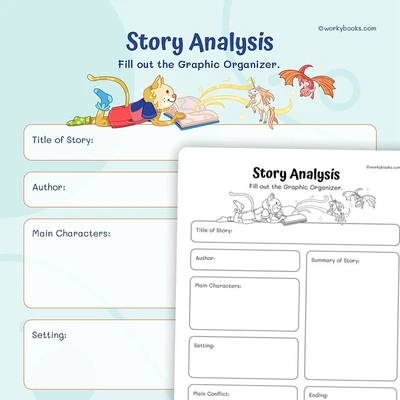
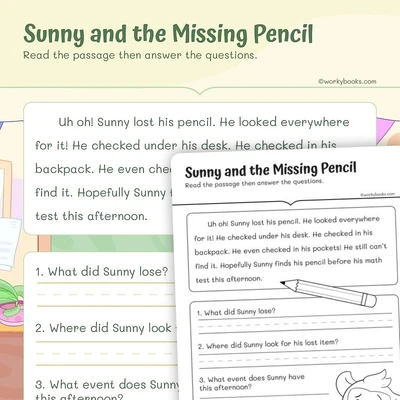
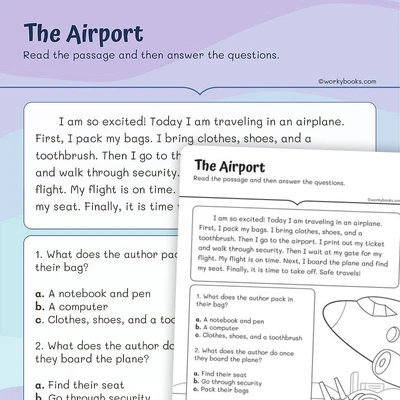
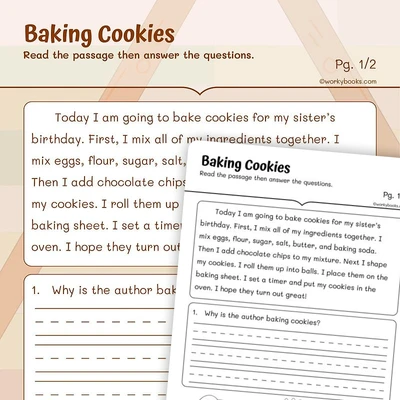
Story Analysis Graphic Organizer
Interactive worksheet with auto-grading, instant feedback, and printable PDF.
By completing this purchase you agree to our Terms of Use and Privacy Policy. Your subscription renews automatically until you cancel. You can cancel anytime from your account settings. All sales are final and non-refundable. Digital content is available for download in your account immediately upon purchase.
What's included
Story Analysis Graphic Organizer preview and details
About this worksheet
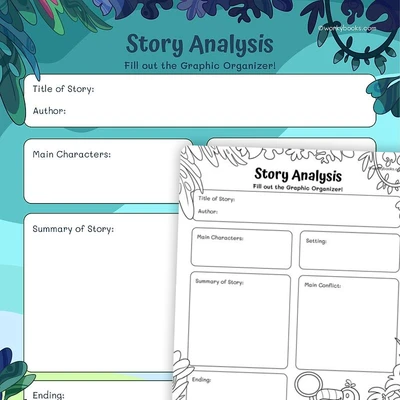
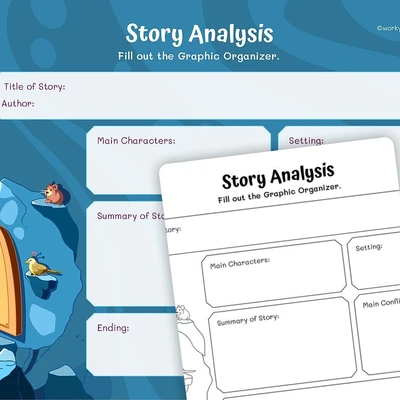
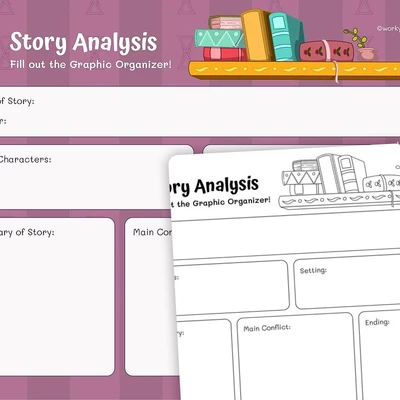
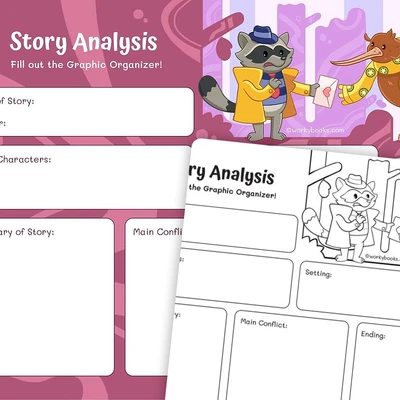
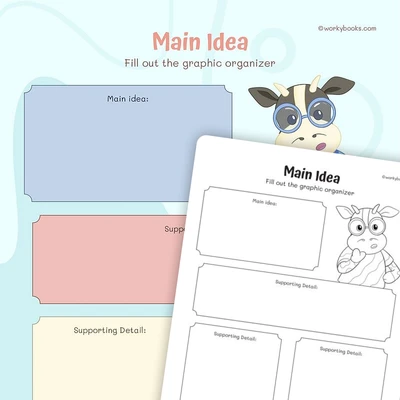
Story Analysis is a comprehensive graphic organizer worksheet designed to help students break down and analyze key elements of a story. This interactive and printable worksheet guides learners through the process of identifying and recording crucial components of a narrative, including the title, author, summary, main characters, settings, main conflict, and ending. By organizing these story elements in a structured format, students can develop a deeper understanding of narrative structure and improve their reading comprehension skills.
This interactive and printable worksheet provides a clear and organized framework for students to capture and analyze essential story elements. It encourages critical thinking and helps learners visualize the relationships between different aspects of a narrative. By completing this graphic organizer, students can enhance their ability to summarize stories, identify key plot points, and understand character development. The worksheet's layout also makes it an excellent tool for review and study purposes, allowing students to quickly recall important details from the stories they've read.
What will your child learn through this worksheet?
- Identification of key story elements such as title, author, characters, and settings
- Summarization skills to concisely capture the main points of a story
- Analysis of narrative structure, including the main conflict and resolution
- Organization of information in a clear, visual format
Learning Outcomes
Cognitive
- Analyze and identify the main components of a story with 90% accuracy
- Summarize the plot of a given story in 3-5 sentences within 15 minutes
Psychomotor
- Complete the graphic organizer neatly and legibly within a 30-minute time frame
- Organize story elements in the correct sections of the worksheet with 95% accuracy
Affective
- Demonstrate increased confidence in analyzing stories after completing the worksheet
- Show appreciation for the structure and elements that make up a well-crafted story
Interpersonal/Social
- Collaborate with peers to discuss and compare story analyses using the completed worksheets
- Present a story analysis to the class using the graphic organizer as a visual aid
Tags
Story analysis, graphic organizer, reading comprehension, narrative elements, literary analysis, character analysis, plot structure, summarization skills, critical thinking
Common Core standards covered
Ask and answer questions about key details in a text.
Ask and answer such questions as who, what, where, when, why, and how to demonstrate understanding of key details in a text.
Ask and answer questions to demonstrate understanding of a text, referring explicitly to the text as the basis for the answers.
Describe characters in a story (e.g., their traits, motivations, or feelings) and explain how their actions contribute to the sequence of events.
Refer to details and examples in a text when explaining what the text says explicitly and when drawing inferences from the text.
Describe in depth a character, setting, or event in a story or drama, drawing on specific details in the text (e.g., a character’s thoughts, words, or actions).
Quote accurately from a text when explaining what the text says explicitly and when drawing inferences from the text.
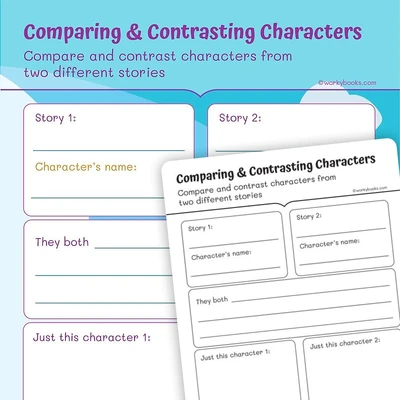
Compare and contrast two or more characters, settings, or events in a story or drama, drawing on specific details in the text (e.g., how characters interact).
Perfect for the way you teach
- Assign in one click
- Track progress per student
- Auto-graded results
- Practice at home
- Print or do on-screen
- Build skill mastery
- Standards-aligned
- Self-paced
- Ready-to-use today