This learning resource is available in interactive and printable formats. The interactive worksheet can be played online and assigned to students. The Printable PDF version can be downloaded and printed for completion by hand.
This engaging 400-word science passage introduces fifth-grade students to the concept of a full moon and helps them understand why we see the moon's phases change throughout the month. Aligned with NGSS standard 5-ESS1-2, the passage explains that a full moon happens when Earth is between the sun and the moon, so we see the entire sunlit side as a bright circle. Students learn that a full moon occurs about two weeks after a new moon and discover how the positions of Earth, the sun, and the moon create different moon phases. The passage uses simple, age-appropriate language and real-world examples to help students connect this scientific concept to their own observations of the night sky. Audio integration supports diverse learners by providing multiple ways to access the content. The passage includes bolded vocabulary terms with clear definitions, helping students build their scientific vocabulary. Accompanying activities include comprehension questions, writing prompts, and graphic organizers that reinforce understanding of lunar phases and the relationships between celestial bodies in our solar system.
CONTENT PREVIEW
Expand content preview
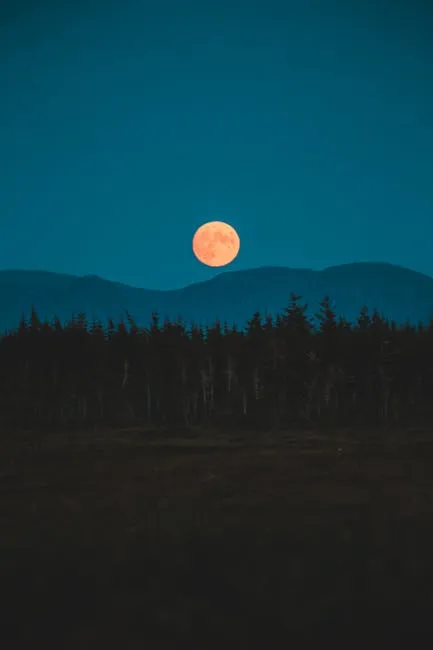
Image credit Erik Mclean / Pexels.
A full moon is a phase of the moon when we can see the entire sunlit side of the moon from Earth. This happens when Earth is positioned between the sun and the moon. The sun's light shines on the moon, and from our view on Earth, we see the whole bright circle. Understanding moon phases helps us track time and predict when we will see different shapes of the moon in the night sky.
The moon does not make its own light. Instead, it reflects light from the sun. As the moon moves around Earth in its orbit, which is the path it follows, different amounts of sunlight reflect off the moon's surface toward Earth. This is why the moon appears to change shape throughout the month. These different shapes are called phases.
A full moon occurs about two weeks after a new moon. During a new moon, the moon is between Earth and the sun, so we cannot see the sunlit side at all. The moon looks dark or invisible in the sky. As days pass, more of the sunlit side becomes visible from Earth. First, we see a thin crescent. Then the moon appears to grow larger each night. This growing is called waxing. After about two weeks, the moon has traveled halfway around Earth, and we see a full moon.
The position of Earth, the sun, and the moon determines what phase we see. Think of it like a lamp shining on a ball. If you stand between the lamp and the ball, you see the entire lit side of the ball. That is similar to what happens during a full moon. Earth is in the middle, the sun acts like the lamp, and the moon is like the ball. We see the whole bright side because sunlight travels past Earth and lights up the side of the moon facing us.
Full moons happen about once every 29.5 days. This is how long it takes the moon to complete one full orbit around Earth. People throughout history have used full moons to mark time and plan activities. Farmers planted crops based on moon phases. Many cultures created calendars using the cycles of the moon. Today, scientists study the moon's phases to understand more about how objects move in space.
Interesting Fact: A full moon can appear slightly orange or red when it rises near the horizon because Earth's atmosphere scatters the sunlight, similar to how sunsets look colorful!
Where is Earth during a full moon?
Between the sun and moonBehind the moonNext to the sunFar from the moon
What does the moon reflect?
Earth's lightSunlightStar lightIts own light
How long between full moons?
About 15 daysAbout 29.5 daysAbout 7 daysAbout 60 days
Why do we see moon phases?
The moon changes size dailyClouds cover the moon differentlyDifferent amounts of sunlight reflect toward EarthThe moon moves closer and farther
What happens after a new moon?
The moon disappears completelyWe see more sunlit moon each nightThe moon stops movingThe sun gets brighter
Why can full moons look orange?
The moon is actually orangeThe sun changes colorEarth's atmosphere scatters sunlightClouds make it orange
The moon makes its own light.
TrueFalse
What is an orbit?
The moon's surfaceA path around another objectLight from the sunA phase of the moon
Perfect For:
👩🏫 Teachers
• Reading comprehension practice
• Auto-graded assessments
• Literacy skill development
👨👩👧👦 Parents
• Reading practice at home
• Comprehension improvement
• Educational reading time
🏠 Homeschoolers
• Reading curriculum support
• Independent reading practice
• Progress monitoring
Reading Features:
📖
Reading Passage
Engaging fiction or nonfiction text
❓
Comprehension Quiz
Auto-graded questions
📊
Instant Feedback
Immediate results and scoring
📄
Printable Version
Download for offline reading
🔊
Read Aloud
Voice-over with word highlighting
Reviews & Ratings
No reviews yet. Be the first to share your experience!
Related Content
What is Milky Way
This engaging passage introduces Grade 4-5 students to the Milky Way, our home galaxy. Students will learn that the Milk...
5-ESS1-15-ESS1-2RI.3.1RI.3.4
Andromeda Galaxy
This engaging science passage introduces Grade 4-5 students to the Andromeda Galaxy, our closest large galactic neighbor...