What Makes Weather Change? — Reading Comprehension
Rate this|
1
Present
Present in classroom. No work saved
Assign
Classroom with student accounts, Track progress
Quick Play
No student accounts, assign with a link
Grades
4
5
6
7
PRINT+DIGITAL RESOURCE
This learning resource is available in interactive and printable formats. The interactive worksheet can be played online and assigned to students. The Printable PDF version can be downloaded and printed for completion by hand.
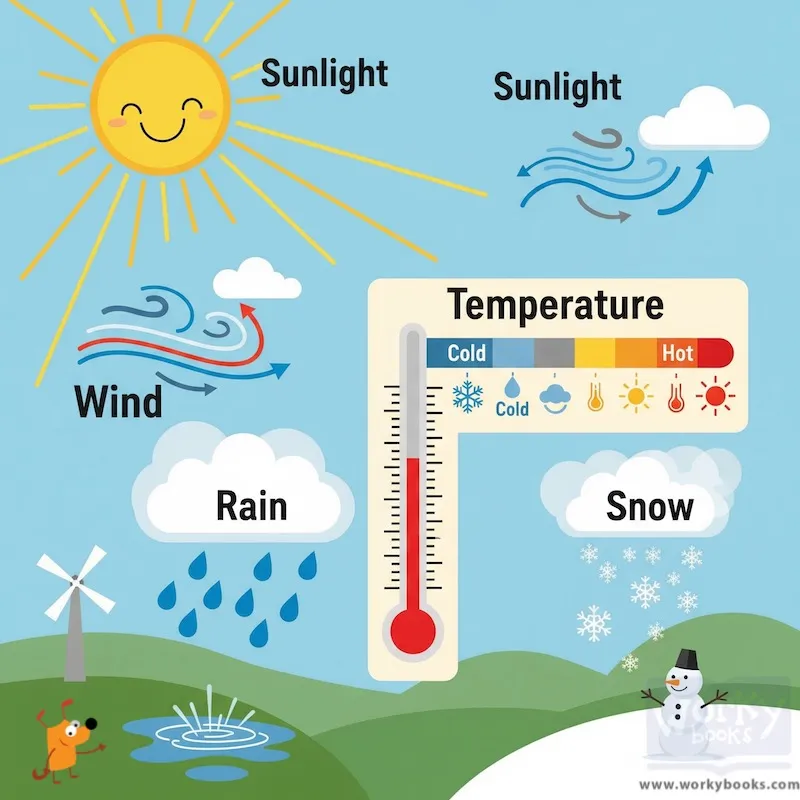
Weather is the combination of sunlight, wind, rain, snow and temperature in the atmosphere at any given time. The amount of sunlight creates major weather patterns on Earth.
Areas near the equator receive direct sunlight all year long. This intense heat produces wet tropical climates. The sun shines at an angle on middle latitudes, bringing warmer summers and cooler, drier winters. Frigid polar regions get little direct sunlight, making them cold year-round.
The movement of air between warm and cold areas also determines weather. As air warms near the tropics, it rises and flows toward the poles. Colder, denser air then cycles back towards lower latitudes setting up wind patterns.
When air masses with different temperatures meet, storms often erupt, bringing rain or snow.
Tracking sunlight patterns and air circulation helps meteorologists forecast weather and measure climate trends over seasons, years or decades in areas across the globe.
Learning about these major mechanisms allows us to explain and even predict weather shifts where we live.
What two factors primarily determine the weather?
Altitude and air pollutionOceans and topographySunlight and air movementTemperature and precipitation
Why is weather often stormy between air masses?
They have dense airThey gain moistureThey meet at the equatorThey have different temperatures
Why are the tropics rainy?
Lots of plantsIntense sunlightHigh elevationsUnstable air
Why are the poles very cold?
Far from equatorNear warm oceansLow levels of sunlightLack of air movement
Perfect For:
👩🏫 Teachers
• Reading comprehension practice
• Auto-graded assessments
• Literacy skill development
👨👩👧👦 Parents
• Reading practice at home
• Comprehension improvement
• Educational reading time
🏠 Homeschoolers
• Reading curriculum support
• Independent reading practice
• Progress monitoring
Reading Features:
📖
Reading Passage
Engaging fiction or nonfiction text
❓
Comprehension Quiz
Auto-graded questions
📊
Instant Feedback
Immediate results and scoring
📄
Printable Version
Download for offline reading
🔊
Read Aloud
Voice-over with word highlighting
Reviews & Ratings
No reviews yet. Be the first to share your experience!
Related Content
Caterpillars—Informational Text
This informational text is a great way for early readers to practice their comprehension skills. Students will read the ...
RI.K.1
Lions—Informational Text
This informational text is a great way for early readers to practice their comprehension skills. Students will read the ...
RI.K.1
The Sun—Informational Text
This informational text is a great way for early readers to practice their comprehension skills. Students will read the ...
RI.K.1
The Moon and the Sun—Informational Text
This informational text on the sun and the moon is a great way to practice spotting similarities between texts. Students...
RI.K.3
Bats and Butterflies—Informational Text
This informational text on bats and butterflies is a great way to practice spotting similarities between texts. Students...
RI.K.3
The Solar System—Informational Text
This informational text is a great way for early readers to practice their comprehension skills. Students will read the ...
RI.K.7
Pandas—Informational Text
This informational text on pandas is a great way to practice reading comprehension. Students will read the text then ans...
RI.5.1RI.5.10
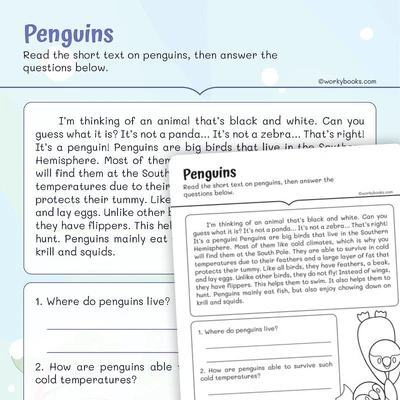
Informational Text — Penguins
This informational text on penguins is a great way to practice reading comprehension. Students will read the short passa...
RI.2.1RI.2.10
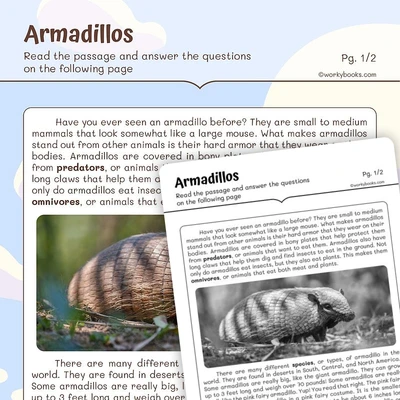
Informational Text — Armadillos
This informational text on armadillos is a great way to practice reading comprehension. Students will read the short pas...
RI.2.1RI.2.10
Animals at Farms—Informational Text
This informational text is a great way for early readers to practice their comprehension skills. Students will read the ...
RI.K.2
Airplanes Informational Text
This informational text on airplanes is a great way to practice reading comprehension. Students will read the short para...
RI.1.1RI.1.10RF.1.4.ARF.1.4.B
The Park—Informational Text
This informational text is a great way for early readers to practice their comprehension skills. This kindergarten readi...
RI.K.2
Flowers—Informational Text
This informational text is a great way for early readers to practice their comprehension skills. Students will read the ...
RI.K.2
Mesopotamia—Informatonal Text
This informational text on Mesopotamia is a great way to practice reading comprehension. Students will read the text the...
RI.5.3RI.5.10
Teachers—Informational Text
This worksheet will help your students to find the main point an author is trying to make, as well as identify reasons. ...
RI.K.8
Plants—Informational Text
This informational text on plants is a great way to practice identifying and applying meaning to unknown words in a text...
RI.K.4
Penguins—Informational Text
This informational text on penguins is a great way to practice identifying and applying meaning to unknown words in a te...
RI.K.4
Informational Text on Butterflies
This resource is a great way to practice differntiating between information gained from illustrations and words in a tex...
RI.1.6RI.10RF.1.4.ARF.1.4
Otters—Informational Text
This informational text on otters is a great way to practice identifying unknown words in a text. Students will read the...
RI.K.4
Elephants—Informational Text
This worksheet will help your students to find the main point an author is trying to make, as well as identify reasons. ...