What Type of Cloud Is Associated with Hail? — Reading Comprehension
Rate this|
11
Premium Resource
Present
Present in classroom. No work saved
Assign
Classroom with student accounts, Track progress
Quick Play
No student accounts, assign with a link
Grades
3
4
5
6
7
Standards
MS-ESS2-4
PRINT+DIGITAL RESOURCE
This learning resource is available in interactive and printable formats. The interactive worksheet can be played online and assigned to students. The Printable PDF version can be downloaded and printed for completion by hand.
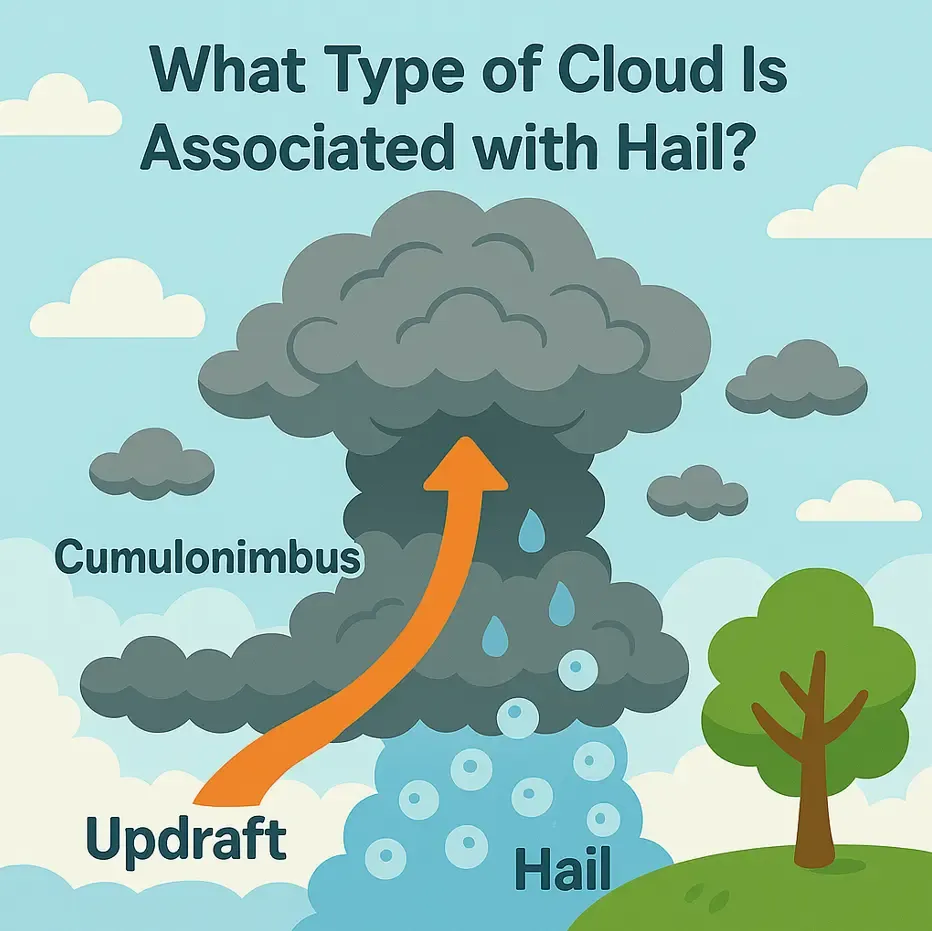
This NGSS-aligned science reading passage for middle school explains that cumulonimbus clouds are the main cloud type responsible for hail. It describes how strong updrafts in these towering storm clouds carry water droplets high into the atmosphere, where they freeze and grow as hailstones. Once the hail becomes too heavy for the updrafts to hold, it falls to the ground. The passage also introduces other severe weather linked to cumulonimbus clouds, such as lightning and tornadoes, helping students understand how these clouds form and why they matter in weather forecasting and Earth science lessons.
CONTENT PREVIEW
Expand content preview
The type of cloud most often associated with hail is the cumulonimbus cloud. These are large, towering clouds that form during strong thunderstorms. Cumulonimbus clouds can grow very tall—sometimes reaching over 10 miles (16 kilometers) into the sky—and stretch through different layers of the atmosphere.
Hail forms inside these powerful clouds when updrafts (strong upward winds) carry water droplets high into the cold parts of the cloud. The droplets freeze into small pieces of ice. As they are lifted up and down by the wind, more layers of ice build up around them. Once the hailstones become too heavy for the updrafts to hold, they fall to the ground.
Cumulonimbus clouds are also responsible for producing lightning, thunder, heavy rain, and even tornadoes. These clouds need warm, moist air at the surface and cooler air above to form. The strong rising air inside them creates the perfect conditions for severe weather.
Hail can damage crops, cars, and buildings, especially when the stones are large. That’s why weather forecasters watch cumulonimbus clouds closely during thunderstorms.
Fun Fact: The largest hailstone ever recorded in the U.S. was nearly 8 inches wide—about the size of a volleyball!
What type of cloud is most often linked to hail?
StratusCirrusCumulonimbusNimbostratus
How does hail form inside a cloud?
Raindrops freeze on the groundIce falls from spaceWater droplets freeze in cold air and build up layersSnow melts and refreezes
What helps hailstones grow larger inside a cloud?
SunlightDownward windsUpdrafts that move them aroundCloud rotation
What causes hailstones to fall to the ground?
They melt in the airThey bounce off the cloudsThey become too heavy for the updraftsThe Sun pulls them down
What other weather can cumulonimbus clouds produce?
Gentle breezes and fogTornadoes, lightning, and heavy rainSnow and frostClear skies and sunshine
Why do weather forecasters watch cumulonimbus clouds?
To track ocean currentsTo locate rainfall patternsTo watch for severe weather like hailTo find heat waves
What is the main idea of the passage?
Hail only falls in winterHail forms from clouds near the groundHail forms in tall cumulonimbus clouds during strong stormsAll clouds create hail
What can large hailstones damage?
Stars and planetsOceans and lakesCrops, cars, and buildingsWind and rain
Perfect For:
👩🏫 Teachers
• Reading comprehension practice
• Auto-graded assessments
• Literacy skill development
👨👩👧👦 Parents
• Reading practice at home
• Comprehension improvement
• Educational reading time
🏠 Homeschoolers
• Reading curriculum support
• Independent reading practice
• Progress monitoring
Reading Features:
📖
Reading Passage
Engaging fiction or nonfiction text
❓
Comprehension Quiz
Auto-graded questions
📊
Instant Feedback
Immediate results and scoring
📄
Printable Version
Download for offline reading
🔊
Read Aloud
Voice-over with word highlighting
Reviews & Ratings
No reviews yet. Be the first to share your experience!
Related Content
The Intertropical Convergence Zone (ITCZ): Earth's Weather Belt
This science passage explains the Intertropical Convergence Zone (ITCZ), a key equatorial weather system. Covering NGSS ...
MS-ESS2-5MS-ESS2-4RI.6.7
Earth's Spheres
This middle school science passage introduces students to Earth's four major spheres: the geosphere, hydrosphere, atmosp...
MS-ESS2-4MS-ESS2-6
Surface Water: Rivers, Lakes, and Wetlands
This engaging middle school science passage explores the dynamic world of surface water, focusing on the complex systems...
MS-ESS2-4
Groundwater
This middle school science passage explores the essential topic of groundwater, aligned to NGSS standards MS-ESS2-4 and ...
MS-ESS2-4MS-ESS3-1
Distribution of Water on Earth
This middle school science reading passage explores the distribution of water on Earth, aligned with NGSS standards MS-E...
MS-ESS2-4MS-ESS3-1
Water in Ecosystems
This engaging passage for grades 6-8 explores the essential role of water in ecosystems, tracing its movement through va...
MS-LS2-3MS-ESS2-4
The Ozone Layer
This engaging NGSS-aligned passage explores the science and importance of the ozone layer for middle school students (gr...
MS-ESS2-4MS-ESS3-3
Layers of the Atmosphere
This middle school science reading passage, aligned to NGSS standard MS-ESS2-4, guides students through the structure an...