Why Do We See Rainbows
Interactive passage with audio narration, comprehension questions, and printable PDF.
By completing this purchase you agree to our Terms of Use and Privacy Policy. Your subscription renews automatically until you cancel. You can cancel anytime from your account settings. All sales are final and non-refundable. Digital content is available for download in your account immediately upon purchase.
What's included
Why Do We See Rainbows preview and details
About this printable Why Do We See Rainbows science reading passage, NGSS-aligned (Grades 3-5)
Sample passage and quiz from Why Do We See Rainbows
Reading passage and comprehension quiz preview
Why Do We See Rainbows
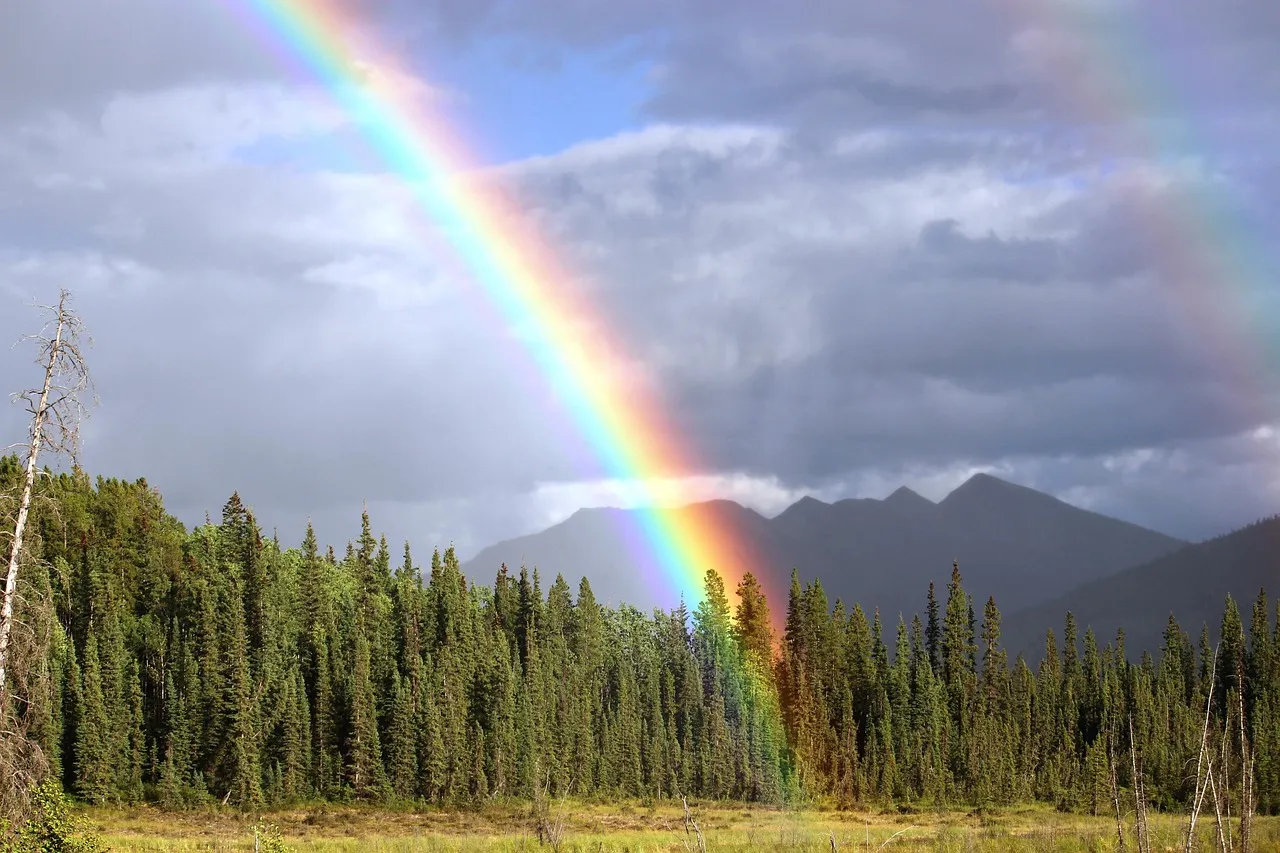
A rainbow is a colorful arc of light that appears in the sky when sunlight shines through water droplets in the air. Rainbows help us understand how light behaves and what white light is really made of.
When sunlight enters a water droplet, something special happens. The light slows down and bends as it enters the droplet. This bending of light is called refraction. White light from the sun is actually made up of many different colors mixed together. As the light refracts, each color bends at a slightly different angle. This causes the white light to separate into its individual colors, creating what scientists call the visible spectrum.
Inside the droplet, the separated colors bounce off the back surface. This bouncing of light is called reflection. Then the light exits the droplet, bending again as it leaves. Each droplet acts like a tiny prism, which is an object that separates light into colors.
The colors always appear in the same order: red, orange, yellow, green, blue, indigo, and violet. You can remember this order with the name "Roy G. Biv." You see a rainbow when the sun is behind you and rain or water droplets are in front of you. Millions of droplets work together to create the beautiful rainbow arc you see in the sky.
Comprehension quiz (8 questions)
1. What causes white light to separate?
2. What is refraction?
3. How many colors are in the spectrum?
4. Why do water droplets create rainbows?
5. When can you see a rainbow?
6. What happens inside the water droplet?
7. White light is made of one color.
8. What does visible spectrum mean?
Perfect for the way you teach
- Build comprehension skills
- Auto-graded quiz
- Differentiated reading
- Read together at home
- Improve fluency
- Quiet reading time
- Reading curriculum support
- Independent practice
- Track Lexile growth