
Louisiana Purchase Teaching Resources
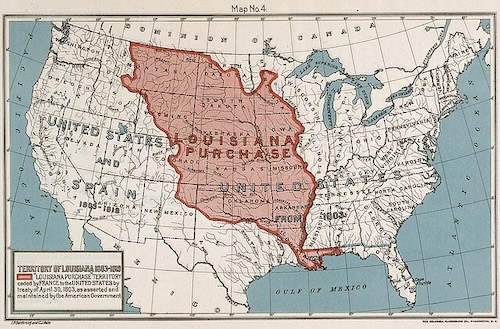
The Louisiana Purchase of 1803 stands as one of the most transformative events in American history. When President Thomas Jefferson negotiated the purchase of 828,000 square miles of territory from France, he forever changed the destiny of the United States. For educators teaching U.S. History, westward expansion, or manifest destiny, this topic offers rich opportunities for cross-curricular learning.
In this post, we’ll explore the key aspects of the Louisiana Purchase, share teaching strategies, and introduce you to our collection of reading passages designed to help students understand this pivotal moment in American history.
What Was the Louisiana Purchase?
The Louisiana Purchase was a land deal between the United States and France. It was completed on April 30, 1803. The U.S. paid about $15 million—roughly 3 cents per acre. This purchase added the vast Louisiana Territory to the nation. The land stretched from the Mississippi River to the Rocky Mountains and from the Gulf of Mexico to Canada.
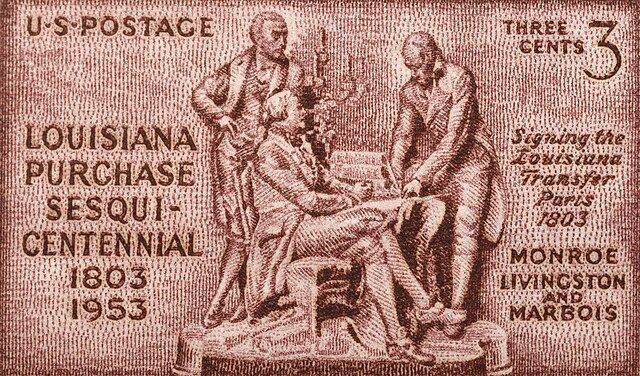
A 3-cent postage stamp, 1953 issue, commemorating the sesquicentennial of the Louisiana Purchase. In the Cherrygarden collection; scan by Fred Cherrygarden.Source: Wikipedia Commons
.jpg)
This single transaction doubled the size of the United States overnight, adding land that would eventually become all or part of 15 states, including Louisiana, Arkansas, Missouri, Iowa, Oklahoma, Kansas, Nebraska, and others.
Key Figures in the Louisiana Purchase
Thomas Jefferson – President of the United States who authorized the purchase
Napoleon Bonaparte – French leader who sold the territory
Robert Livingston – U.S. Minister to France who helped negotiate the deal
James Monroe – Special envoy sent by Jefferson to assist with negotiations
Why Was the Louisiana Purchase Important?
Understanding how the Louisiana Purchase affected the United States is essential for students studying American history.
1. Control of the Mississippi River and New Orleans Port
One of Jefferson’s primary motivations was securing access to the Port of New Orleans. This strategic port was vital for American farmers and merchants who relied on the Mississippi River to ship goods east.
📚 Featured Reading Passage: New Orleans Port – This passage explores Jefferson’s concerns about trade access and why the port was so critical to the young nation’s economy.
2. Westward Expansion and Manifest Destiny
The Louisiana Purchase opened the floodgates for westward expansion. It provided the land and opportunity that would fuel the idea of Manifest Destiny—the belief that Americans were destined to expand across the continent.
3. Constitutional Questions
Jefferson himself questioned whether the Constitution gave him the power to make this deal. This started an important debate about what a president can and cannot do. That debate is still relevant today—and makes a great topic for civics class.
4. Exploration and Scientific Discovery
The purchase led directly to the famous Lewis and Clark Expedition, which mapped the new territory, documented hundreds of plant and animal species, and established relationships with Native American tribes.
Lewis and Clark Expedition
After the Louisiana Purchase was complete, Jefferson commissioned Meriwether Lewis and William Clark to lead an expedition into the uncharted western territory. Their journey, known as the Corps of Discovery, lasted from 1804 to 1806 and covered approximately 8,000 miles.

source: U.S. Post Office; Bureau of Engraving and Printing; designed by Charles R. Chickering
What Students Should Know About Lewis and Clark
- Purpose: Map the territory, find a water route to the Pacific Ocean, document plants and animals, and establish trade with Native American tribes
- Duration: May 1804 – September 1806
- Route: The expedition followed the Missouri River westward, crossed the Rocky Mountains, and reached the Pacific Ocean
📚 Featured Reading Passage: Lewis and Clark Expedition – This comprehensive passage covers the goals, challenges, and discoveries of this historic journey.
Sacagawea: Essential Guide and Interpreter
Sacagawea played a key role in the Lewis and Clark Expedition. This Lemhi Shoshone woman served as a guide and interpreter. She knew the land well and could speak with Native tribes. Her skills were vital to the expedition’s success.
📚 Featured Reading Passage: Sacagawea – This passage highlights Sacagawea’s contributions, her incredible journey while carrying her infant son, and her lasting legacy in American history.
Teaching the Louisiana Purchase: Classroom Strategies
For Elementary Students (Grades 3-5)
- Focus on the basic facts: who, what, when, where, why
- Use maps to show the size of the purchase compared to the existing United States
- Introduce key figures through biographical reading passages
- Create a simple timeline of events from 1803-1806
For Middle School Students (Grades 6-8)
- Explore the constitutional debate Jefferson faced
- Analyze primary sources such as the treaty text or Jefferson’s letters
- Discuss cause and effect relationships between the purchase and westward expansion
📚 Featured Reading Passage: Louisiana Purchase Deal of 1803
Frequently Asked Questions
When was the Louisiana Purchase?
The Louisiana Purchase treaty was signed on April 30, 1803.
What was the Louisiana Purchase?
It was the acquisition of the Louisiana Territory from France by the United States for $15 million.
How did the Louisiana Purchase affect the United States?
It doubled the nation’s size, secured control of the Mississippi River and New Orleans Port, and opened the West for exploration and settlement.
Why did France sell the Louisiana Territory?
Napoleon needed funds for his European wars and had abandoned plans for a French empire in North America after a failed attempt to suppress a slave rebellion in Haiti.
Was the Louisiana Purchase constitutional?
This was debated even at the time. Jefferson believed in strict constitutional interpretation but ultimately decided the benefits outweighed his concerns.
Ready to explore our full collection of U.S. History reading passages?
Visit Workybooks.com to discover hundreds of curriculum-aligned resources for your K-8 classroom.
Looking for more American history teaching resources? Check out our reading passages on the American Revolution, Westward Expansion, and Native American History.
Related Posts

4th Grade Common Core Math Worksheets | Workybooks
Author’s Purpose Worksheets: Grade 1