Thomas Jefferson Biography — Reading Comprehension
Rate this
Premium Resource
Present
Present in classroom. No work saved
Assign
Classroom with student accounts, Track progress
Quick Play
No student accounts, assign with a link
Grades
3
4
5
Standards
HSS 5.6.2
RI.4.2
PRINT+DIGITAL RESOURCE
This learning resource is available in interactive and printable formats. The interactive worksheet can be played online and assigned to students. The Printable PDF version can be downloaded and printed for completion by hand.
This engaging history reading passage provides a detailed look at Thomas Jefferson, one of America's most influential founding fathers. Students will learn about Jefferson's childhood in Virginia, his important role in writing the Declaration of Independence, his presidency, and his many inventions and interests. The passage highlights Jefferson's commitment to liberty and education, as well as his impact on the new nation's government. Aligned to HSS 5.6.2 and RI.4.2, the resource includes a glossary, a Spanish translation, and a read aloud audio option. Interactive activities such as multiple-choice questions, writing prompts, timelines, and graphic organizers help students develop comprehension and analytical skills. This comprehensive resource is ideal for exploring the early years of the United States and understanding how Jefferson's ideas continue to shape America today.
CONTENT PREVIEW
Expand content preview
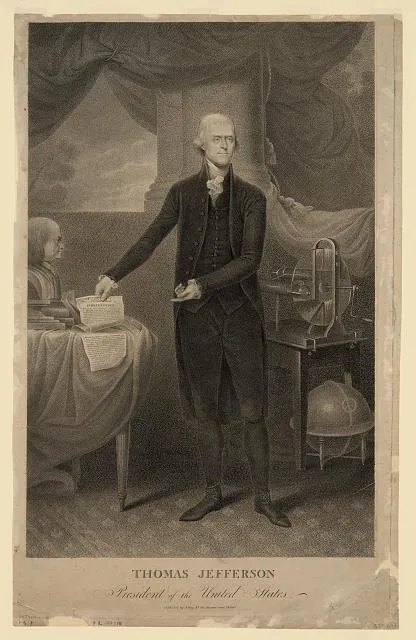
Thomas Jefferson, President of the United States. Source: Library of Congress - Tiebout, Cornelius, 1777-1832
Thomas Jefferson was one of America’s most important leaders. He was born in 1743 in Virginia. As a young boy, he loved to read and learn about science, nature, and music. Jefferson grew up to become a planter and lawyer, caring for his land and family. He wanted to help his country become a better place.
In 1776, Jefferson became famous for writing the Declaration of Independence. This important paper said that all people have the right to life, liberty, and the pursuit of happiness. The Declaration helped the American colonies break away from British rule. Jefferson’s words inspired many people to fight for freedom.
After the American Revolution, Jefferson worked to build the new country. He served as the governor of Virginia and later as the Secretary of State for President George Washington. In 1801, he became the third President of the United States. As president, Jefferson made a huge decision—the Louisiana Purchase. This doubled the size of the United States by buying land from France. Jefferson also sent Lewis and Clark to explore the West.
Jefferson believed in the power of education. He started the University of Virginia because he thought learning was important for everyone. Jefferson was also an inventor and loved to create new things. He designed his own home, Monticello, and many useful gadgets. He knew French, played the violin, and studied plants and animals. People called him a Renaissance man because he had so many talents.
Thomas Jefferson’s ideas about freedom, government, and education helped shape the United States. He worked hard to make his country fair and strong. He died on July 4, 1826, exactly 50 years after the Declaration of Independence was signed.
Interesting Fact: Both Thomas Jefferson and John Adams, another founding father, died on the same day—July 4, 1826, the 50th anniversary of American independence!
Where was Thomas Jefferson born?
VirginiaNew YorkGeorgiaPennsylvania
What did Jefferson write in 1776?
Declaration of IndependenceBill of RightsLouisiana PurchaseU.S. Constitution
Jefferson was the ____ President.
thirdfirstsecondfifth
What was the effect of the Louisiana Purchase?
Doubled U.S. sizeStarted a warEnded slaveryCreated Congress
Why did Jefferson send Lewis and Clark west?
To explore new landTo start a warTo collect taxesTo build a city
How did Jefferson show he valued education?
Started University of VirginiaBuilt a libraryWrote a bookInvented a clock
Jefferson died on July 4, 1826. (True or False)
TrueFalse
What is a 'Renaissance man'?
Talented in many thingsA British kingA ship captainA French writer
Perfect For:
👩🏫 Teachers
• Reading comprehension practice
• Auto-graded assessments
• Literacy skill development
👨👩👧👦 Parents
• Reading practice at home
• Comprehension improvement
• Educational reading time
🏠 Homeschoolers
• Reading curriculum support
• Independent reading practice
• Progress monitoring
Reading Features:
📖
Reading Passage
Engaging fiction or nonfiction text
❓
Comprehension Quiz
Auto-graded questions
📊
Instant Feedback
Immediate results and scoring
📄
Printable Version
Download for offline reading
🔊
Read Aloud
Voice-over with word highlighting
Reviews & Ratings
No reviews yet. Be the first to share your experience!
Related Content
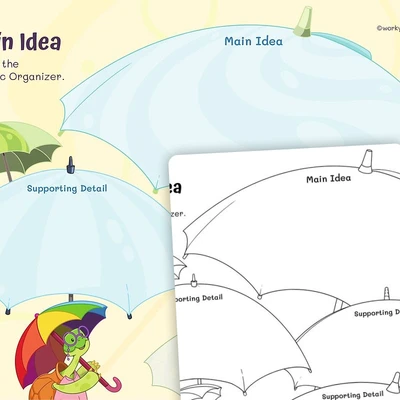
Identify Main Idea Graphic Organizer
This graphic organizer on main idea includes space to write the main idea and three supporting details.
RI.1.2RI.2.2RI.3.2RI.4.2
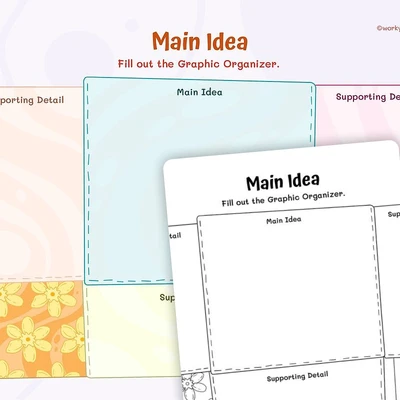
Main Idea and Suporting Details Graphic Organizer
This graphic organizer on main idea includes space to write the main idea and three supporting details.
RI.1.2RI.2.2RI.3.2RI.4.2
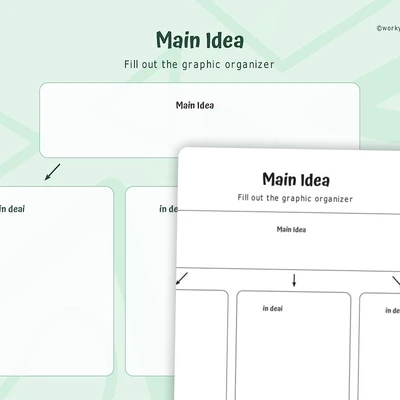
Main Idea and Details Graphic Organizer
This graphic organizer on main idea includes space to write the main idea and three supporting details.
RI.1.2RI.2.2RI.3.2RI.4.2
Snorkeling & Scuba Diving
RI.2.2RI.2.6RI.2.10RF.2.4.A
The Rubik's Cube
RI.2.2RI.2.6RI.2.10RF.2.4.A
The Space Needle
Students read a passage about the history and features of Seattle's Space Needle, then answer comprehension questions to...
RI.4.2
Graphic Organizer for Main Idea
This graphic organizer on main idea includes space to write the main idea and three supporting details.
RI.1.2RI.2.2RI.3.2RI.4.2
The Role of Pollinators in Nature
Learn about the fascinating world of pollinators and discover their crucial role in the reproductive process of flowerin...
RI.4.2RI.4.3RI.4.4RI.5.1
Pollination: A Crucial Ecosystem Service
Explore the vital role of pollination beyond plant reproduction, as it sustains ecosystems by ensuring food security, pr...
RI.4.2RI.4.3RI.4.4RI.5.1
Seed Dispersal: How Plants Travel
Plants may seem stationary, but their seeds have amazing ways to travel! Explore the fascinating world of seed dispersal...
RI.4.2RI.4.3RI.4.4RI.5.1
The States of Matter: Solid
Discover the differences between solids, liquids and gases by exploring how their particles are arranged and move. This ...
RI.4.2RI.4.3RI.4.4RI.5.1
What is a Simple Machine
Discover the power of simple machines! This informational text explores how basic tools like levers, pulleys and incline...
RI.4.2RI.4.3RI.4.4RI.5.1
How Do Scientists Study Past Climates?
Students will analyze how tools like ice cores and tree rings provide scientific evidence about Earth’s historical clima...
RI.4.1RI.4.2RI.4.3.4.RI.4.74-ESS2-2
Earth Day and Types of Pollution
Earth Day is coming! Get ready to learn about pollution and test your knowledge. Click for a free reading passage and qu...
RI.4.1RI.4.2ESS3.CESS3.A
Earth Day and Green Initiatives
Celebrate Earth Day with this fun and educational activity! Students will begin by reading a short passage that explains...
RI.4.1RI.4.2ESS3.CESS3.A
The Life Cycle of a Salmon
Salmon have a remarkable life cycle that takes them from rivers to the ocean and back again. They hatch as alevin, grow ...
RI.3.1RI.4.4RI.4.2
Journey of a Sea Turtle
Sea turtles lay their eggs on beaches, and their hatchlings begin a dangerous journey to the ocean. After growing in the...
RI.3.1RI.4.4RI.4.2
Heroes for Freedom: Harriet Tubman
Harriet Tubman, born into slavery, became a hero who risked her life to lead others to freedom through the Underground R...
RI.3.1RI.4.4RI.4.2RI.5.2
Heroes for Freedom: Fannie Lou Hamer
Fannie Lou Hamer overcame racial segregation and poverty to become a powerful voice for civil rights. Her fight for voti...