New Orleans: An Important Port — Reading Comprehension
Rate this
Premium Resource
Present
Present in classroom. No work saved
Assign
Classroom with student accounts, Track progress
Quick Play
No student accounts, assign with a link
Grades
3
4
5
Standards
D2.HIS.3.3-5
D2.HIS.14.3-5
RI.4.3
RI.4.4
W.4.2
PRINT+DIGITAL RESOURCE
This learning resource is available in interactive and printable formats. The interactive worksheet can be played online and assigned to students. The Printable PDF version can be downloaded and printed for completion by hand.
This engaging U.S. history reading passage explores the crucial role of New Orleans and the Louisiana Purchase in shaping the early United States. Students learn about the Mississippi River, the importance of ports, and the actions of Thomas Jefferson as president. Through a clear and chronological narrative, the passage highlights how the purchase of Louisiana doubled the size of the country and opened new opportunities for Americans. Activities include a glossary, multiple-choice quiz, writing prompts, and a timeline of important events. The passage is aligned to C3 Framework and Common Core standards and features a read aloud audio and Spanish translation, making it accessible for all learners. Key terms such as 'port,' 'territory,' and 'trade' are defined and reinforced throughout the lesson. This resource is ideal for classrooms studying America's westward expansion and the challenges faced by the new nation.
The port of New Orleans became one of the most important cities in early America. After the United States gained independence, the country needed a way to move goods like cotton, corn, and tobacco to other parts of the world. The Mississippi River was the best route for shipping these goods. Ships could travel down the river and out to the Gulf of Mexico, reaching markets far away.
New Orleans sits at the mouth of the Mississippi River. This made it a powerful trade hub. Farmers from many states used the river to send their crops to New Orleans. From there, goods were loaded onto big ships and sent across the ocean. If a country controlled New Orleans, it controlled the flow of trade for much of the United States. This gave the city great value, even more than thousands of miles of empty wilderness.
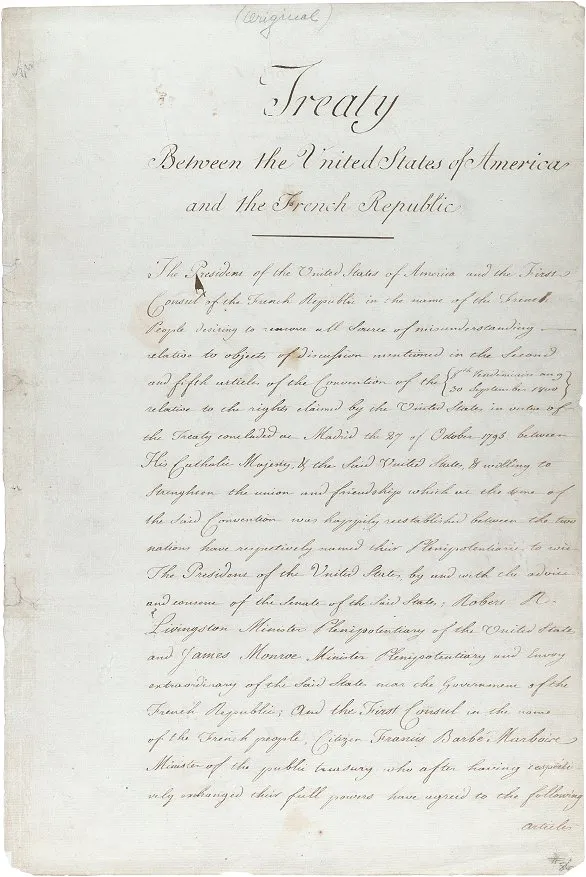
In the early 1800s, New Orleans was owned by France. The United States worried that if another country took over New Orleans, American farmers would not be able to sell their crops. President Thomas Jefferson knew the city’s importance. In 1803, he made a deal with France called the Louisiana Purchase. This agreement gave the United States control of New Orleans and a huge area of land west of the river.
After the Louisiana Purchase, the United States could use the Mississippi River freely. The port of New Orleans grew even busier. Steamboats and larger ships carried goods in and out of the country. The city became a gateway for people moving west and for products traveling to other lands. New Orleans helped the young nation grow richer and stronger by connecting it to the world.
Controlling New Orleans was a turning point for the United States. It showed that sometimes, a single city can matter more than a vast wilderness. Because of its location and the river, New Orleans became the heart of American trade in the early 1800s.
Interesting Fact: In 1815, the Battle of New Orleans was fought after the War of 1812 ended, making the city even more famous in American history.
Where is New Orleans located?
At the mouth of the Mississippi RiverOn the Atlantic OceanNear the Great LakesIn the Rocky Mountains
Who was president during the Louisiana Purchase?
Thomas JeffersonGeorge WashingtonAbraham LincolnJames Madison
Which country owned New Orleans before 1803?
FranceSpainEnglandMexico
Why was New Orleans valuable?
It controlled trade on the riverIt had gold minesIt was near mountainsIt was the biggest city
How did the U.S. gain New Orleans?
By buying it from FranceBy winning a battleBy finding it emptyBy building it
What happened after the Louisiana Purchase?
Trade increasedThe city was abandonedRivers dried upFarmers left
The Battle of New Orleans happened in 1815.
TrueFalse
What is a port?
A place for ships to load goodsA kind of shipA farm toolA type of crop
Perfect For:
👩🏫 Teachers
• Reading comprehension practice
• Auto-graded assessments
• Literacy skill development
👨👩👧👦 Parents
• Reading practice at home
• Comprehension improvement
• Educational reading time
🏠 Homeschoolers
• Reading curriculum support
• Independent reading practice
• Progress monitoring
Reading Features:
📖
Reading Passage
Engaging fiction or nonfiction text
❓
Comprehension Quiz
Auto-graded questions
📊
Instant Feedback
Immediate results and scoring
📄
Printable Version
Download for offline reading
🔊
Read Aloud
Voice-over with word highlighting
Reviews & Ratings
No reviews yet. Be the first to share your experience!
Related Content
Colonial Trade with England and Africa
This history reading passage explores colonial trade between the American colonies, England, and Africa, focusing on the...
D2.HIS.2.3-5D2.HIS.14.3-5RI.4.3RI.4.4
Building Washington D.C., Our Capital
This history reading passage explores the building of Washington D.C., the capital of the United States. Students will l...
D2.HIS.1-3.3-5D2.HIS.14.3-5RI.4.3RI.4.4
John Adams: Second President
This engaging U.S. history reading passage introduces students to John Adams, the second President of the United States....
D2.HIS.2.3-5D2.HIS.14.3-5RI.4.3RI.4.4
Dolley Madison Saves Washington's Portrait
This engaging history reading passage tells the inspiring story of Dolley Madison and her brave actions during the War o...
D2.HIS.2.3-5D2.HIS.14.3-5RI.4.3RI.4.4
Boomtowns Spring Up Out West
This engaging passage explores the exciting rise of boomtowns in the American West during the 1800s, focusing on the Gol...
D2.HIS.2.3-5D2.HIS.14.3-5RI.4.3RI.4.4
African Americans Fight for the Union
This engaging U.S. history reading passage explores the important role African Americans played in helping the Union dur...
D2.HIS.2.3-5D2.HIS.14.3-5RI.4.3RI.4.4
Franklin D. Roosevelt and the New Deal
This engaging history reading passage explores the life and leadership of Franklin D. Roosevelt and his creation of the ...
D2.HIS.2.3-5D2.HIS.14.3-5RI.4.3RI.4.4
Rationing and Life on the Home Front
This history reading passage explores rationing and life on the home front during World War II, focusing on how American...
D2.HIS.2.3-5D2.HIS.14.3-5RI.4.3RI.4.4
D-Day and the End of World War II
This engaging reading passage explores the key events of D-Day and how it helped bring World War II to a close. Students...
D2.HIS.2.3-5D2.HIS.14.3-5RI.4.3RI.4.4
Martin Luther King Jr. and "I Have a Dream"
This engaging history reading passage introduces students to the life and legacy of Martin Luther King Jr., focusing on ...
D2.HIS.2.3-5D2.HIS.14.3-5RI.4.1RI.4.3.
Ruby Bridges and the Little Rock Nine
This engaging history reading passage explores the stories of Ruby Bridges and the Little Rock Nine, two important group...
D2.HIS.2.3-5D2.HIS.14.3-5RI.4.3RI.4.4
Cesar Chavez and Farm Workers' Rights
This engaging history reading passage explores the life and impact of Cesar Chavez, a key leader in the fight for farm w...
D2.HIS.2.3-5D2.HIS.14.3-5RI.4.3RI.4.4
When Mexico Took Over California
This engaging U.S. history reading passage explores the period when Mexico took over California during the era of Westwa...
D2.HIS.2.3-5D2.HIS.3.3-5D2.HIS.14.3-5RI.4.3
Californios Culture
This history reading passage explores the story of the Californios—Spanish and Mexican settlers who shaped California be...
D2.HIS.2.3-5D2.HIS.3.3-5D2.HIS.14.3-5RI.4.3
The 31st State: California Joins the Union
This engaging U.S. history reading passage explores California's journey to becoming the 31st state in 1850. Students le...
D2.HIS.3.3-5D2.HIS.14.3-5RI.4.3RI.4.4
Routes to the Gold Fields
This engaging history reading passage explores the three main routes people took to reach the California gold fields dur...
D2.HIS.2.3-5D2.HIS.14.3-5RI.4.3RI.4.4
The Golden Spike: Connecting California to the Nation
This engaging U.S. history reading passage teaches students about the Golden Spike and how the first transcontinental ra...
D2.HIS.1.3-5D2.HIS.2.3-5D2.HIS.14.3-5RI.4.3
California Women Win the Vote in 1911
This engaging history reading passage explores how women in California fought and won the right to vote in 1911. Aligned...
D2.HIS.2.3-5D2.HIS.14.3-5RI.4.3RI.4.4
The 1965 Immigration Act
Discover the story of the 1965 Immigration Act with this engaging U.S. history reading passage. Perfect for building rea...
D2.HIS.4.3-5D2.HIS.14.3-5RI.5.3RI.5.4
Protecting California's Environment
This engaging U.S. history reading passage explores the story of how California has worked to protect its unique environ...