Reading Passage

Discovery of Penicillin

Interactive passage with audio narration, comprehension questions, and printable PDF.

No ratings yet|
28
Grades 4–5ElaReadingScienceEnglish · SpanishInteractive · Printable
Aligned toRI.4.6RI.5.6

What's included

Reading passage
Audio narration
Comprehension quiz
Writing activity
Glossary & flashcards
Differentiated version
Spanish translation

Discovery of Penicillin preview and details

About this printable Discovery of Penicillin science reading passage, NGSS-aligned (Grades 4-5)

This passage compares Alexander Fleming's firsthand laboratory notes on the discovery of penicillin with a secondhand account from a medical journal. Fleming's notes capture the immediate observations and potential significance of the accidental discovery, focusing on the specific details observed in the lab. The journal article provides a broader historical context, explaining the development of penicillin into a usable drug and its impact on modern medicine. This comparison allows students to analyze how firsthand and secondhand accounts differ in focus, detail, and perspective, particularly in scientific discoveries. The passage aligns with CCSS.ELA-LITERACY.RI.4.6 standards and enhances understanding of how scientific breakthroughs are reported and contextualized.
Written by Workybooks TeamPublished by Workybooks
Preview

Sample passage and quiz from Discovery of Penicillin

Reading passage and comprehension quiz preview

Discovery of Penicillin
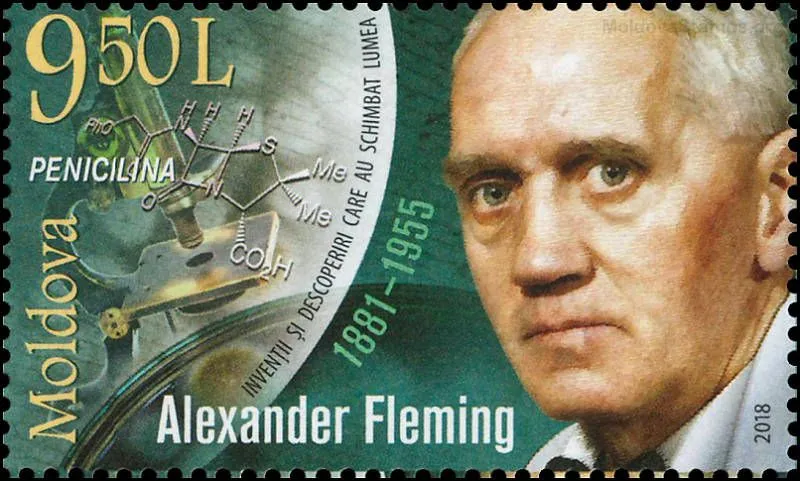
Alexander Fleming 2018 stamp of Moldova

"Alexander Fleming 2018 stamp of Moldova" by Post of Moldova / Wikimedia Commons

Firsthand Account: Alexander Fleming's Laboratory Notes September 3, 1928: Upon returning from holiday, I noticed something unusual in one of my Petri dishes containing Staphylococcus bacteria. A mold had contaminated the dish, and around this mold was a clear area where no bacteria were growing. This is most curious. I have isolated the mold and will investigate further. This accidental discovery could potentially lead to something significant in the field of antibacterial substances.


Secondhand Account: Medical Journal Article, 1945

The discovery of penicillin by Alexander Fleming in 1928 revolutionized modern medicine. Fleming noticed that a mold contaminating one of his bacterial cultures had created a bacteria-free circle around itself. He identified the mold as belonging to the Penicillium genus and found that it produced a substance with antibiotic properties, which he named penicillin. However, it wasn't until the late 1930s and early 1940s that a team of scientists, led by Howard Florey and Ernst Chain, developed penicillin into a usable antibiotic drug. This discovery has since saved millions of lives and opened the door to the development of many other antibiotics.

Comprehension quiz (4 questions)

1. How does the focus of the firsthand account differ from the secondhand account?

The firsthand account emphasizes the immediate observations and potential significance, while the secondhand account provides historical context and long-term impact.
The firsthand account discusses the development of penicillin as a drug, while the secondhand account focuses on Fleming's initial discovery.
The firsthand account provides statistical data on lives saved, while the secondhand account describes the laboratory conditions.
The firsthand account mentions other scientists involved, while the secondhand account only discusses Fleming's role.

2. What information is unique to the secondhand account?

The date of Fleming's discovery
The name of the bacteria in the Petri dish
The involvement of Florey and Chain in developing penicillin as a drug
The observation of the bacteria-free circle around the mold

3. Which aspect of the discovery is emphasized more in the firsthand account?

The accidental nature of the discovery
The global impact on medicine
The chemical properties of penicillin
The recognition Fleming received for his work

4. How does the secondhand account provide a different perspective on the discovery?

It includes Fleming's personal thoughts and feelings
It focuses on the challenges Fleming faced in his research
It provides information about the development and impact of penicillin beyond the initial discovery
It describes the specific laboratory techniques used by Fleming
Curriculum

Common Core standards for Discovery of Penicillin

RI.4.6

Compare and contrast a firsthand and secondhand account of the same event or topic; describe the differences in focus and the information provided.

RI.5.6

Analyze multiple accounts of the same event or topic, noting important similarities and differences in the point of view they represent.

Who it's for

Perfect for the way you teach

Teachers
  • Build comprehension skills
  • Auto-graded quiz
  • Differentiated reading
Parents
  • Read together at home
  • Improve fluency
  • Quiet reading time
Homeschoolers
  • Reading curriculum support
  • Independent practice
  • Track Lexile growth
Topics

Reviews & Ratings

No reviews yet. Be the first to share your experience!

More reading you might love

14 more
Worksheet
At The Amusement Park! - worksheet educational content
Grades 4–5

At The Amusement Park!

reading informational text · RI.4.6

$1.50
Worksheet
Point of View - worksheet educational content
Grades 4–5

Point of View

reading informational text · RI.4.6

Free
Worksheet
Living in the City - worksheet educational content
Grades 4–5

Living in the City

reading informational text · RI.4.6

$1.50
Passage
The Thorny Devil - reading educational content
Grades 1–3

The Thorny Devil

reading informational text · RI.3.1

Free
Passage
Great Chicago Fire - reading educational content
Grades 4–5

Great Chicago Fire

reading informational text · RI.4.6

$1.50
Passage
Eruption of Mount Vesuvius - reading educational content
Grades 4–5

Eruption of Mount Vesuvius

reading informational text · RI.4.6

Free
Passage
The Wright Brothers' First Flight - reading educational content
Grades 4–5

The Wright Brothers' First Flight

reading informational text · RI.4.6

Free
Worksheet
Primary and Secondary Sources  - worksheet educational content
Grades 3–5

Primary and Secondary Sources

us history · RI.4.6

$1.50
Passage
Animal Colors Help Them Survive - reading educational content
Grades 3–6

Animal Colors Help Them Survive

life science · 3-LS4-2

$1.50
Worksheet
Analyzing Perspective -Christopher Columbus - worksheet educational content
Grade 5

Analyzing Perspective -Christopher Columbus

reading informational text · RI.5.6

$1.50
Worksheet
Comparing Accounts of Landing on Moon - worksheet educational content
Grade 5

Comparing Accounts of Landing on Moon

reading informational text · RI.5.6

Free
Worksheet
Comparing News Reports- Political Protest - worksheet educational content
Grade 5

Comparing News Reports- Political Protest

reading informational text · RI.5.6

$1.50
Worksheet
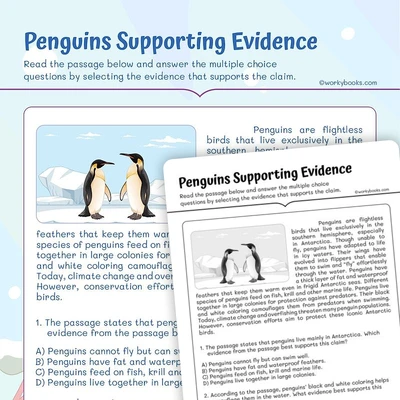
Penguins Supporting Evidence - worksheet educational content
Grade 5

Penguins Supporting Evidence

reading informational text · RI.5.6

Free
Passage
Malala Yousafzai - reading educational content
Grades 5–8

Malala Yousafzai

reading informational text · NGSS

Free
Copyright © 2026 Workybooks. Made with ♥ in California.