Reading PassagePremium

Great Chicago Fire

Interactive passage with audio narration, comprehension questions, and printable PDF.

No ratings yet|
1
Grades 4–5ElaReadingScienceEnglish · SpanishInteractive · Printable
Aligned toRI.4.6RI.5.6
Just this resource
$1.50
One-time purchase
Best value
Unlock everything
$49.99$29.99/yr
40% off until Aug 1 — 10,000+ resources
Renews at $49.99/year.
Unlock above to use these actions

What's included

Reading passage
Audio narration
Comprehension quiz
Writing activity
Glossary & flashcards
Differentiated version
Spanish translation

Great Chicago Fire preview and details

About this printable Great Chicago Fire science reading passage, NGSS-aligned (Grades 4-5)

This passage presents two accounts of the Great Chicago Fire of 1871: a firsthand diary entry and a secondhand newspaper article. Students can compare and contrast the personal, emotional narrative of Sarah Johnson with the factual, overview-style report from the Chicago Tribune. The firsthand account vividly describes the immediate danger and panic, while the secondhand account provides broader context, including the fire's cause, extent, and historical significance. This comparison helps students understand different perspectives on historical events and improves their ability to analyze various types of informational texts, aligning with CCSS.ELA-LITERACY.RI.4.6 standards.
Written by Neha Goel TripathiPublished by Workybooks
Preview

Sample passage and quiz from Great Chicago Fire

Reading passage and comprehension quiz preview

The Great Chicago Fire
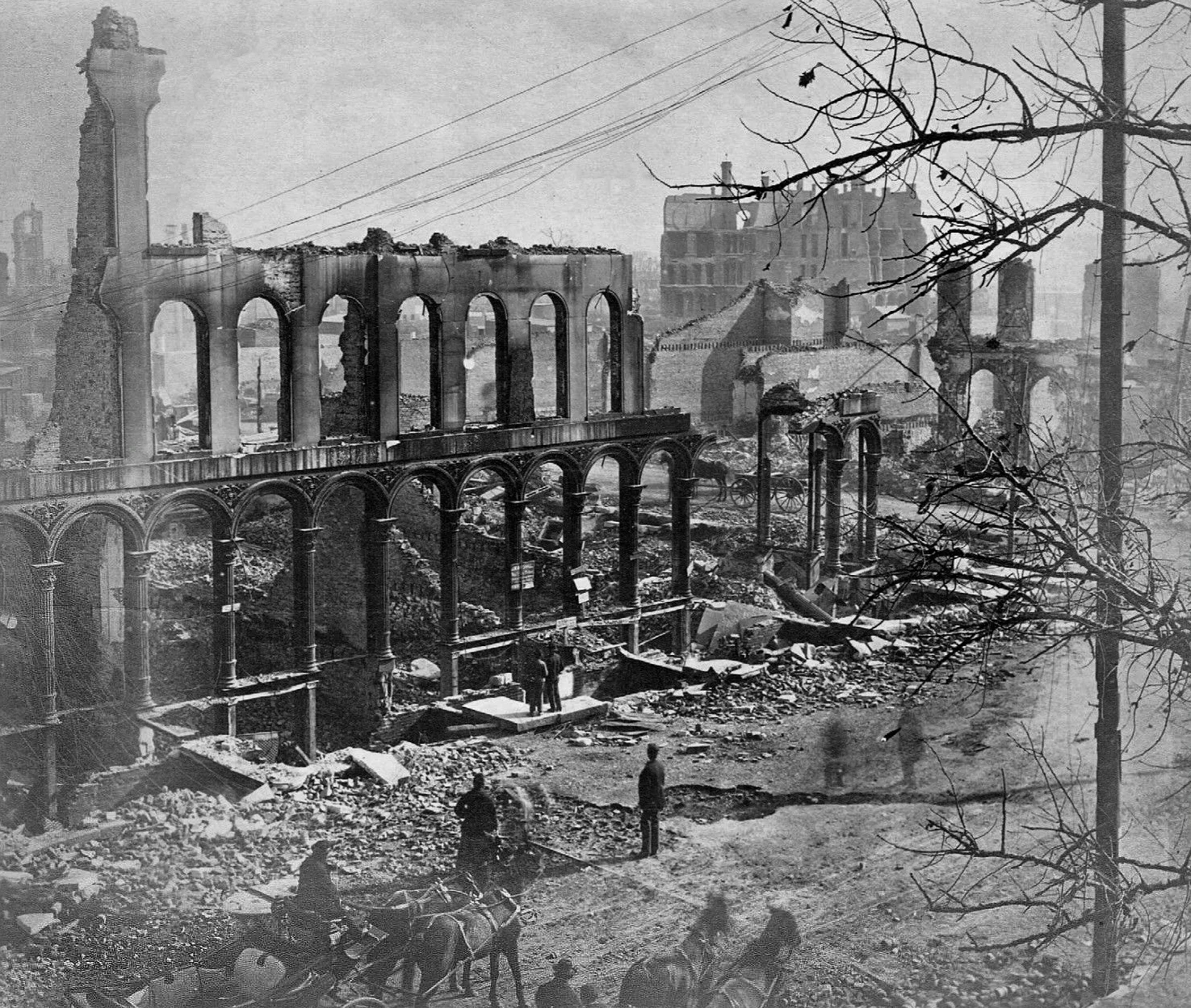
1871 Great Chicago Fire destroyed buildings

1871 Great Chicago Fire destroyed buildings by Unidentified photographer, printer or publisher / Wikimedia Commons.

Firsthand Account: Sarah Johnson's Diary Entry

October 8, 1871: I woke up to the smell of smoke and the sound of people shouting. Looking out my window, I saw flames engulfing Mrs. O'Leary's barn across the street. The fire spread quickly, and soon our entire neighborhood was ablaze. We grabbed what we could and ran towards the lake, dodging falling debris and choking on thick smoke. The heat was unbearable, and I've never been so scared in my life.


Secondhand Account: Chicago Tribune Article, October 10, 1871

The Great Chicago Fire began on the evening of October 8, 1871, in a barn on DeKoven Street. Strong winds helped the fire spread rapidly through the city's mostly wooden buildings. Over 17,000 structures were destroyed, leaving 100,000 residents homeless. The fire raged for two days before rain helped extinguish the flames. While the cause remains uncertain, the incident has become a significant part of Chicago's history.

Comprehension quiz (4 questions)

1. How do the two accounts differ in their focus?

The firsthand account focuses on personal experiences, while the secondhand account provides an overview of the event.
The firsthand account discusses the cause of the fire, while the secondhand account focuses on its aftermath.
The firsthand account describes the city's response, while the secondhand account focuses on individual stories.
The firsthand account provides statistics, while the secondhand account describes emotions.

2. Which information is unique to the secondhand account?

The date the fire started
The number of structures destroyed
The smell of smoke
The sound of people shouting

3. What aspect of the fire is emphasized in the firsthand account?

The historical significance of the event
The emotional impact and immediate danger
The city's reconstruction efforts
The economic consequences of the fire

4. How does the secondhand account provide a different perspective on the fire?

It includes specific details about the author's escape
It focuses on the fire's long-term effects on Chicago's economy
It provides a broader context, including the fire's duration and extent of damage
It describes the firefighters' efforts to control the blaze
Curriculum

Common Core standards for Great Chicago Fire

RI.4.6

Compare and contrast a firsthand and secondhand account of the same event or topic; describe the differences in focus and the information provided.

RI.5.6

Analyze multiple accounts of the same event or topic, noting important similarities and differences in the point of view they represent.

Who it's for

Perfect for the way you teach

Teachers
  • Build comprehension skills
  • Auto-graded quiz
  • Differentiated reading
Parents
  • Read together at home
  • Improve fluency
  • Quiet reading time
Homeschoolers
  • Reading curriculum support
  • Independent practice
  • Track Lexile growth
Topics

Reviews & Ratings

No reviews yet. Be the first to share your experience!

More reading you might love

14 more
Worksheet
At The Amusement Park! - worksheet educational content
Grades 4–5

At The Amusement Park!

reading informational text · RI.4.6

$1.50
Worksheet
Point of View - worksheet educational content
Grades 4–5

Point of View

reading informational text · RI.4.6

Free
Worksheet
Living in the City - worksheet educational content
Grades 4–5

Living in the City

reading informational text · RI.4.6

$1.50
Passage
The Thorny Devil - reading educational content
Grades 1–3

The Thorny Devil

reading informational text · RI.3.1

Free
Passage
Eruption of Mount Vesuvius - reading educational content
Grades 4–5

Eruption of Mount Vesuvius

reading informational text · RI.4.6

Free
Passage
Discovery of Penicillin - reading educational content
Grades 4–5

Discovery of Penicillin

reading informational text · RI.4.6

Free
Passage
The Wright Brothers' First Flight - reading educational content
Grades 4–5

The Wright Brothers' First Flight

reading informational text · RI.4.6

Free
Worksheet
Primary and Secondary Sources  - worksheet educational content
Grades 3–5

Primary and Secondary Sources

us history · RI.4.6

$1.50
Passage
Animal Colors Help Them Survive - reading educational content
Grades 3–6

Animal Colors Help Them Survive

life science · 3-LS4-2

$1.50
Worksheet
Analyzing Perspective -Christopher Columbus - worksheet educational content
Grade 5

Analyzing Perspective -Christopher Columbus

reading informational text · RI.5.6

$1.50
Worksheet
Comparing Accounts of Landing on Moon - worksheet educational content
Grade 5

Comparing Accounts of Landing on Moon

reading informational text · RI.5.6

Free
Worksheet
Comparing News Reports- Political Protest - worksheet educational content
Grade 5

Comparing News Reports- Political Protest

reading informational text · RI.5.6

$1.50
Worksheet
Penguins Supporting Evidence - worksheet educational content
Grade 5

Penguins Supporting Evidence

reading informational text · RI.5.6

Free
Passage
Malala Yousafzai - reading educational content
Grades 5–8

Malala Yousafzai

reading informational text · NGSS

Free
Copyright © 2026 Workybooks. Made with ♥ in California.