Eruption of Mount Vesuvius — Reading Comprehension
Rate this|
5
Present
Present in classroom. No work saved
Assign
Classroom with student accounts, Track progress
Quick Play
No student accounts, assign with a link
Grades
4
5
Standards
RI.4.6
RI.5.6
PRINT+DIGITAL RESOURCE
This learning resource is available in interactive and printable formats. The interactive worksheet can be played online and assigned to students. The Printable PDF version can be downloaded and printed for completion by hand.
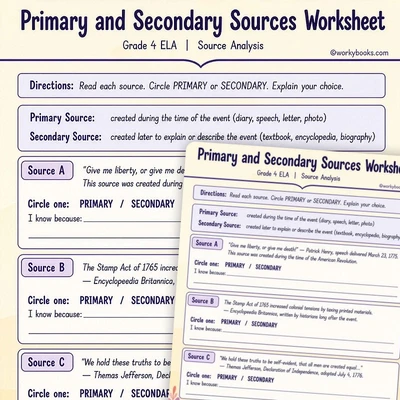
This passage contrasts Pliny the Younger's eyewitness account of the Mount Vesuvius eruption with a modern historical textbook excerpt. The firsthand account vividly describes the unfolding disaster, capturing the fear and confusion of those experiencing the event. The secondhand account provides scientific data, historical context, and information about the long-term impact of the eruption. By comparing these accounts, students can identify differences in perspective, detail, and focus between contemporary and historical writings about the same event. This comparison enhances critical reading skills and meets CCSS.ELA-LITERACY.RI.4.6 standards for analyzing multiple accounts of historical events.
CONTENT PREVIEW
Expand content preview
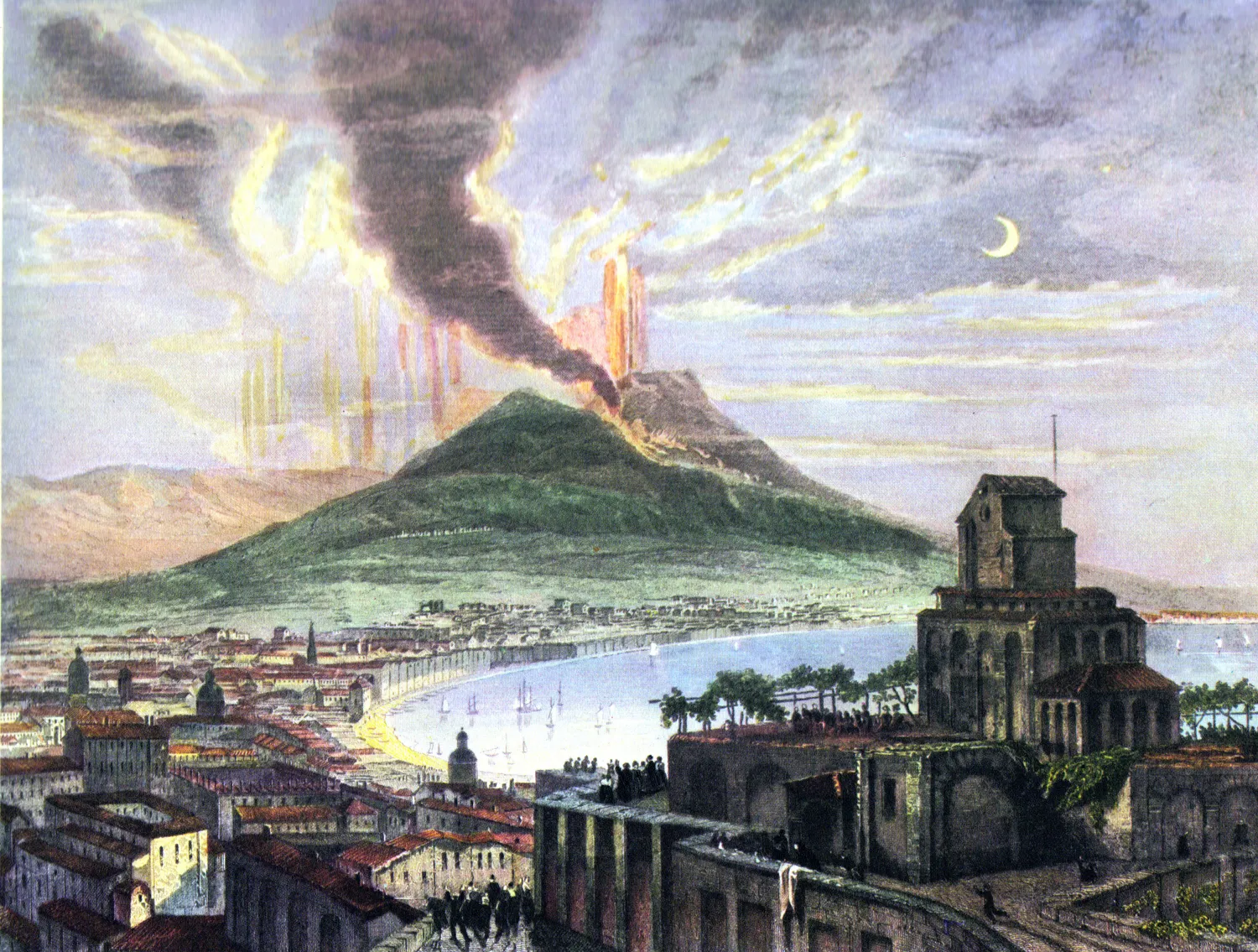
Napoli Mount Vesuvius 1858 engraving" by McLeod / Wikimedia Commons
Firsthand Account: Pliny the Younger's Letter
August 24, 79 AD: The day began with a strange cloud rising from Mount Vesuvius, shaped like a pine tree. As ash and pumice began to fall, my uncle decided to investigate closer. I stayed behind with my mother. The earth shook violently, and the sea seemed to roll back upon itself. Darkness fell as if the sun had been extinguished. People cried out in fear, thinking the world was ending. We tied pillows to our heads for protection from the falling rocks and fled the city.
Secondhand Account: History Textbook Excerpt
The eruption of Mount Vesuvius in 79 AD was one of the most catastrophic volcanic events in European history. It buried the Roman cities of Pompeii and Herculaneum under meters of ash and pumice, preserving them for centuries. The eruption lasted for two days, ejecting molten rock, pulverized pumice, and hot ash at a rate of 1.5 million tons per second. The event was recorded by Pliny the Younger in two letters to the historian Tacitus, providing valuable eyewitness accounts of the disaster.
What is a key difference in the information provided by the two accounts?
The firsthand account describes personal observations and experiences, while the secondhand account provides scientific data and historical context.The firsthand account mentions the preservation of Pompeii, while the secondhand account focuses on escape efforts.The firsthand account provides the exact date of the eruption, while the secondhand account describes the shape of the eruption cloud.The firsthand account discusses the long-term impacts, while the secondhand account only describes the immediate effects.
Which detail is only mentioned in the firsthand account?
The duration of the eruptionThe cities affected by the eruptionThe use of pillows as protective headgearThe rate of volcanic material ejection
How does the focus of the secondhand account differ from the firsthand account?
It emphasizes the emotional impact on individualsIt provides a broader historical and scientific perspectiveIt concentrates on the rescue effortsIt describes the daily life in Pompeii before the eruption
What additional information does the secondhand account provide?
The personal experiences of the writerThe sensory details of the eruptionThe quantity of material ejected during the eruptionThe weather conditions on the day of the eruption
Perfect For:
👩🏫 Teachers
• Reading comprehension practice
• Auto-graded assessments
• Literacy skill development
👨👩👧👦 Parents
• Reading practice at home
• Comprehension improvement
• Educational reading time
🏠 Homeschoolers
• Reading curriculum support
• Independent reading practice
• Progress monitoring
Reading Features:
📖
Reading Passage
Engaging fiction or nonfiction text
❓
Comprehension Quiz
Auto-graded questions
📊
Instant Feedback
Immediate results and scoring
📄
Printable Version
Download for offline reading
🔊
Read Aloud
Voice-over with word highlighting
Reviews & Ratings
No reviews yet. Be the first to share your experience!
Related Content
At The Amusement Park!
RI.4.6
Point of View
RI.4.6
Living in the City
RI.4.6
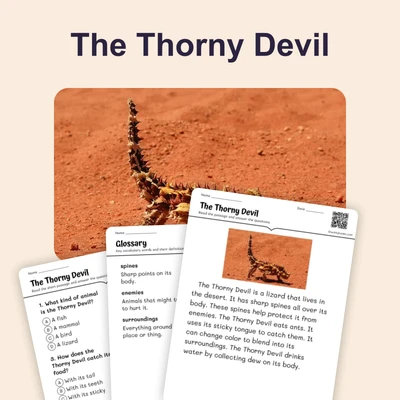
The Thorny Devil
The Thorny Devil is a fascinating desert lizard covered in sharp spines that protect it from predators. This unique rept...
RI.3.1RI.4.4RI.4.6
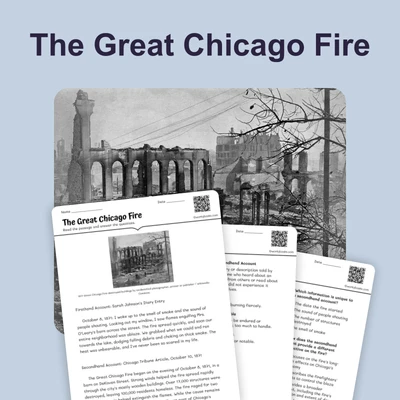
Great Chicago Fire
This passage presents two accounts of the Great Chicago Fire of 1871: a firsthand diary entry and a secondhand newspaper...
RI.4.6RI.5.6
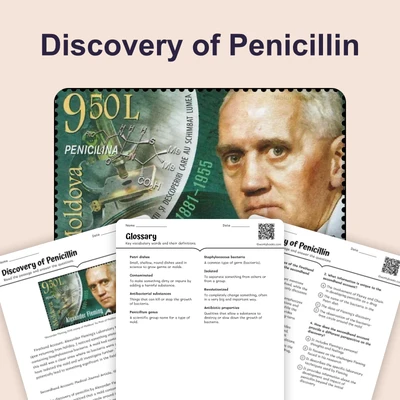
Discovery of Penicillin
This passage compares Alexander Fleming's firsthand laboratory notes on the discovery of penicillin with a secondhand ac...
RI.4.6RI.5.6
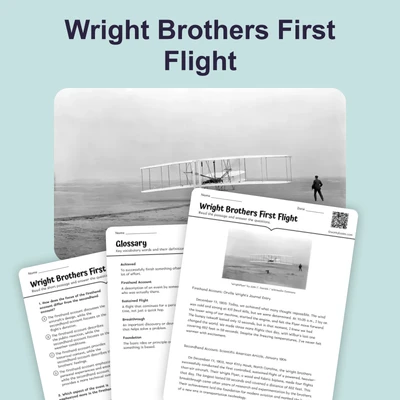
The Wright Brothers' First Flight
This passage presents two perspectives on the Wright Brothers' first flight: Orville Wright's firsthand journal entry an...
RI.4.6RI.5.6
Analyzing Perspective -Christopher Columbus
This worksheet has students read contradictory accounts of Christopher Columbus's 1492 voyage. It then asks multiple cho...
RI.5.6RI.5.5RI.5.8RI.5.9
Comparing Accounts of Landing on Moon
This worksheet has students read two accounts of the 1969 moon landing that provide different perspectives. It then asks...
RI.5.6RI.5.5RI.5.8RI.5.9
Comparing News Reports- Political Protest
This worksheet has students analyze contradictory news reports about a political protest. It uses multiple choice questi...
RI.5.6RI.5.5RI.5.8RI.5.9
Penguins Supporting Evidence
This informational text on penguins is a great way to practice finding the main point and reasons to support. This readi...
RI.5.6RI.5.5RI.5.8RI.5.9
Malala Yousafzai
This Grade 4-5 science reading passage introduces students to Malala Yousafzai, a courageous young woman from Pakistan w...