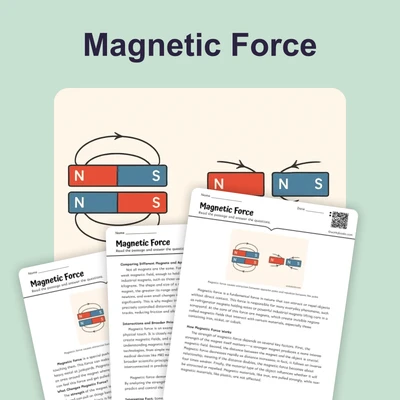
Forces and Motion
Interactive passage with audio narration, comprehension questions, and printable PDF.
By completing this purchase you agree to our Terms of Use and Privacy Policy. Your subscription renews automatically until you cancel. You can cancel anytime from your account settings. All sales are final and non-refundable. Digital content is available for download in your account immediately upon purchase.
What's included
Forces and Motion preview and details
About this printable Forces and Motion science reading passage, NGSS-aligned (Grades 3-6)
Sample passage and quiz from Forces and Motion
Reading passage and comprehension quiz preview
Forces and Motion
Forces and Motion
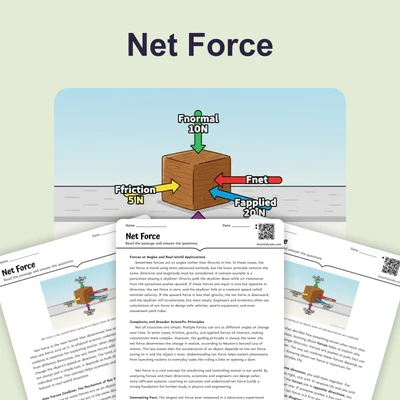
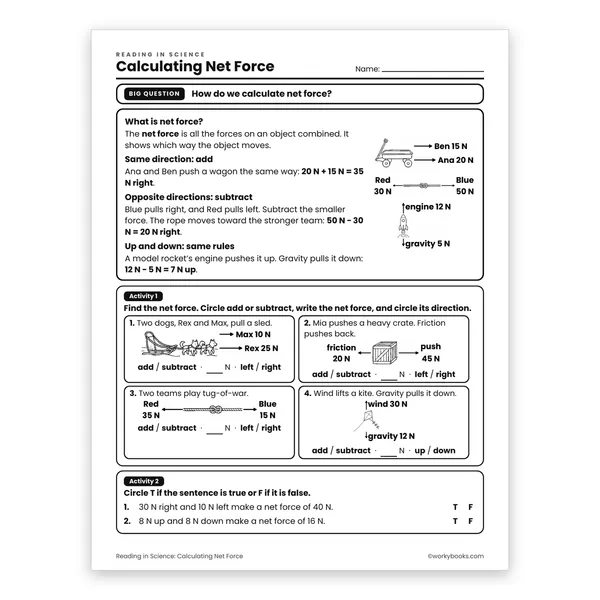
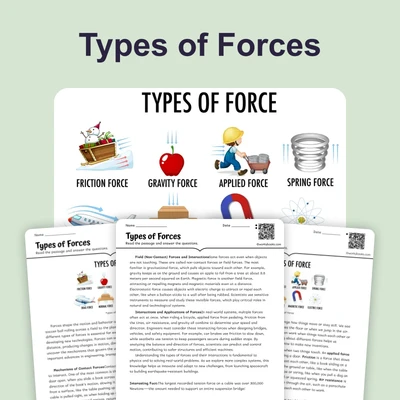
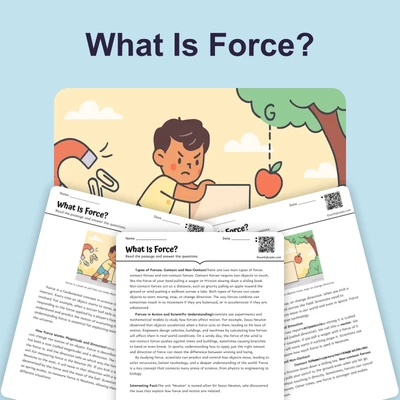
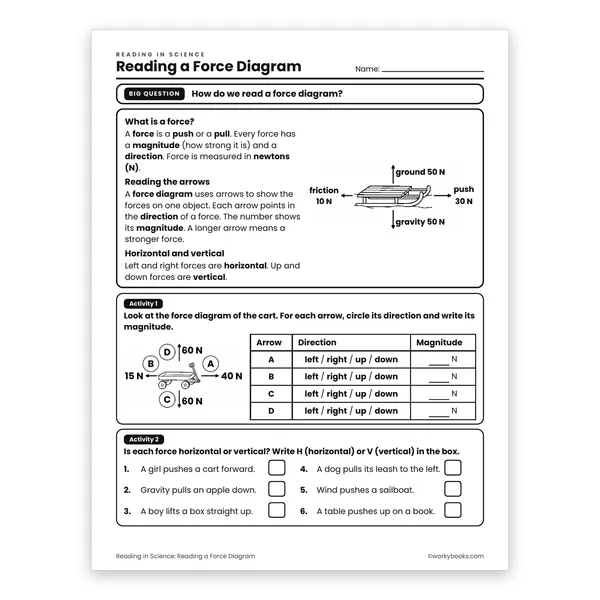
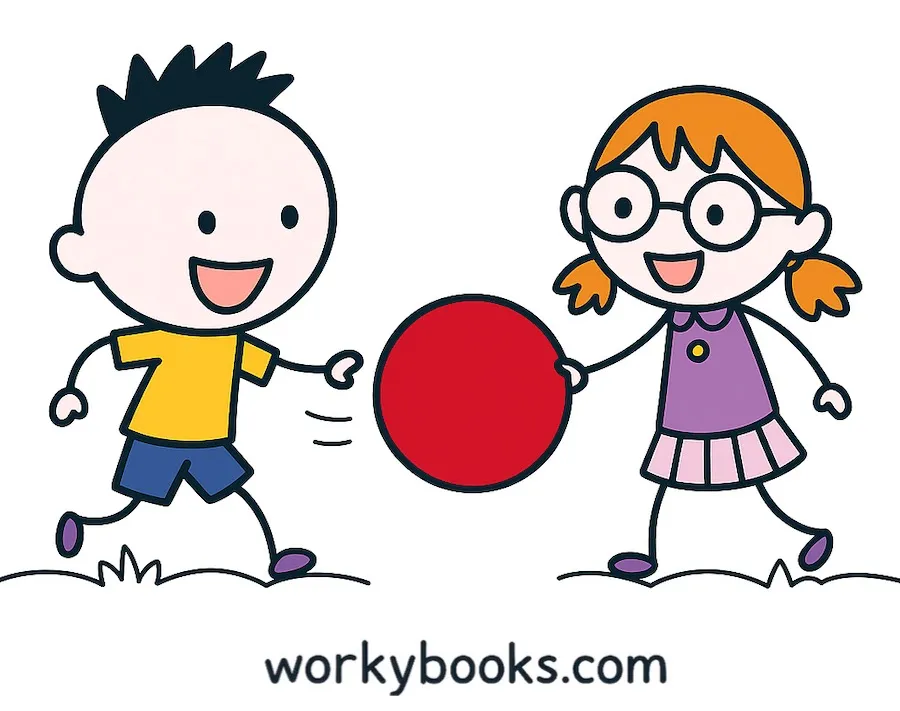
A force is a push or a pull. Forces are invisible hands that make things move, stop, speed up, slow down, or change direction. There are many types of forces around us every day.
When you push a swing at the playground, you are using a push, a type of force. When you pull a wagon, you use a pull. Both are ways to move things.
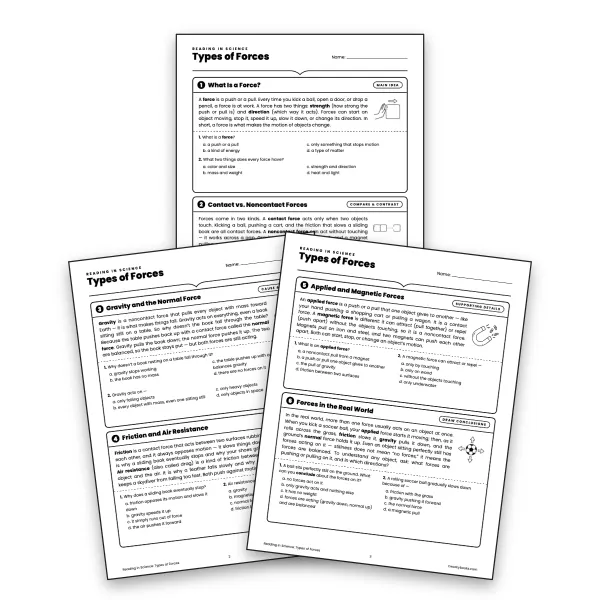
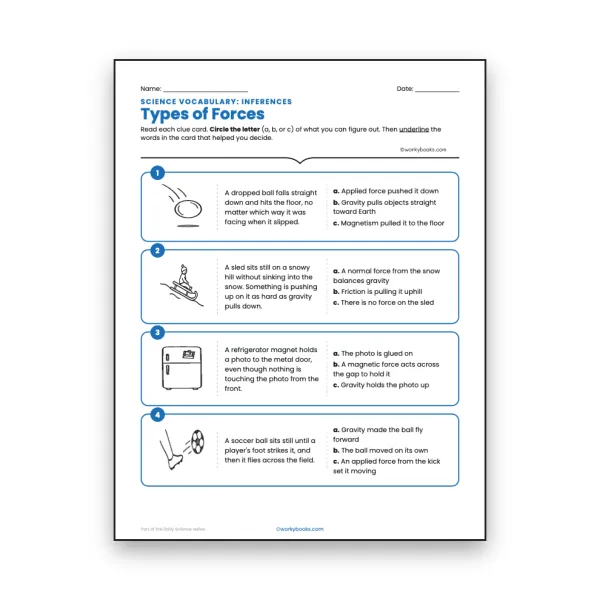
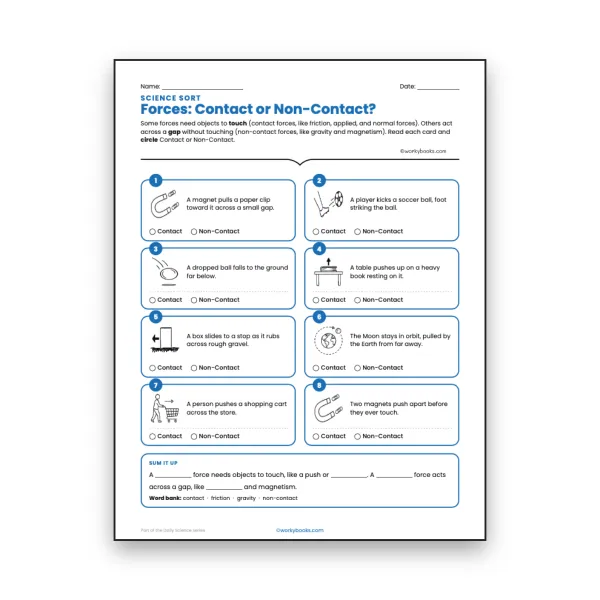
Gravity is a special force. It pulls everything down toward Earth. Gravity is why balls fall to the ground and why you stay on the floor instead of floating away.
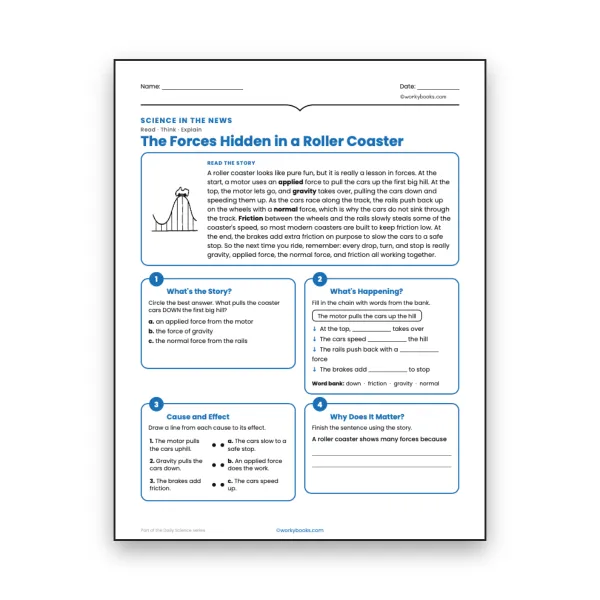
Another force is friction. Friction happens when two surfaces rub together. Friction slows things down. That is why a ball rolls farther on a smooth tile floor than on rough carpet. The carpet has more friction, so it slows the ball faster.
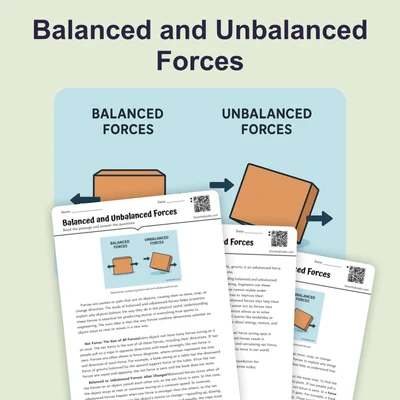
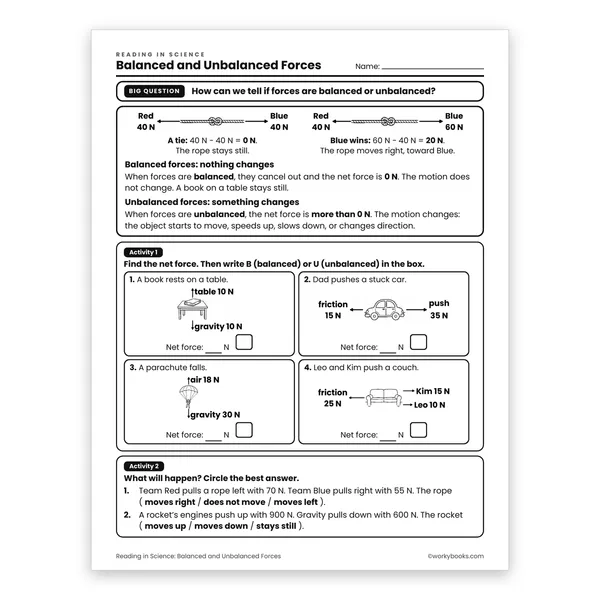
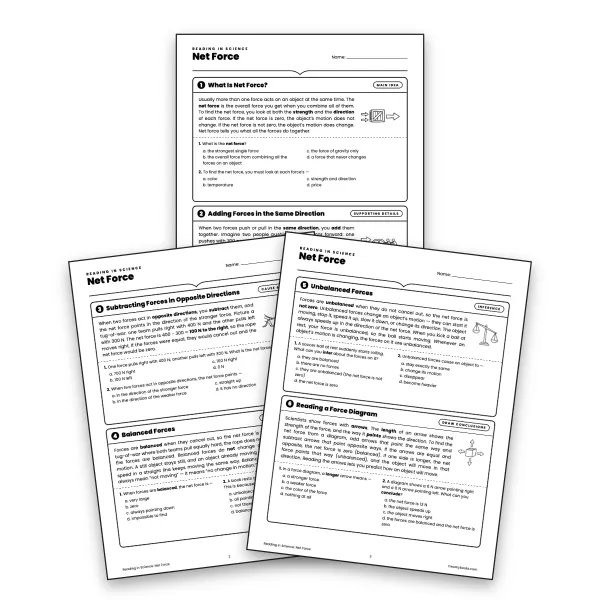
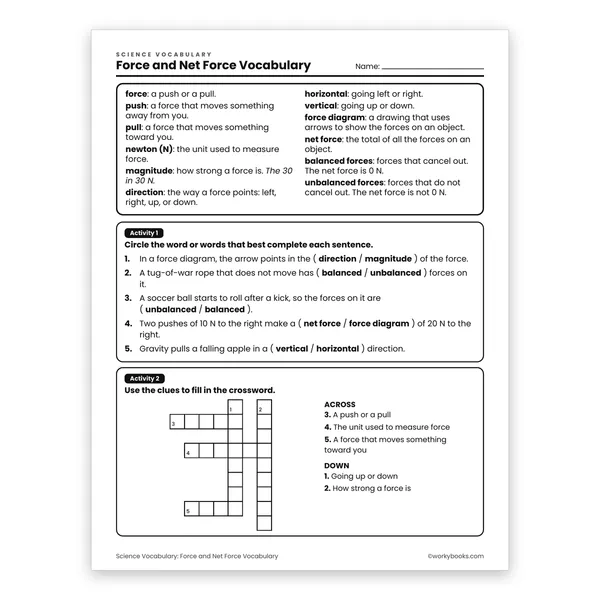
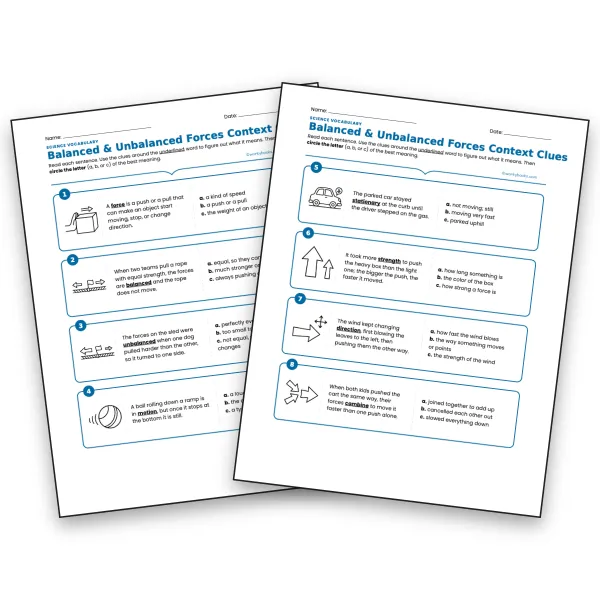
Sometimes, forces are balanced. This means the pushes and pulls on an object are equal and opposite. If you play tug-of-war and both teams pull with the same strength, the rope does not move. It stays still or keeps moving the same way.
Other times, forces are unbalanced. When one force is stronger than the other, the object moves in the direction of the stronger force. If one team in tug-of-war pulls harder, the rope moves their way.
Forces are important in sports and playground activities. Kicking a ball uses a force to start its motion. Catching a ball stops it with another force. Turning your bike is a force that changes the direction you are moving.
Scientists study forces by doing experiments, like pushing toys with different strengths or rolling balls on different surfaces to see how friction works.
Interesting Fact: The world’s largest swing, called a pendulum, can be over 100 feet tall and shows how gravity and force work together!
Comprehension quiz (8 questions)
1. What is a force?
2. What does gravity do?
3. What is friction?
4. Why does a ball stop faster on carpet?
5. What happens if forces are balanced?
6. What does an unbalanced force do?
7. Friction always makes things go faster. True or false?
8. Which word means 'equal and opposite forces'?
Perfect for the way you teach
- Build comprehension skills
- Auto-graded quiz
- Differentiated reading
- Read together at home
- Improve fluency
- Quiet reading time
- Reading curriculum support
- Independent practice
- Track Lexile growth