How Agriculture Affects Earth
Interactive passage with audio narration, comprehension questions, and printable PDF.
By completing this purchase you agree to our Terms of Use and Privacy Policy. Your subscription renews automatically until you cancel. You can cancel anytime from your account settings. All sales are final and non-refundable. Digital content is available for download in your account immediately upon purchase.
What's included
How Agriculture Affects Earth preview and details
About this printable How Agriculture Affects Earth science reading passage, NGSS-aligned (Grades 4-6)
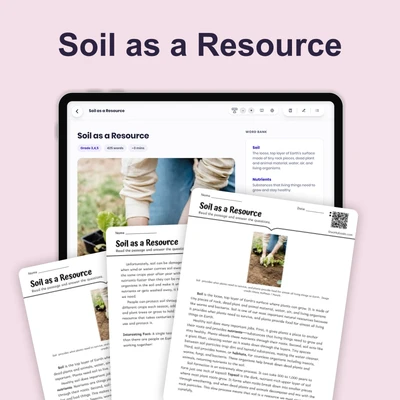
Sample passage and quiz from How Agriculture Affects Earth
Reading passage and comprehension quiz preview
How Agriculture Affects Earth
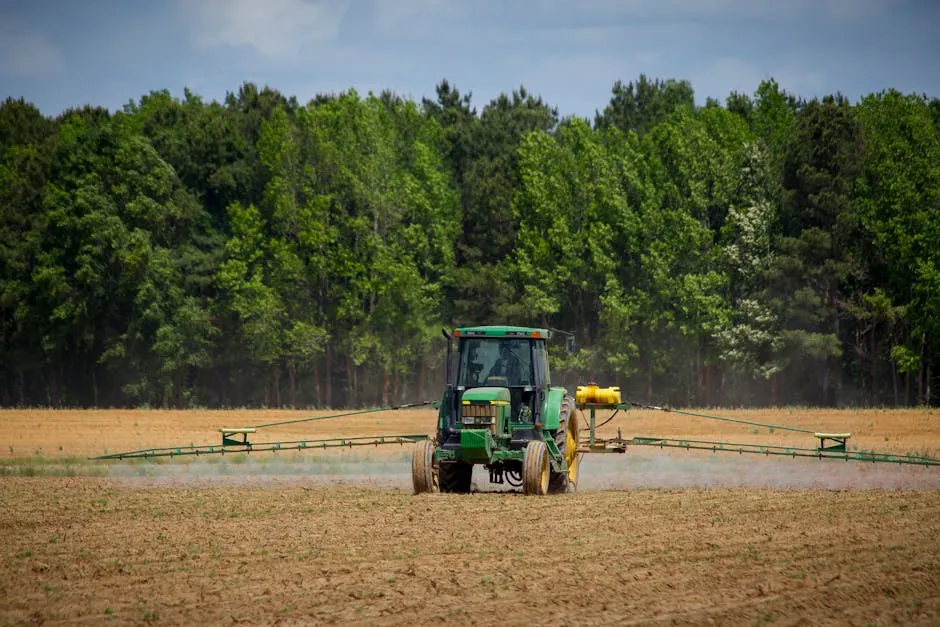
Tractor spraying fields with pesticides on a countryside farm by Mark Stebnicki / Pexels.
Agriculture is the practice of growing crops and raising animals for food. Farmers use agriculture to produce the fruits, vegetables, grains, and meat that feed billions of people around the world. Without agriculture, we would not have enough food to survive. However, the way we farm can affect Earth's soil, water, and air in important ways.
When farmers prepare land for crops, they often clear forests or grasslands. This process removes plants whose roots hold soil in place. Without these roots, wind and rain can easily wash away the topsoil. Erosion is the process of soil being worn away and carried to new locations. When erosion happens, the land loses the nutrient-rich soil that plants need to grow. Think of erosion like sweeping a floor—once the good soil is swept away, it's hard to grow healthy crops.
Farmers use fertilizers, which are substances that add nutrients to soil to help plants grow bigger and faster. They also use pesticides, which are chemicals that kill insects and weeds that damage crops. While these products help farmers grow more food, they can cause problems. Rain can wash fertilizers and pesticides into streams and rivers. This is called runoff. When too many nutrients from fertilizers enter water, they cause algae to grow rapidly. The algae use up oxygen in the water, making it hard for fish and other animals to survive.
Many farms use irrigation, which means bringing water to crops through pipes, sprinklers, or ditches. Irrigation helps plants grow in dry areas, but it can use huge amounts of water. In some places, farmers pump so much water from underground sources or rivers that these water supplies shrink. This affects other people, plants, and animals that need water too.
Agriculture also changes habitats. When forests or prairies are cleared for farmland, animals lose their homes and food sources. Some species must move to new areas or face declining populations.
Farmers and scientists are working on better ways to grow food while protecting the environment. They use methods like planting trees along streams, rotating different crops, and using less fertilizer and pesticides. These practices help keep soil healthy, water clean, and habitats safe for wildlife.
Interesting Fact: One inch of topsoil can take 500 years to form naturally, but erosion can wash it away in just a few years of poor farming practices!
Comprehension quiz (8 questions)
1. What is agriculture?
2. What happens during erosion?
3. What are fertilizers used for?
4. Why can runoff harm fish?
5. How does clearing land affect animals?
6. What problem can irrigation cause?
7. Agriculture is necessary to feed people worldwide.
8. What does the word 'pesticides' mean?
Perfect for the way you teach
- Build comprehension skills
- Auto-graded quiz
- Differentiated reading
- Read together at home
- Improve fluency
- Quiet reading time
- Reading curriculum support
- Independent practice
- Track Lexile growth