Soil as a Resource
Interactive passage with audio narration, comprehension questions, and printable PDF.
By completing this purchase you agree to our Terms of Use and Privacy Policy. Your subscription renews automatically until you cancel. You can cancel anytime from your account settings. All sales are final and non-refundable. Digital content is available for download in your account immediately upon purchase.
What's included
Soil as a Resource preview and details
About this printable Soil as a Resource science reading passage, NGSS-aligned (Grades 4-6)
Sample passage and quiz from Soil as a Resource
Reading passage and comprehension quiz preview
Soil as a Resource
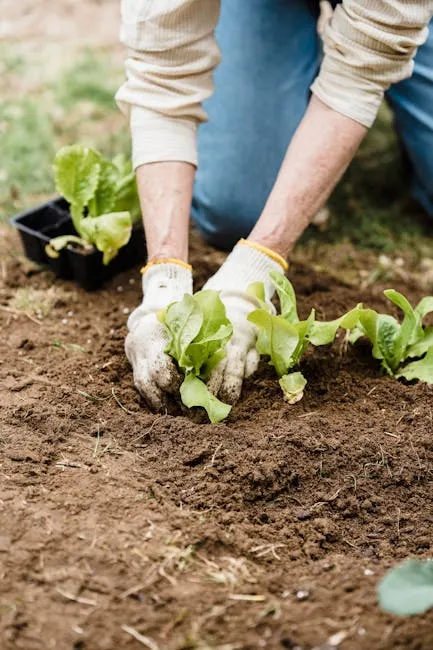
Soil provides what plants need to survive, and plants provide food for almost all living things on Earth. Image credit Greta Hoffman / Pexels.
Soil is the loose, top layer of Earth's surface where plants can grow. It is made of tiny pieces of rock, dead plant and animal material, water, air, and living organisms like worms and bacteria. Soil is one of our most important natural resources because it provides what plants need to survive, and plants provide food for almost all living things on Earth.
Healthy soil does many important jobs. First, it gives plants a place to anchor their roots and provides nutrients—substances that living things need to grow and stay healthy. Plants absorb these nutrients through their roots. Second, soil acts like a giant filter, cleaning water as it soaks down through the layers. Tiny spaces between soil particles trap dirt and harmful substances, making the water cleaner. Third, soil provides homes, or habitats, for countless organisms including insects, worms, fungi, and bacteria. These organisms help break down dead plants and animals, returning nutrients to the soil.
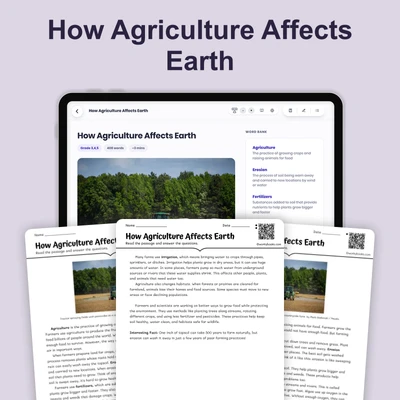
Soil formation is an extremely slow process. It can take 500 to 1,000 years to form just one inch of topsoil! Topsoil is the dark, nutrient-rich upper layer of soil where most plant roots grow. It forms when rocks break down into smaller pieces through weathering, and when dead plants and animals decompose and mix with the rock particles. This slow process means that soil is a resource we must protect carefully.
Unfortunately, soil can be damaged much faster than it forms. Erosion happens when wind or water carries soil away from one place to another. When farmers plant the same crops year after year without giving soil time to rest, they remove nutrients faster than they can be replaced. Pollution from chemicals can kill helpful organisms in the soil and make it unsafe for growing food. When soil loses its nutrients or gets washed away, it becomes difficult or impossible to grow the crops we need.
People can protect soil through careful farming practices. Farmers can plant different crops each season, add natural materials like compost to replace nutrients, and plant trees or grass to hold soil in place. By understanding that soil is a limited resource that takes centuries to form, we can make better choices about how we use and protect it.
Interesting Fact: A single teaspoon of healthy soil contains more living organisms than there are people on Earth—billions of bacteria, fungi, and other tiny creatures working together!
Comprehension quiz (8 questions)
1. What is soil made of?
2. How long does it take to form topsoil?
3. What does erosion mean?
4. Why does soil act like a filter?
5. How can farmers protect soil from damage?
6. What happens when soil loses its nutrients?
7. Soil is a limited resource that forms quickly.
8. What are nutrients in soil?
Perfect for the way you teach
- Build comprehension skills
- Auto-graded quiz
- Differentiated reading
- Read together at home
- Improve fluency
- Quiet reading time
- Reading curriculum support
- Independent practice
- Track Lexile growth