How Does a Hurricane Form? — Reading Comprehension
Rate this|
3
Present
Present in classroom. No work saved
Assign
Classroom with student accounts, Track progress
Quick Play
No student accounts, assign with a link
Grades
3
4
5
6
7
PRINT+DIGITAL RESOURCE
This learning resource is available in interactive and printable formats. The interactive worksheet can be played online and assigned to students. The Printable PDF version can be downloaded and printed for completion by hand.
This NGSS-aligned reading passage explains how hurricanes form over warm ocean waters. Students will learn about key concepts like low pressure, warm air rising, condensation, and the Coriolis effect. The passage also describes the structure of a hurricane, including the eye and eyewall, and explains why hurricanes weaken when they move over land. It supports NGSS standard MS-ESS2-6 and helps students understand weather systems and the energy behind powerful storms in a clear and engaging way.
CONTENT PREVIEW
Expand content preview
Hurricanes are powerful storms that begin over warm ocean water. They are also known as tropical cyclones or typhoons, depending on where they happen in the world. These storms can bring heavy rain, strong winds, and big waves that cause flooding and damage. But how does a hurricane actually form?
It all starts with warm, moist air over the ocean. When the ocean’s surface reaches at least 26°C (about 79°F), it heats the air above it. This warm air rises and creates an area of low air pressure. As the warm air rises, it cools and condenses into clouds and thunderstorms, releasing even more heat into the air. This heat helps more warm air rise, fueling the storm.
As more air rushes in to replace the rising air, the system begins to spin due to Earth’s rotation. This spinning is called the Coriolis effect. If the storm continues to grow and the wind speeds reach at least 74 miles per hour, it becomes a hurricane.
The center of a hurricane is called the eye. It’s usually calm and clear, but it’s surrounded by the eyewall, which has the most dangerous winds and heaviest rain. Hurricanes lose strength when they move over cooler water or land, where they no longer have warm ocean air to keep them going.
Scientists use satellites and special tools to track hurricanes and warn people early. Understanding how they form helps communities prepare and stay safe.
Fun Fact: A fully formed hurricane can release more energy in one day than all the world’s power plants combined!
Where do hurricanes begin?
Over mountainsOver cool land areasOver warm ocean waterIn icy polar regions
What causes warm air to rise over the ocean?
Cold air from aboveStrong ocean wavesHeat from the sun warming the oceanClouds forming quickly
What happens when warm air rises and cools?
It disappearsIt sinks back downIt forms clouds and thunderstormsIt freezes into snow
What is the Coriolis effect?
A type of cloudThe reason the storm spins due to Earth's rotationThe way hurricanes make wavesA cooling effect from rain
What wind speed must a storm reach to be called a hurricane?
25 miles per hour50 miles per hour74 miles per hour100 miles per hour
What is the calm center of a hurricane called?
The coreThe cycloneThe eyeThe storm zone
What is the main idea of the passage?
Hurricanes form when it snows on the oceanHurricanes are the biggest storms on landHurricanes form from warm ocean air, rising air, and spinning motionHurricanes only happen in winter
Why do hurricanes weaken over land?
They hit trees and buildingsThey get too heavyThey lose warm ocean air, which fuels themThey get pushed by the wind
Perfect For:
👩🏫 Teachers
• Reading comprehension practice
• Auto-graded assessments
• Literacy skill development
👨👩👧👦 Parents
• Reading practice at home
• Comprehension improvement
• Educational reading time
🏠 Homeschoolers
• Reading curriculum support
• Independent reading practice
• Progress monitoring
Reading Features:
📖
Reading Passage
Engaging fiction or nonfiction text
❓
Comprehension Quiz
Auto-graded questions
📊
Instant Feedback
Immediate results and scoring
📄
Printable Version
Download for offline reading
🔊
Read Aloud
Voice-over with word highlighting
Reviews & Ratings
No reviews yet. Be the first to share your experience!
Related Content
Comparing Weather and Climate Texts
This reading comprehension worksheet has 5th graders read two informational texts about Weather and Climate. Students th...
RI.5.9
Climate and weather activity
This worksheet is perfect for understanding the differences between climate and weather. Students will read the phrases ...
Climate and Weather — Distinguishing Characterstics
This worksheet highlights the differences between climate and weather. The chart format makes comparing and contrasting ...
What Is Space Weather and How Does It Affect the Earth?
This NGSS-aligned science passage for middle school explains what space weather is and how it affects Earth. Students le...
MS-ESS2-2
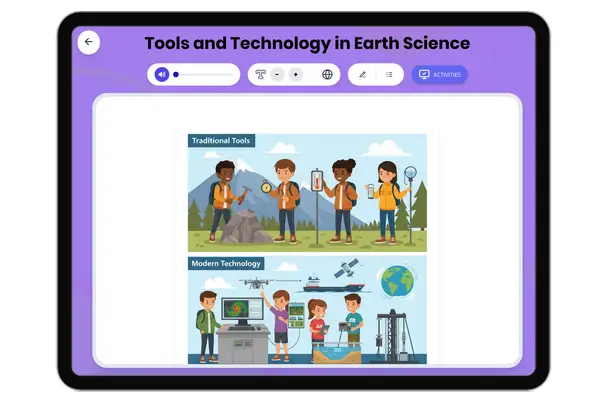
Tools and Technology in Earth Science
This middle school science reading passage explores the wide range of tools and technologies used in Earth science, from...
MS-ESS2-2MS-ESS3-2MS-ETS1-1MS-PS4-3
Polar Bears and Climate
This informational text on polar bears is a great way to practice reading comprehension. Students will read the passage ...
RI.4.1W.4.72-LS4-1RF.4.4
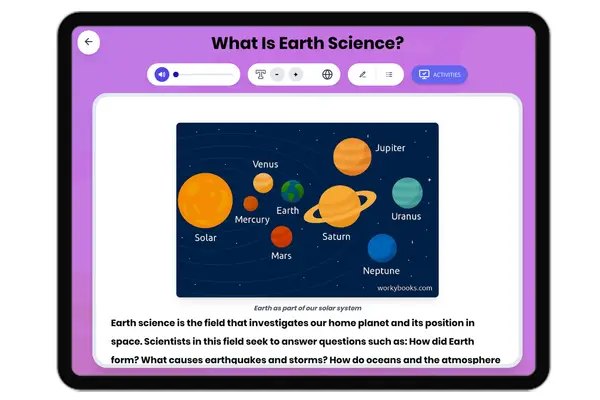
What Is Earth Science?
This engaging middle school science passage introduces students to the field of Earth science, aligning with NGSS standa...
MS-ESS1MS-ESS2MS-ESS3SEP
Weather and Temperature
RI.4.73-ESS2-13-ESS2-2
Informational Text — Armadillos
This informational text on armadillos is a great way to practice reading comprehension. Students will read the short pas...
RI.2.1RI.2.10
Informational Text — Penguins
This informational text on penguins is a great way to practice reading comprehension. Students will read the short passa...
RI.2.1RI.2.10
Reading for Main Details—Birds
This informational text on birds is a great way to practice main idea. Students will read the passage, then give the mai...
RI.2.6RI.2.8
Informational Text — Astronauts
Practice this second grade context clues worksheet with this informational text on astronauts. Students will read the te...
RI.2.4RI.2.10RI.3.4RI.3.10
Interpreting visual information on Layers of the Earth
This informational text on the layers of the earth is a great way to practice using images during reading. Students will...
RI.1.7RI.10RF.1.4.ARF.1.4
Reading for Main Details—Beavers Teeth
This informational text on beavers is a great way to practice main idea. Students will read the passage, then give the m...
RI.2.6RI.2.10
The Great Barrier Reef and Climate
ESS3.DRI.4.10-23-ESS2-2
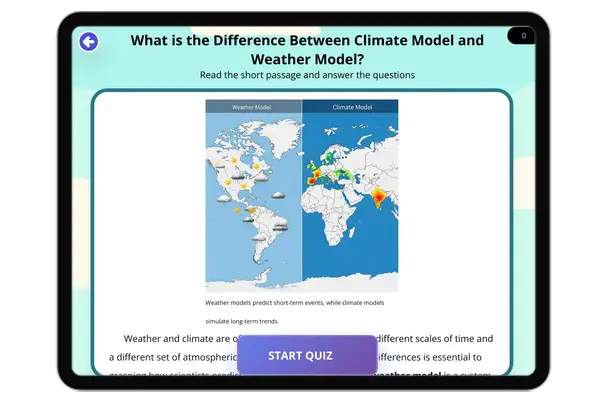
What Is The Difference Between Climate Model And Weather Model?
This reading passage delves into the fundamental differences between weather models and climate models, explaining their...
Key Details in Text
RI.1.1RI.1.2RI.1.10
Reading for Main Details—Veternarians
Practie summarizing paragraphs with this fun informational text on veternarians! Students will give the main idea of eac...
RI.2.2RI.2.10
Informational Text — Habitats
This short informational text on habitats will teach your students what a habitat is, as well as provide some examples o...
RF.3.4.A
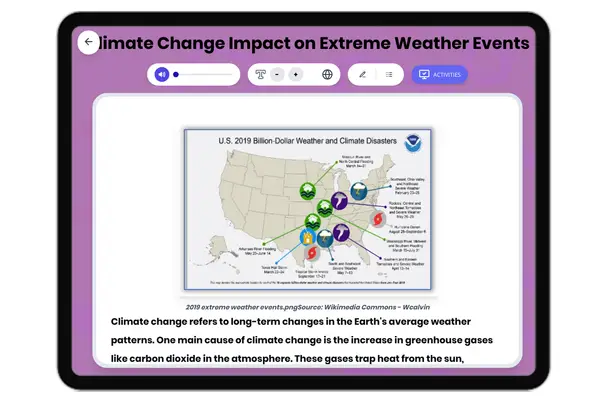
Extreme Weather and Climate Change
This Grade 6-8 science passage, aligned to NGSS standards, explores the impact of climate change on extreme weather even...